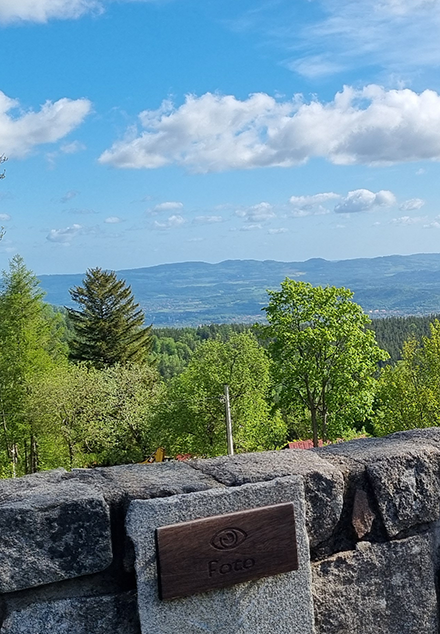
To dlatego Kotlina Jeleniogórska nazywana bywa doliną pałaców i ogrodów. Jako jeden z pierwszych powstał pałac w Mysłakowicach, przebudowany przez króla pruskiego Fryderyka Wilhelma trzeciego. Po prawej stronie świerku rosnącego poniżej budynku transformatora bystroocy obserwatorzy ujrzą w oddali dwie jasne wieże. Jedna z nich należy do wspomnianego pałacu królewskiego, druga do dawnego kościoła ewangelickiego w Mysłakowicach, w którym znajdują się autentyczne kolumny ze starożytnych Pompejów. Obie wieże oddalone są stąd w linii prostej o niewiele ponad osiem kilometrów.
Dokładnie tyle samo dzieli kościółek od rezydencji hrabiny von Reden w Bukowcu. W owym czasie duże znaczenie przykładano do kształtowania krajobrazu. Nie bez przyczyny zatem ulokowano świątynię Wang w tym właśnie miejscu, na zboczu Czarnej Góry, w połowie drogi z Karpacza na Śnieżkę. Grunty, na których, jak głosi oryginalny dokument, miał się znaleźć Kościół, mieszkanie księdza i kantora, a także ogródek i cmentarz, podarował hrabia Christian Leopold von Szabesgocz, właściciel dóbr ziemskich z Cieplic, katolik. Świątynia Wang miała być doskonale widoczna z tarasu królewskiego pałacu.
Przenosząc wzrok na prawo, trudno nie zauważyć dwóch pokrytych lasem gór, jako żywo kojarzących się z kobiecymi wdziękami. To Sokoliki. Na tamtejszych skałkach pierwsze wspinaczkowe szlify zdobywali polscy himalaiści: Wanda Rutkiewicz, Jerzy Kukuczka czy Krzysztof Wielicki. Nieco na prawo, na odrobinę bliższym planie znajduje się Bukowiec i rezydencja von Redenów. Niedługo po ślubie hrabia von Reden polecił tam wznieść dla swojej młodej żony pawilon z otwartym kolumnowym portykiem, gdzie zbierano się na herbatę. Z tejże herbaciarni właściciele i goście podziwiać mogli położoną wysoko w Karkonoszach świątynię Wang.





Visit Social media:
Share Social media: