A brick monastery was erected at the same time. Together with the church, it formed a quadrangle with a garden in the center—a truly unique architectural complex. Sections of walls revealed during renovations indicate that this church, along with the former Collegiate Church of St. Michael, was among the first brick structures in Masovia.
The residents of Płock held the order and its work in high regard. Annual theological debates held on the Feast of St. Thomas Aquinas drew many visitors—both clergy and laypeople—to the city. The friars also played an active role in the daily life of the townspeople, helping, for instance, to install the city's second clock in 1542.
The monastery underwent several expansions over the years. Unfortunately, after the Prussian authorities expelled the Dominicans, the buildings began to fall into disrepair. Surviving to this day are the main altar—featuring a crucifix in its upper section—and a Rococo pulpit, both finished in white with gold accents. The cemetery adjoining the church is also worth a visit. It was once surrounded by a wall featuring four large shrines.
The current parish is dedicated to St. Maximilian Kolbe.
Former Dominican church and monastery
The Dominicans began their work in Poland as early as 1220, when the young cleric Jacek Odrowąż received the religious habit from the hands of St. Dominic himself. The new order quickly gained popularity, and just fourteen years later, the friars arrived in Płock, brought there by Duke Konrad of Masovia. He also funded the Church of St. Dominic, situated on the slope of Tumskie Hill.


How it working
To listen to the history of monuments as part of the "Discover History" project, you need to follow a few simple steps. Below, we present a short, step-by-step "user manual" to provide a relatively simple way to access the mini-auditions.
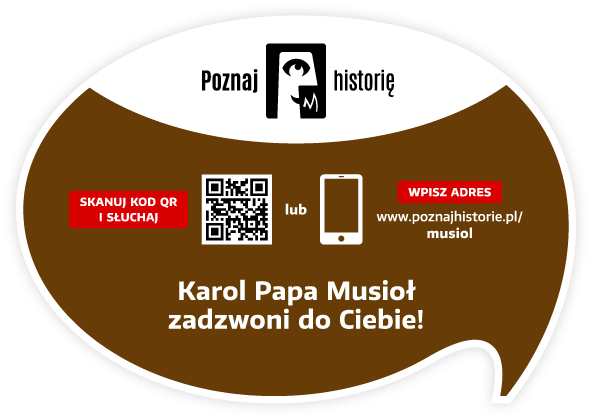
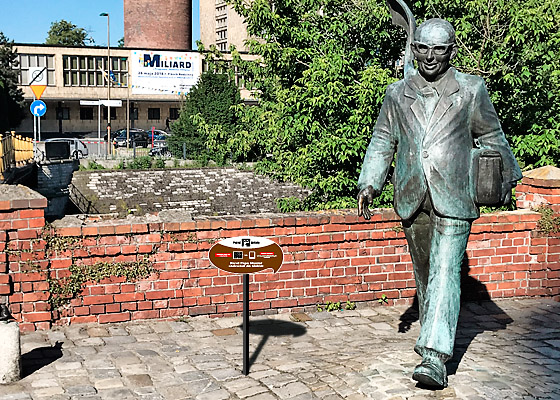
You need a smartphone with a camera. The camera lens should be pointed at the information plaque located next to the monument. Below is a view of the plaque itself and its example location next to the Karol Musioł monument in Opole.
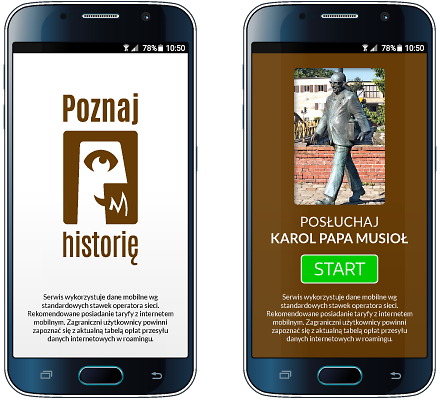
After pointing your smartphone's camera at the QR code located on the right side of the plaque, the app's welcome screen will appear, followed by a screen with the name, photo of the monument, and the "START" button.
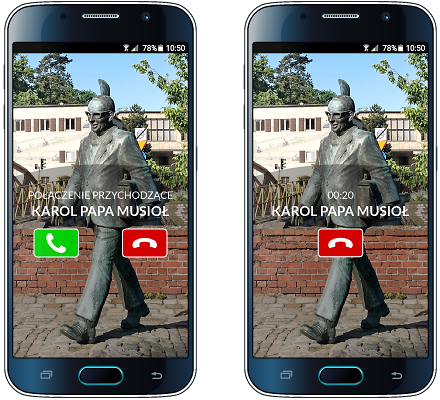
The "START" button starts the audio recording process.
Your smartphone will prompt you with the next steps after you listen to the story or pause it. Please keep an eye on your smartphone screen!
Other available options: brief information about the monument, author of the text and recording, list of other monuments in the city included in the "Discover History" project, downloadable map of monuments, video, and social media links
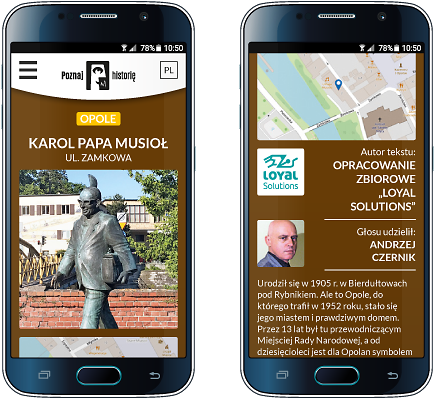
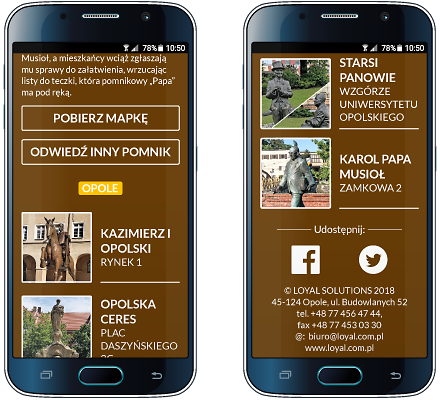
Would you like to implement the project in your city as well?
ContactSelect an object
View gallery
Monuments in cities remind us of the history of places and people, and allude to important events. They are also works of art. Bronze, metal, wood, or concrete transformed into the form of a monumental obelisk attract attention. We enjoy sitting by them, taking photos, and making appointments.
Project partners
Implementing the "Discover history" project in each city requires the involvement of many people: programmers, graphic designers, writers, actors, sound engineers, and coordinators. It is thanks to them that this project came to life.
Our ambition is to continually expand its reach. Therefore, we thank our current partners and invite additional cities, institutions, companies, and individuals to collaborate!

Would you like to become our Partner of the project or monument?
ContactContact
Are you interested in implementing the project in your city? Want to learn more? Want to learn more? Write to us, call us! We'll contact you and arrange a meeting. We'll prepare materials and a proposal for you.

QR Communication Sp. z o.o.
tel. +48 735 147 911
tel. +48 606 881 118
paulina.panusch@poznajhistorie.pl
kontakt@poznajhistorie.pl
Visit Social media:
Share Social media: