Radków

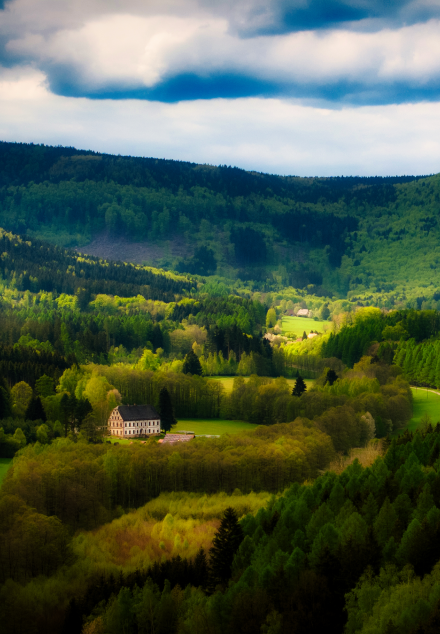
Welcome! At the foot of the Table Mountains lies the Radków commune, long considered a true cycling paradise. Primarily because nature reigns supreme here. And what a nature it is!
The commune encompasses the central and highest reaches of the Table Mountains – one of the most extraordinary mountain ranges in Poland. This landscape is unique not only in the region but also in the entire voivodeship. 

Half of the Table Mountains National Park lies here, making the commune a natural center for mountain hiking and cycling trips.

Tourism is concentrated primarily in Karłów and Pasterka – places that offer access to the most famous attractions, such as Szczeliniec Wielki and Błędne Skały. Wambierzyce, known far beyond the region as a religious center with an impressive basilica, also plays an important role. However, it's also worth exploring nearby villages, such as Nowy Świat, Tłumaczów, and Suszyna. Although they don't usually appear in guidebooks, they have their own local attractions and mountain charm. Radków itself is also beautiful, with its picturesque Radków Reservoir – an ideal place for rest and recreation. It's worth a longer stay, as Radków, though small, has much to offer.
Since the Middle Ages, life has been centered here as a settlement, and later a town, situated on an important route leading to Kudowa, Wambierzyce, and the Table Mountains. Radków received its town charter around 1320 and developed over the centuries as a local center of crafts, trade, and administration. The market square was its natural center: a place for markets, meetings, announcements, and the daily affairs of its residents.

Radków
Radków
Text author:
Łukasz
Pośpiech

Łukasz Pośpiech jest socjologiem z wykształcenia, na co dzień jednak redaguje, montuje, zajmuje się copywritingiem. Przede wszystkim jednak żyje w książkowym wieloświecie, w wolnych chwilach poszerzając jego ogromne uniwersum. Jest retromaniakiem, miłośnikiem rocka, westernu i gier video.

Visit Social media:

Share Social media:

How it working

To listen to the history of monuments as part of the "Discover History" project, you need to follow a few simple steps. Below, we present a short, step-by-step "user manual" to provide a relatively simple way to access the mini-auditions.

STEP 1

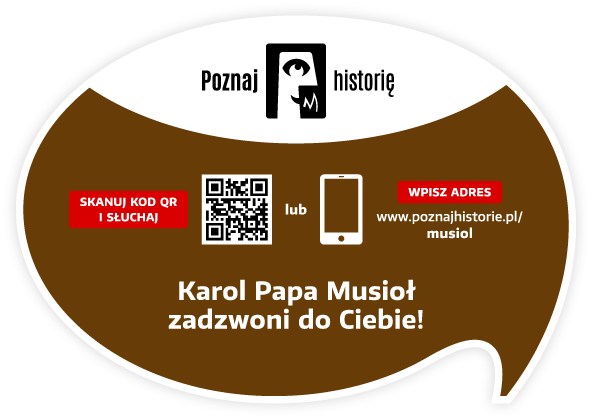
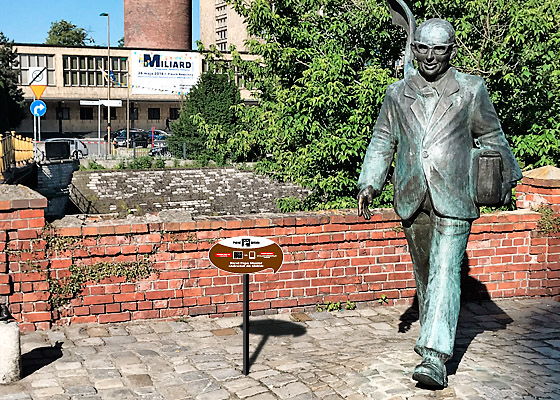
You need a smartphone with a camera. The camera lens should be pointed at the information plaque located next to the monument. Below is a view of the plaque itself and its example location next to the Karol Musioł monument in Opole.

STEP 2

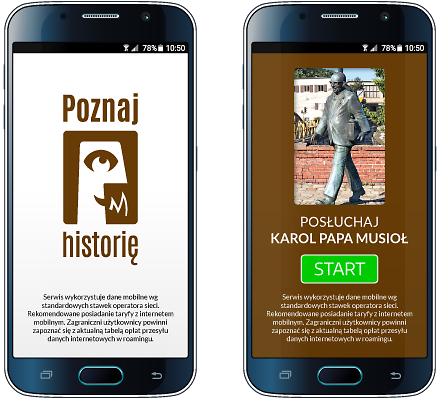
After pointing your smartphone's camera at the QR code located on the right side of the plaque, the app's welcome screen will appear, followed by a screen with the name, photo of the monument, and the "START" button.

STEP 3

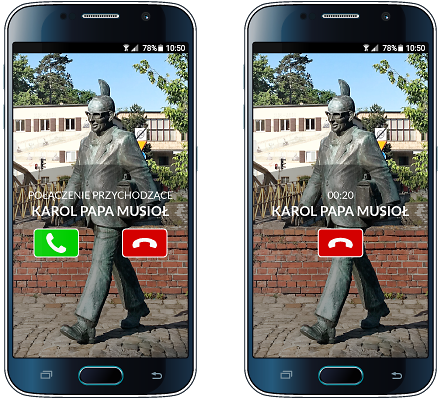
The "START" button starts the audio recording process.
Your smartphone will prompt you with the next steps after you listen to the story or pause it. Please keep an eye on your smartphone screen!

STEP 4

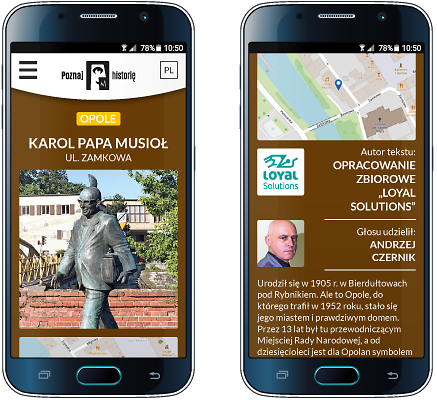
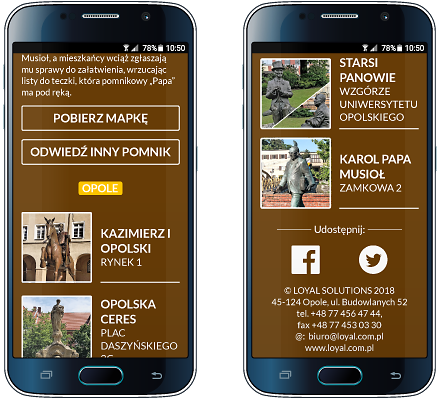
Other available options: brief information about the monument, author of the text and recording, list of other monuments in the city included in the "Discover History" project, downloadable map of monuments, video, and social media links


Would you like to implement the project in your city as well?

Contact

Project partners

Implementing the "Discover history" project in each city requires the involvement of many people: programmers, graphic designers, writers, actors, sound engineers, and coordinators. It is thanks to them that this project came to life.

Our ambition is to continually expand its reach. Therefore, we thank our current partners and invite additional cities, institutions, companies, and individuals to collaborate!


Would you like to become our Partner of the project or monument?

Contact

Contact

Are you interested in implementing the project in your city? Want to learn more? Want to learn more? Write to us, call us! We'll contact you and arrange a meeting. We'll prepare materials and a proposal for you.