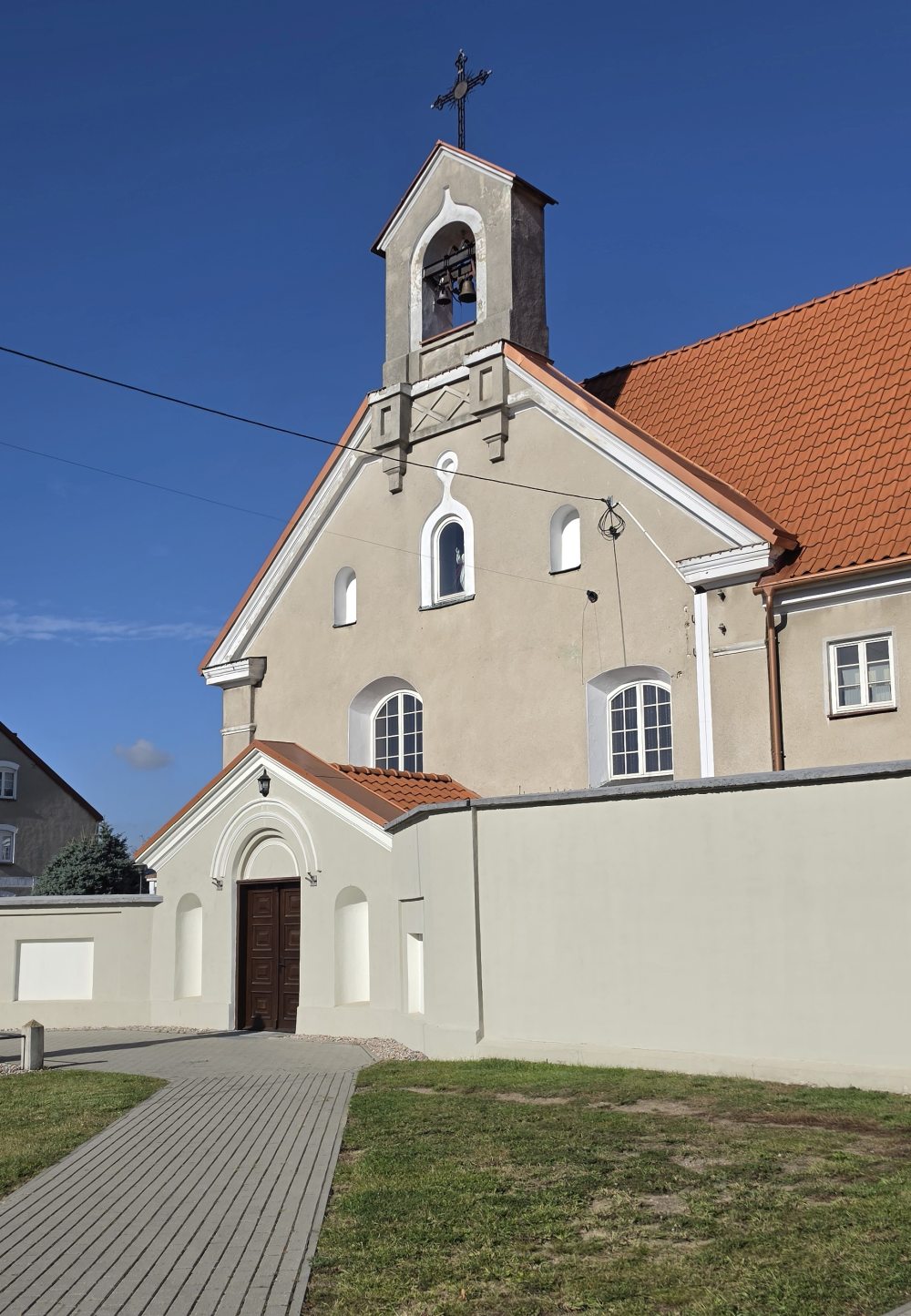
Krótko później kolejna fundatorka, Elżbieta Mostowska, kupuje im ziemię pod murowany kościół. W 1615 roku klasztor jest gotowy. Ale historia nie oszczędza tych murów. W roku 1622 pożar niszczy budowlę. Zakon odbudowuje ją z funduszy zapisanych przez Mostowską i dzięki pomocy bernardynów. Kolejny pożar wybucha w 1645 roku. I znów świątynię i budynki klasztoru trzeba podnosić ze zgliszczy. Mimo to klasztor rośnie, wspierany zapisami okolicznej szlachty, liczącej na modlitwę za zbawienie duszy. Był to popularny wówczas zwyczaj – co bogatsi zapisywali siostrom dobra licząc, że te wymodlą im zbawienie. Siostry nie tylko modliły się, ale też kształciły. Przy klasztorze działała pensja dla dziewcząt – i to bardzo dobra. W 1818 roku pojawił się też inny pomysł: by urządzić tu przytułek dla kobiet chorych wenerycznie. Nie sprzeciwił się temu ówczesny biskup płocki, ale mocno opierała się przeorysza zakonu. Miejsce to nie powstało.
Klaryski
i bernardynki
Jest rok 1606. Na tronie Rzeczpospolitej zasiada Zygmunt III Waza. Wtedy to, z Warszawy do Przasnysza, przybywają bernardynki: zakon kontemplacyjny, żyjący za klauzurą. Siostry modlą się, pracują, szyją szaty liturgiczne, wypiekają komunikanty. Na początek dostają drewnianą kaplicę, pod którą grunt ofiarowuje im szlachcianka Petronela Podoska.
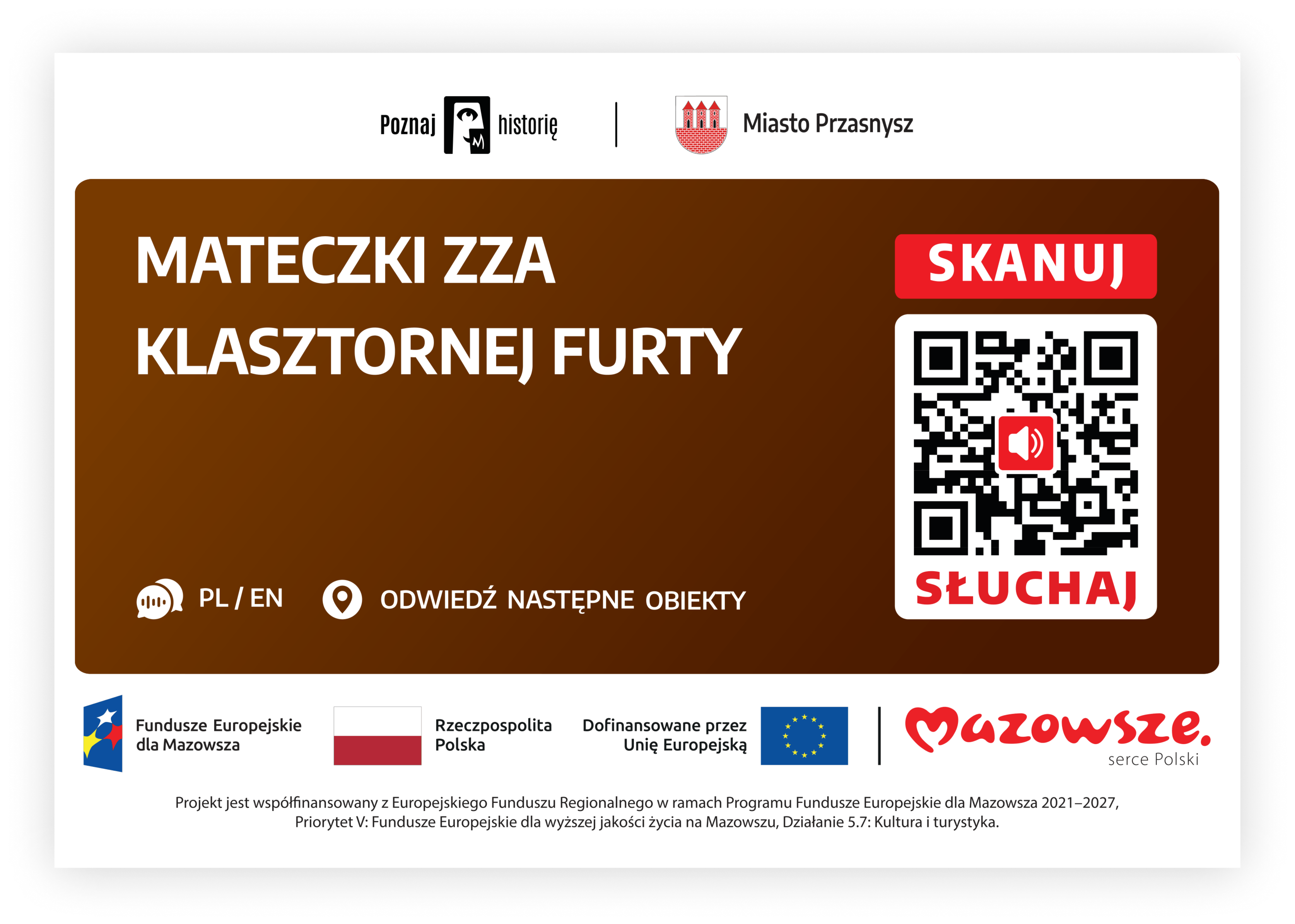
How it working
To listen to the history of monuments as part of the "Discover History" project, you need to follow a few simple steps. Below, we present a short, step-by-step "user manual" to provide a relatively simple way to access the mini-auditions.
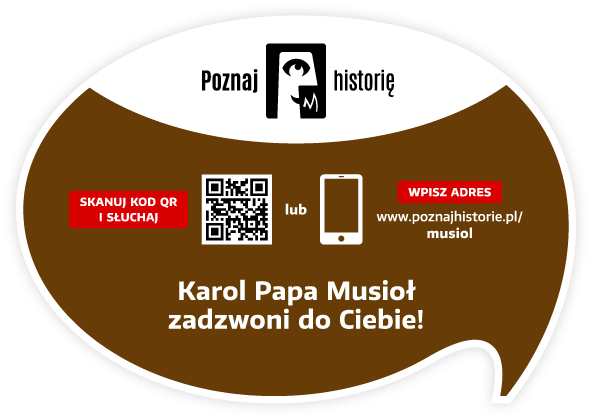
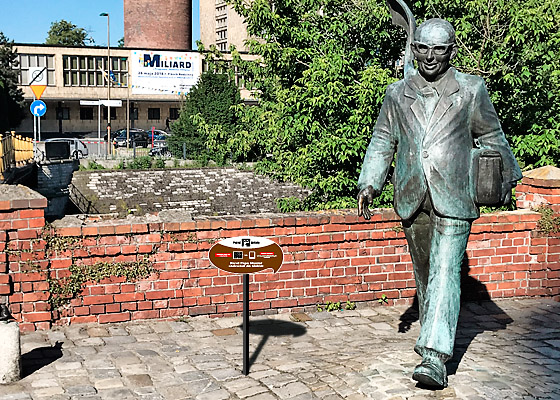
You need a smartphone with a camera. The camera lens should be pointed at the information plaque located next to the monument. Below is a view of the plaque itself and its example location next to the Karol Musioł monument in Opole.
After pointing your smartphone's camera at the QR code located on the right side of the plaque, the app's welcome screen will appear, followed by a screen with the name, photo of the monument, and the "START" button.
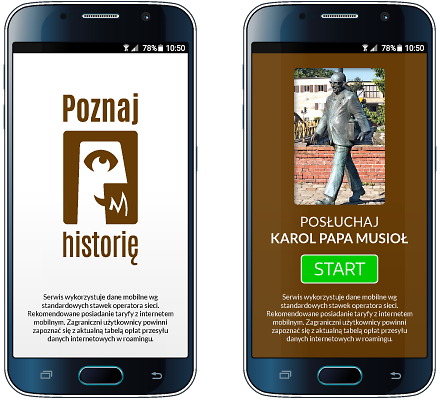
The "START" button starts the audio recording process.
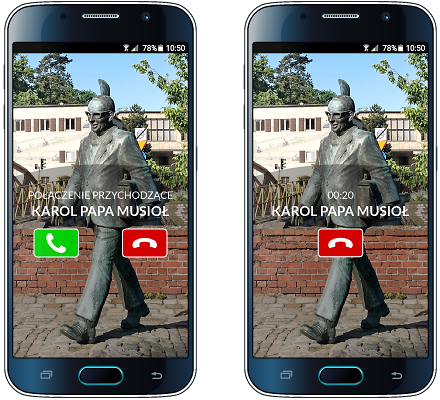
Your smartphone will prompt you with the next steps after you listen to the story or pause it. Please keep an eye on your smartphone screen!
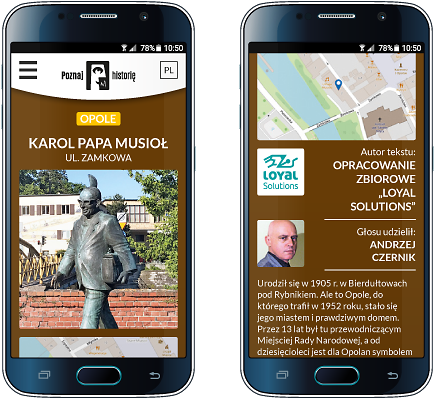
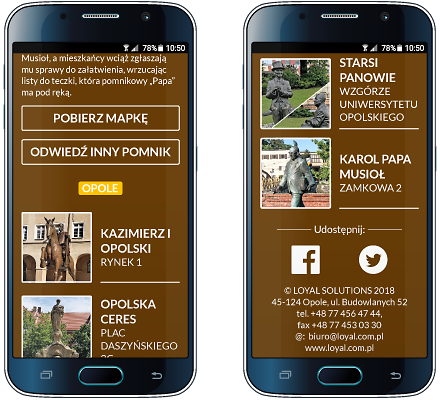
Other available options: brief information about the monument, author of the text and recording, list of other monuments in the city included in the "Discover History" project, downloadable map of monuments, video, and social media links
Would you like to implement the project in your city as well?
ContactSelect an object
View gallery
Monuments in cities remind us of the history of places and people, and allude to important events. They are also works of art. Bronze, metal, wood, or concrete transformed into the form of a monumental obelisk attract attention. We enjoy sitting by them, taking photos, and making appointments.
Project partners
Implementing the "Discover history" project in each city requires the involvement of many people: programmers, graphic designers, writers, actors, sound engineers, and coordinators. It is thanks to them that this project came to life.
Our ambition is to continually expand its reach. Therefore, we thank our current partners and invite additional cities, institutions, companies, and individuals to collaborate!

Would you like to become our Partner of the project or monument?
ContactContact
Are you interested in implementing the project in your city? Want to learn more? Want to learn more? Write to us, call us! We'll contact you and arrange a meeting. We'll prepare materials and a proposal for you.

QR Communication Sp. z o.o.
tel. +48 735 147 911
tel. +48 606 881 118
paulina.panusch@poznajhistorie.pl
kontakt@poznajhistorie.pl
Visit Social media:
Share Social media: