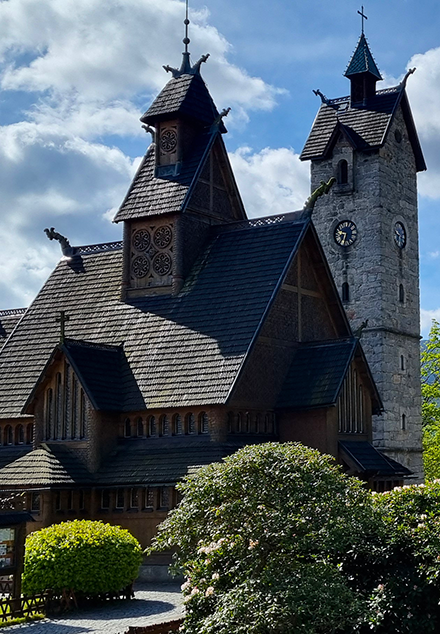
Ówczesny władca Norwegów, Olaf drugi Haraldson znosi w kraju pogaństwo, zastępując je wiarą w jedynego Boga w Trójcy Świętej. Po tym wydarzeniu w okresie od jedenastego do trzynastego wieku powstają w Norwegii drewniane kościoły łączące w sobie cechy tradycyjnych pogańskich świątyń skandynawskich z wczesno chrześcijańską architekturą romańską.
Są to kościoły o konstrukcji słupowo- szkieletowej, tak zwane stavkirke. Za materiał służą przyrdzeniowe części twardych skandynawskich sosen. Nie stosowano gwoździ. Trwałość konstrukcji opierając na jałowcowych kołkach i zaciosach. Potomkowie Wikingów mających kontakty z wieloma kulturami zdobili świątynie, łącząc własne tradycje z romańskimi, bizantyjskimi, a nawet saraceńskimi i perskimi. Ponad pięć wieków później, w tysiącosiemset czterdziestym roku, ewangelicka rada parafii Wang nad jeziorem Wangsmusen w południowej Norwegii, zdecydowała się sprzedać popadającą w ruinę świątynię i zdobyć w ten sposób środki finansowe na budowę nowego Kościoła. Johan Christian Dahl, norweski wykładowca na Akademii Sztuk Pięknych w Dreźnie, zdołał namówić na jej zakup króla Prus.
Tak oto latem tysiącosiemset czterdziestego pierwszego roku wszystkie zdatne do użytku elementy załadowano do ogromnych skrzyń i drogą wodną wyekspediowano do portu w Szczecinie. Z przekazów wynika, że statek wiozący kościół Wang cudem tylko uniknął zatopienia podczas potężnego sztormu, który dopadł go podczas przepływania przez duńskie cieśniny. Przepiękne dzieło skandynawskich cieśli i snycerzy znalazło się w końcu w Muzeum Starym w Berlinie. Zamierzano je odtworzyć w miejskich ogrodach na Wyspie Pawiej, lecz wtedy nastąpił kolejny zwrot jego dziejów. Wróćmy teraz do rzeźby Łazarza i skierujmy się w prawo. Po kilkunastu metrach staniemy przed klasycystycznym epitafium.





Visit Social media:
Share Social media: