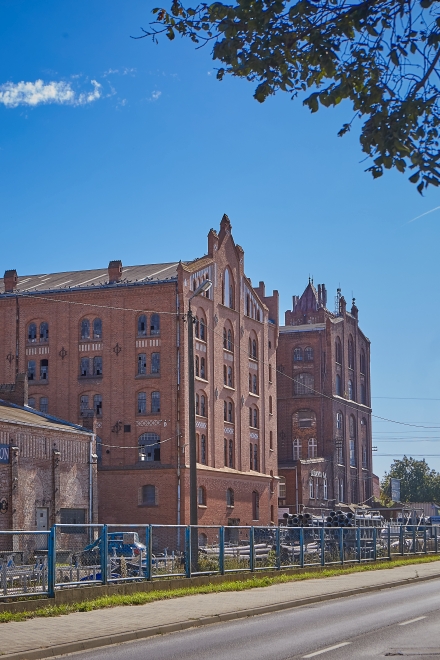
Buildings of the former Potato Plant

Hello, traveler. My name is Marian Ginter, and in the 1970s, I was the deputy director of the Luboń Potato Plant. I'm here so you can hear what I hear when I close my eyes. Not the machines. Not the smoke. Not the sirens. Only the voices of several generations of Luboń residents. A mixture of joy, fear, despair, and admiration. Let me briefly tell you what they say…

Know that the history of this place doesn't begin with me. I came later. It was November 1904. Back then, German companies bought land from Polish farmers, where two separate Koehlmann plants were built. The first was the Potato Processing Factory, the second the Yeast Factory.

For those times, everything here was very modern. The neighbors at the Sinner Yeast Factory, however, had more monumental buildings. They drew on Romanesque and Gothic styles, reminiscent of medieval fortresses or cathedrals. But Koehlmann opted for something different here. Jugendstil, or the young style known in Poland as Art Nouveau. Ornate cornices, undulating gables, balconies, alcoves, windows with their decorative layouts—all of this captivated even those less sensitive to art. Today, even ruins are impressive. For example, the impressive director's villa.

And there, behind the facade—in parallel lines—were built a starch factory, potato flour drying facilities, and pulp mills. In 1907, a dextrin factory was also added. See those buildings around? Those are the remains of a workers' housing estate. They were built for specialized staff brought in from Germany. And what about the locals? Well, they were hired as unskilled laborers.

Buildings of the former Potato Plant

Visit Social media:

Share Social media:

How it working

To listen to the history of monuments as part of the "Discover History" project, you need to follow a few simple steps. Below, we present a short, step-by-step "user manual" to provide a relatively simple way to access the mini-auditions.

STEP 1

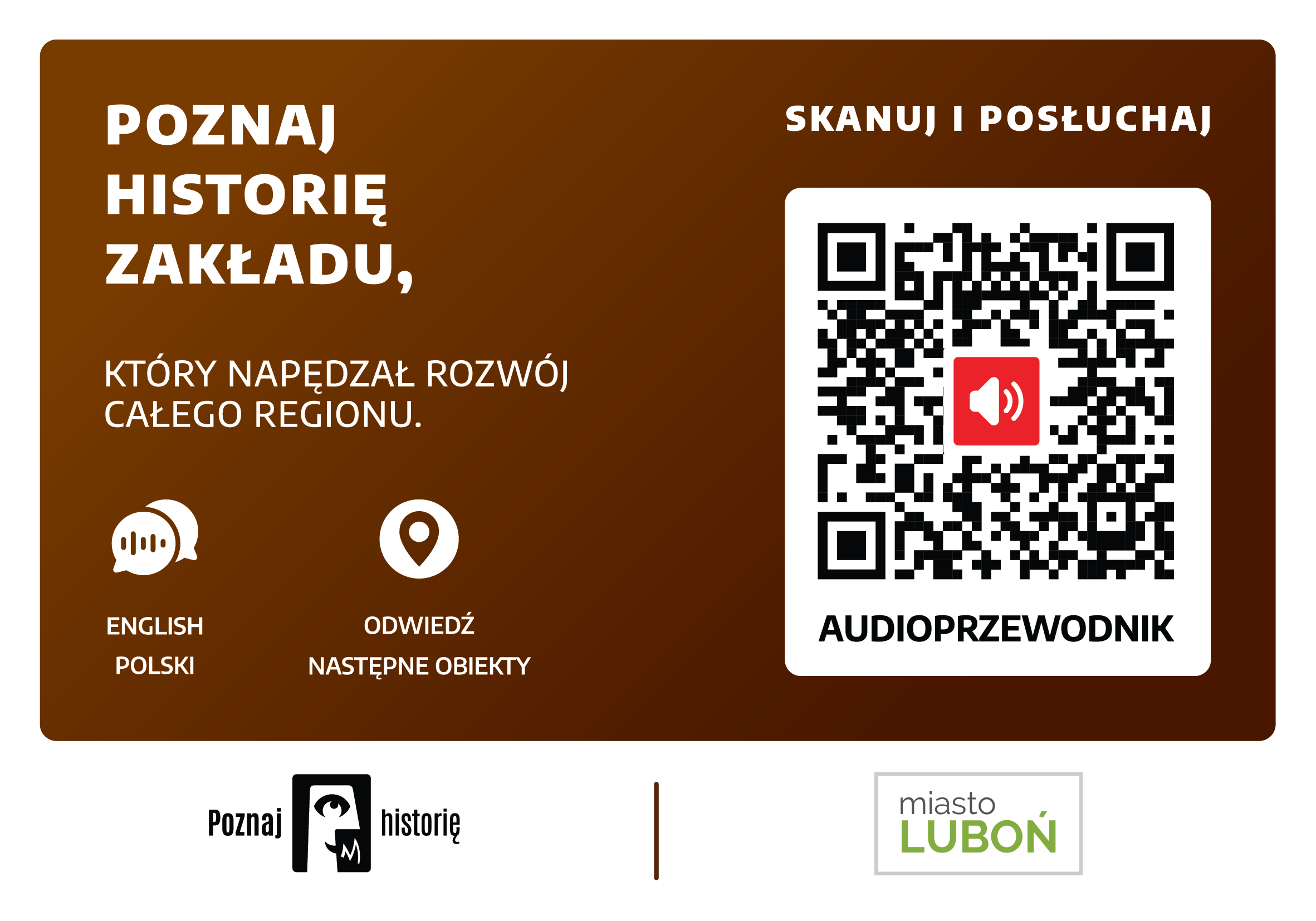
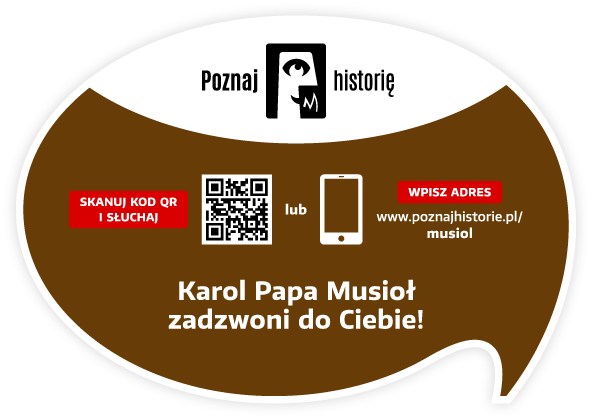
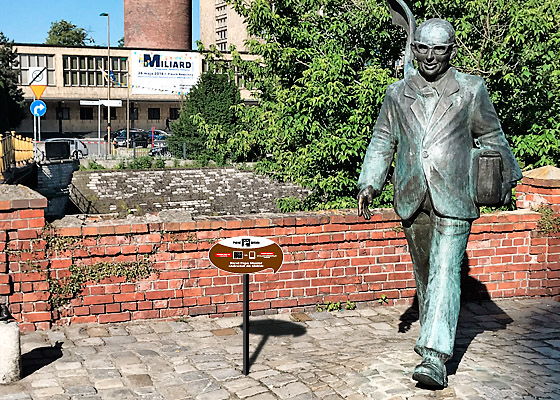
You need a smartphone with a camera. The camera lens should be pointed at the information plaque located next to the monument. Below is a view of the plaque itself and its example location next to the Karol Musioł monument in Opole.

STEP 2

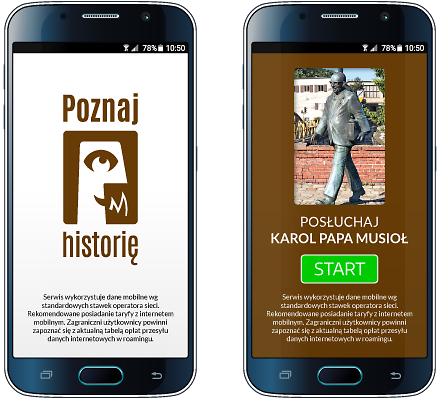
After pointing your smartphone's camera at the QR code located on the right side of the plaque, the app's welcome screen will appear, followed by a screen with the name, photo of the monument, and the "START" button.

STEP 3

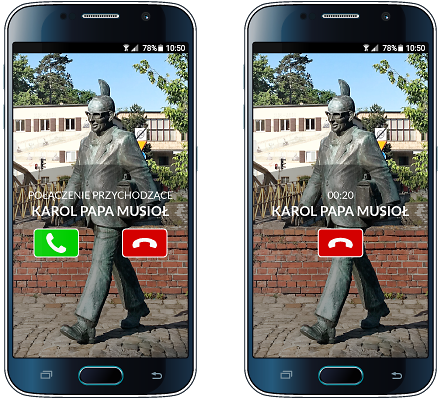
The "START" button starts the audio recording process.
Your smartphone will prompt you with the next steps after you listen to the story or pause it. Please keep an eye on your smartphone screen!

STEP 4

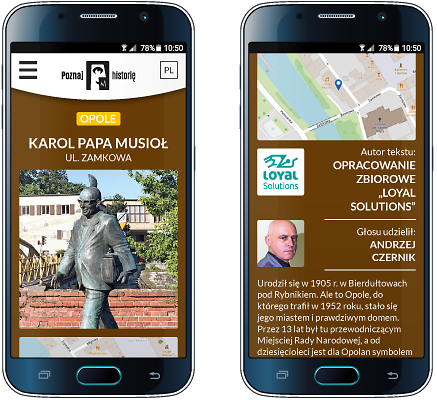
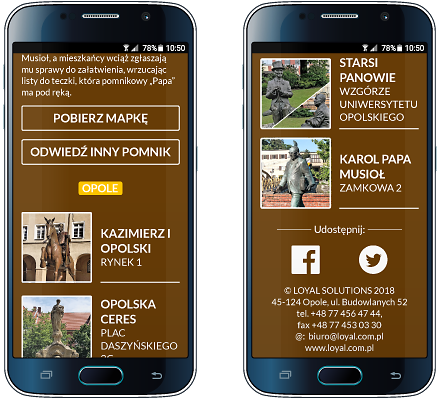
Other available options: brief information about the monument, author of the text and recording, list of other monuments in the city included in the "Discover History" project, downloadable map of monuments, video, and social media links


Would you like to implement the project in your city as well?

Contact

Project partners

Implementing the "Discover history" project in each city requires the involvement of many people: programmers, graphic designers, writers, actors, sound engineers, and coordinators. It is thanks to them that this project came to life.

Our ambition is to continually expand its reach. Therefore, we thank our current partners and invite additional cities, institutions, companies, and individuals to collaborate!


Would you like to become our Partner of the project or monument?

Contact

Contact

Are you interested in implementing the project in your city? Want to learn more? Want to learn more? Write to us, call us! We'll contact you and arrange a meeting. We'll prepare materials and a proposal for you.