The Saturn mine was established on the area of the presbytery farm. It was bought in 1869 by a lawyer from Warsaw, Ludwik Kozłowski. Later, the mine was bought by a group of factory owners from Łódź. Thanks to this investment, they decided to become independent from fluctuations in coal prices and reduce production costs in their factories. On February 13, 1899, they created the Saturn Consortium, and thus one of the better managed coal companies.
The development of the mine, of course, resulted in the development of settlement. Mining estates with all rich infrastructure were built.
The time of World War II was the most difficult moment in the hundred-year history of the mine. After it, the plant was taken over by the state and became part of the great plan for the reconstruction and development of the country. In 1950, at the request of the so-called "workers' activist", the Saturn mine was renamed the Red Guard. The original name was only returned to free Poland, after the transformations of 1989. The economic changes of the early 1990s, and above all hard economic analyzes, turned out to be ruthless for the plant. On January 1, 1993, the Saturn Mine was put into liquidation, which was completed at the end of 1996. Thus, after over a hundred years, the coal industry in Czeladź ceased to exist.
Today, one of the most dynamically operating cultural units functions in the former mining buildings. Artistic and social activities are carried out in the captivating interiors of the post-industrial showcase of Czeladź, full of the spirit of the past. In 2010, the gallery was included in the Industrial Monuments Route of the Silesian Voivodeship, and in 2016, in the Saturn Museum in Czeladź.
Saturn Mine and GSW Elektrownia
The Saturn mine, operating since 1887, and the Czeladź mine, which was not much older than it, were undoubtedly the driving force behind the development of not only the economy of Czeladź, but also the city itself. It is thanks to them that thousands of miners and their families have found a place to live here for over a century.


How it working
To listen to the history of monuments as part of the "Discover History" project, you need to follow a few simple steps. Below, we present a short, step-by-step "user manual" to provide a relatively simple way to access the mini-auditions.
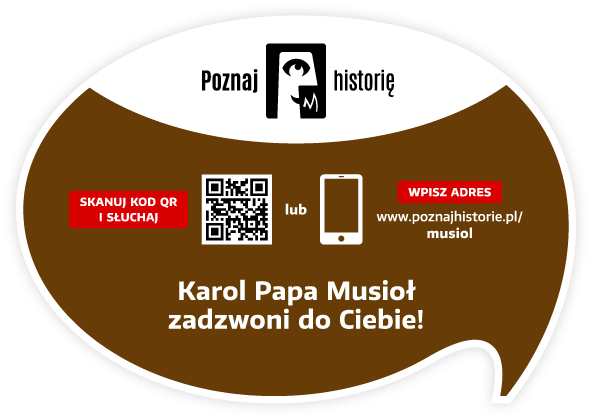
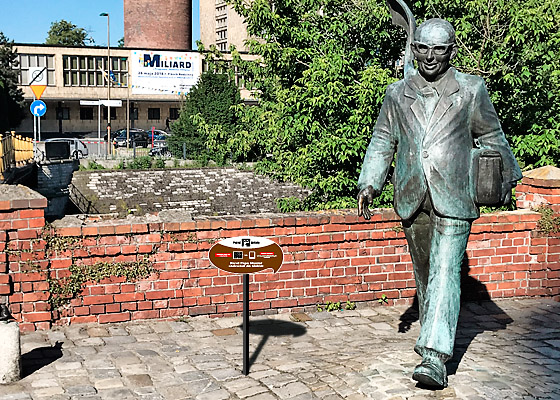
You need a smartphone with a camera. The camera lens should be pointed at the information plaque located next to the monument. Below is a view of the plaque itself and its example location next to the Karol Musioł monument in Opole.
After pointing your smartphone's camera at the QR code located on the right side of the plaque, the app's welcome screen will appear, followed by a screen with the name, photo of the monument, and the "START" button.
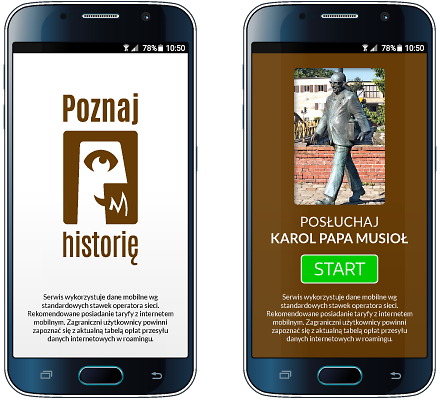
The "START" button starts the audio recording process.
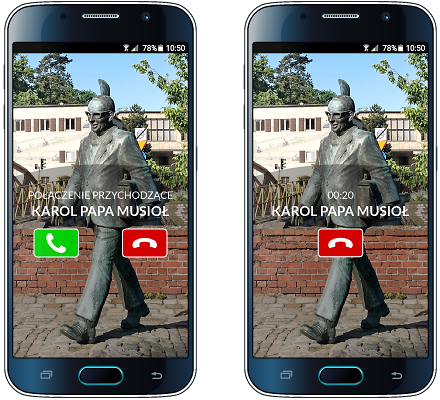
Your smartphone will prompt you with the next steps after you listen to the story or pause it. Please keep an eye on your smartphone screen!
Other available options: brief information about the monument, author of the text and recording, list of other monuments in the city included in the "Discover History" project, downloadable map of monuments, video, and social media links
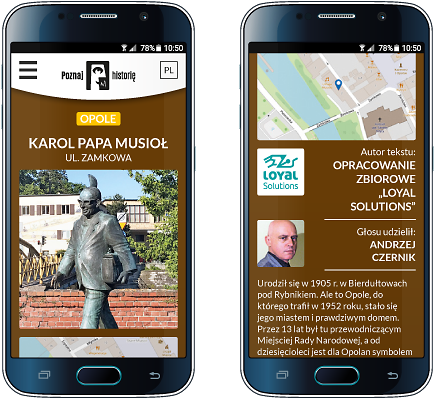
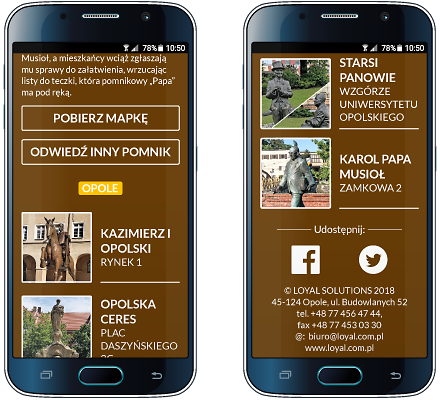
Would you like to implement the project in your city as well?
ContactView gallery
Monuments in cities remind us of the history of places and people, and allude to important events. They are also works of art. Bronze, metal, wood, or concrete transformed into the form of a monumental obelisk attract attention. We enjoy sitting by them, taking photos, and making appointments.
Project partners
Implementing the "Discover history" project in each city requires the involvement of many people: programmers, graphic designers, writers, actors, sound engineers, and coordinators. It is thanks to them that this project came to life.
Our ambition is to continually expand its reach. Therefore, we thank our current partners and invite additional cities, institutions, companies, and individuals to collaborate!

Would you like to become our Partner of the project or monument?
ContactContact
Are you interested in implementing the project in your city? Want to learn more? Want to learn more? Write to us, call us! We'll contact you and arrange a meeting. We'll prepare materials and a proposal for you.

QR Communication Sp. z o.o.
tel. +48 735 147 911
tel. +48 606 881 118
paulina.panusch@poznajhistorie.pl
kontakt@poznajhistorie.pl
Visit Social media:
Share Social media: