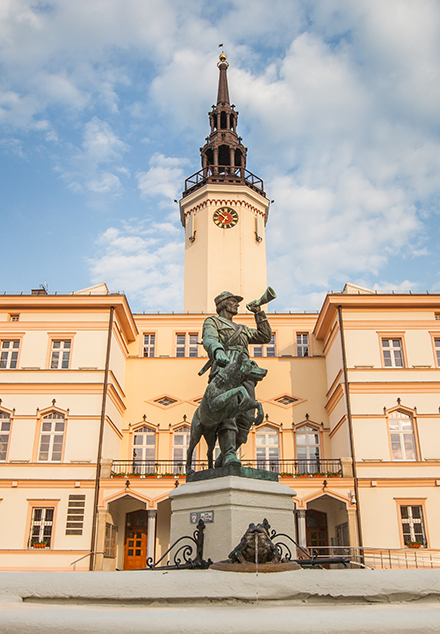
Jest widoczny na najwcześniejszym wizerunku miasta – obrazie z 1536. Wzmianki o nim znaleźć można w miejskim urbarzu, czyli dokumencie spisowym. A co ciekawe, w XVII i XVIII wieku, tuż obok ratusza mieściła się stacja pocztowa dla dyliżansów. Siedziba strzeleckich władz nader często nękana była przez żywioł ognia. Budynek i wieża stanęły w płomieniach między innymi w listopadzie roku pańskiego 1754, gdy w całym mieście szalał groźny pożar. Cztery lata później ratusz po tej tragedyji dźwignięto ze zniszczeń. Kolejny pożar zajął go w lipcu 1826 roku, a niespełna rok później, 18 czerwca 1827 roku, ogień strawił go całkowicie. Nowy ratusz wybudowano dopiero w latach 1844-46 według planów budowniczego Rocha. Kosztował on bagatela 43 tysiące talarów! Budynek nieco przebudowano w roku 1911. Niestety, jak większa część miasta, nie przetrwał on końca II wojny światowej… W styczniu 1945 roku opuszczający Strzelce Rosjanie spalili większość budynków, z tutejszym zamkiem i ratuszem włącznie. Ten ostatni, na który patrzycie - neoklasycystyczny, trzykondygnacyjny - odbudowano dopiero w latach 60-tych XX wieku, wzorując się na starych planach i rycinach. A nawiązujący do nazwy miasta strzelec ze spiżu stanął tu w 1929 r. Dziś mieszkańcom i turystom kojarzy się z piastowskimi korzeniami miasta. Po drugiej stronie placu zaś znajduje się pomnik poświęcony Ofiarom Wojen i Przemocy, zwany śląską pietą.
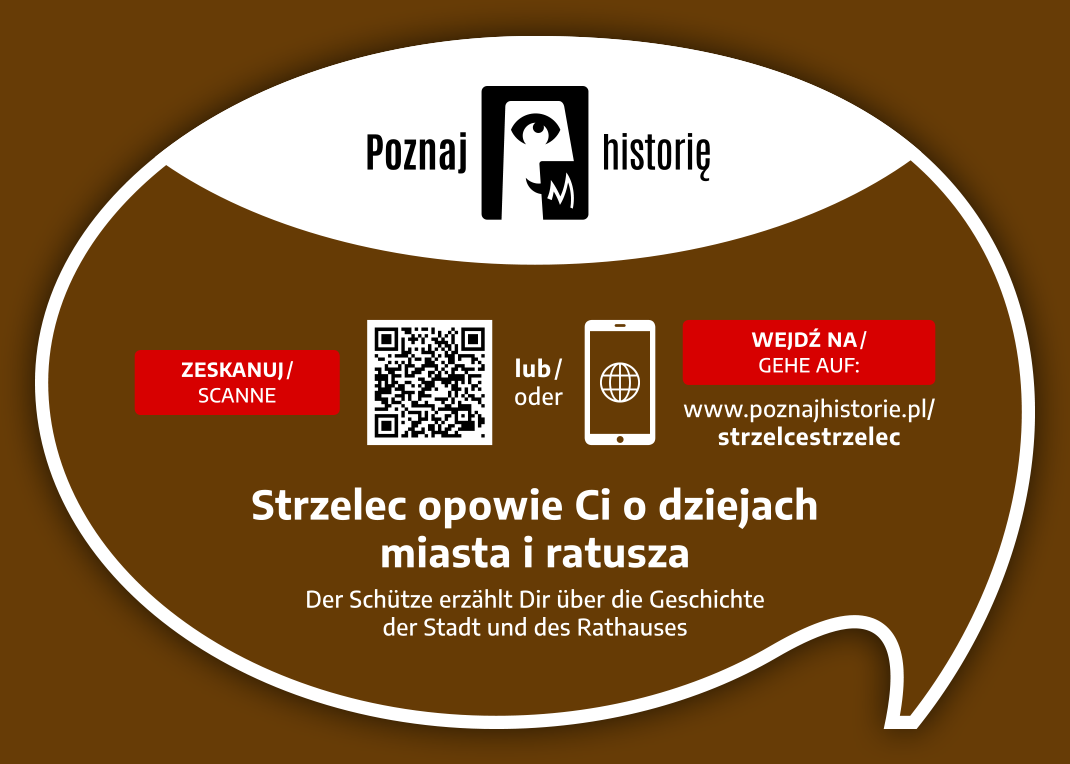
How it working
To listen to the history of monuments as part of the "Discover History" project, you need to follow a few simple steps. Below, we present a short, step-by-step "user manual" to provide a relatively simple way to access the mini-auditions.
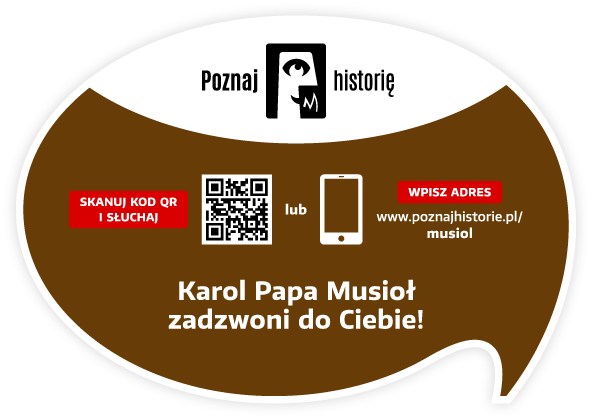
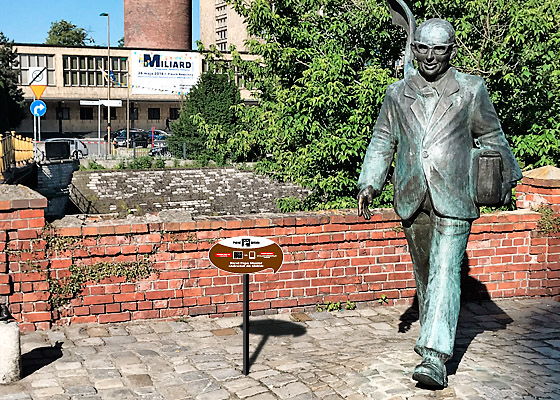
You need a smartphone with a camera. The camera lens should be pointed at the information plaque located next to the monument. Below is a view of the plaque itself and its example location next to the Karol Musioł monument in Opole.
After pointing your smartphone's camera at the QR code located on the right side of the plaque, the app's welcome screen will appear, followed by a screen with the name, photo of the monument, and the "START" button.
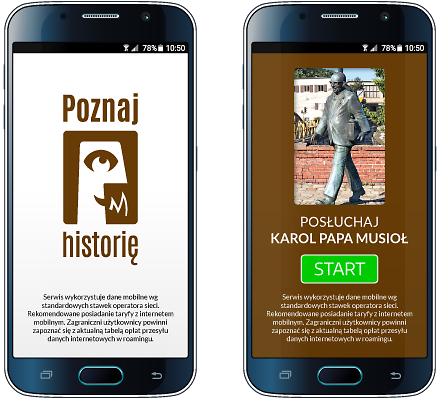
The "START" button starts the audio recording process.
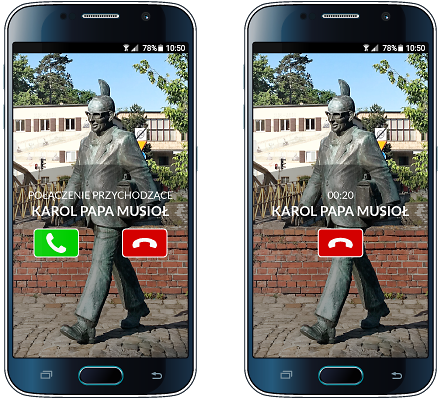
Your smartphone will prompt you with the next steps after you listen to the story or pause it. Please keep an eye on your smartphone screen!
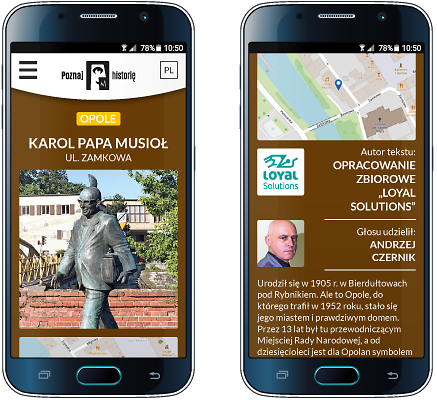
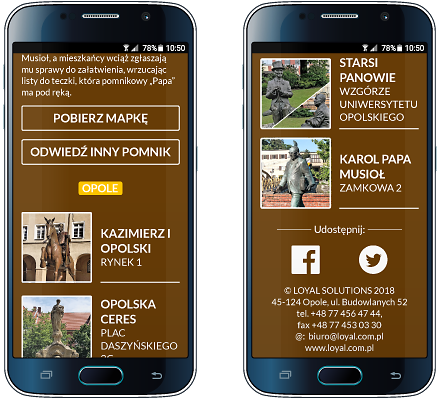
Other available options: brief information about the monument, author of the text and recording, list of other monuments in the city included in the "Discover History" project, downloadable map of monuments, video, and social media links
Would you like to implement the project in your city as well?
ContactView gallery
Monuments in cities remind us of the history of places and people, and allude to important events. They are also works of art. Bronze, metal, wood, or concrete transformed into the form of a monumental obelisk attract attention. We enjoy sitting by them, taking photos, and making appointments.
Project partners
Implementing the "Discover history" project in each city requires the involvement of many people: programmers, graphic designers, writers, actors, sound engineers, and coordinators. It is thanks to them that this project came to life.
Our ambition is to continually expand its reach. Therefore, we thank our current partners and invite additional cities, institutions, companies, and individuals to collaborate!

Would you like to become our Partner of the project or monument?
ContactContact
Are you interested in implementing the project in your city? Want to learn more? Want to learn more? Write to us, call us! We'll contact you and arrange a meeting. We'll prepare materials and a proposal for you.

QR Communication Sp. z o.o.
tel. +48 735 147 911
tel. +48 606 881 118
paulina.panusch@poznajhistorie.pl
kontakt@poznajhistorie.pl
Visit Social media:
Share Social media: