Kościół pobernardyński

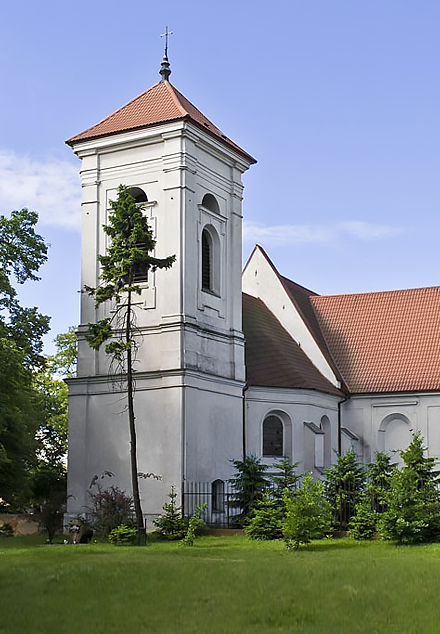
Kościół pobernardyński pod wezwaniem Najświętszej Maryi Panny jest najstarszy w Gołańczy. Ta architektoniczna perełka to jedyna pozostałość po dawnym zespole klasztornym.

Zbudowany został około 1500 roku, w stylu gotyckim. Jego przebudowę, a właściwie rozbudowę, zaczął około 1652 roku Jan Wojciech Smogulecki, zwany Olbrachtem. Prace te przerwał jednak najazd szwedzki. Przebudowę skończył w latach 1695 - 1700 kolejny dziedzic, Marcin Smogulecki.


W 1739 roku, w czasie pożaru, spaliły się piętro i wieża klasztoru. Po tym pożarze ówczesna właścicielka Gołańczy Marianna Malechowska odbudowała wieżę. A przy okazji, od strony południowej, dobudowała kaplicę Matki Boskiej. Drugą z kaplic, od strony północnej, dobudował kilkanaście lat później, bo w roku 1752 Piotr Raczyński z Białośliwia. I dzięki tym dwóm inwestycjom kościół zyskał kształt krzyża.


W 1827 roku, władze pruskie przeprowadziły sekularyzację klasztoru. Ostatnich zakonników przeniesiono i dwa lat później nastąpiła kasata zakonu. A jego dobra przeznaczono na zbór protestancki. Ostatecznie w 1869 roku władze pruskie rozebrały klasztor i zlikwidowały przyklasztorny cmentarz. Został tylko remontowany w końcu lat 60. XX wieku.


W środku szczególnie warto zobaczyć barokowy ołtarz główny z XVIII wieku, ze współczesnymi obrazami Matki Boskiej z Dzieciątkiem, a także oryginalną, kamienną posadzkę z osiemnastego stulecia  czy ambonę z początku XVIII wieku.
Kościół pobernardyński

Visit Social media:

Share Social media:

How it working

To listen to the history of monuments as part of the "Discover History" project, you need to follow a few simple steps. Below, we present a short, step-by-step "user manual" to provide a relatively simple way to access the mini-auditions.

STEP 1

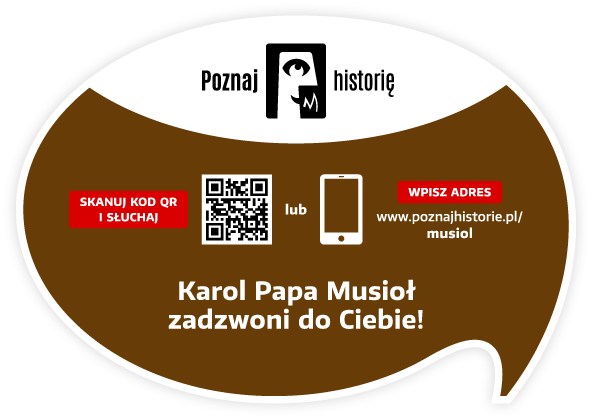
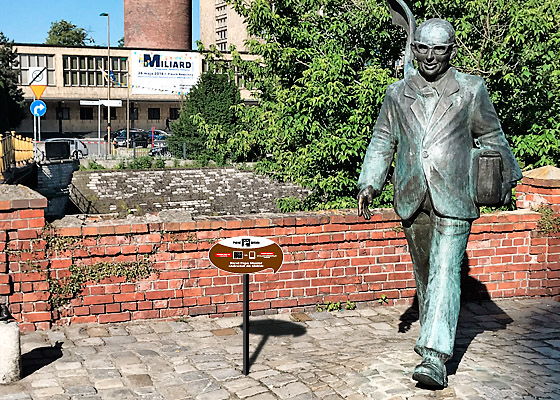
You need a smartphone with a camera. The camera lens should be pointed at the information plaque located next to the monument. Below is a view of the plaque itself and its example location next to the Karol Musioł monument in Opole.

STEP 2

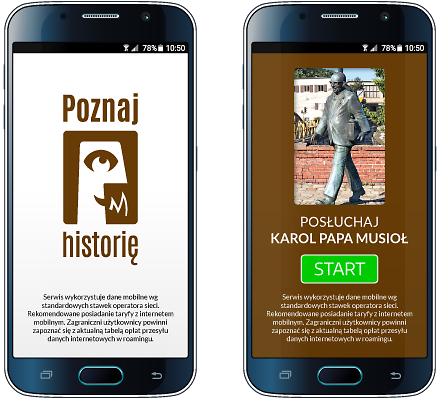
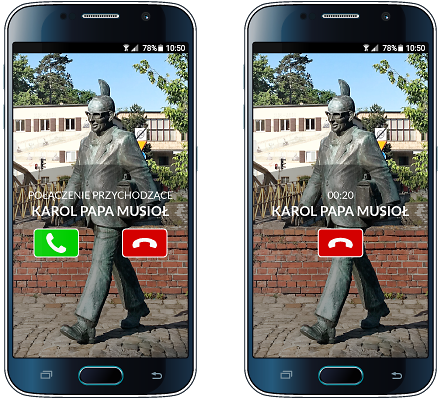
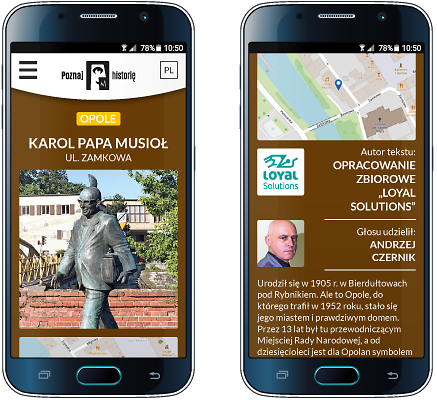
After pointing your smartphone's camera at the QR code located on the right side of the plaque, the app's welcome screen will appear, followed by a screen with the name, photo of the monument, and the "START" button.

STEP 3

The "START" button starts the audio recording process.
Your smartphone will prompt you with the next steps after you listen to the story or pause it. Please keep an eye on your smartphone screen!

STEP 4

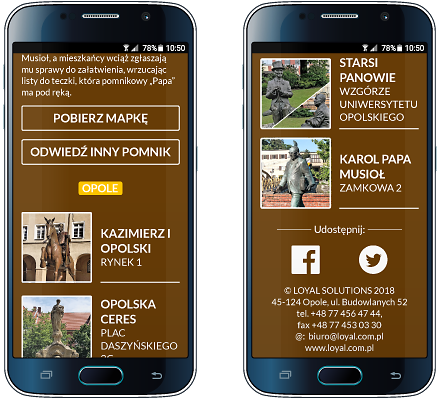
Other available options: brief information about the monument, author of the text and recording, list of other monuments in the city included in the "Discover History" project, downloadable map of monuments, video, and social media links


Would you like to implement the project in your city as well?

Contact

Project partners

Implementing the "Discover history" project in each city requires the involvement of many people: programmers, graphic designers, writers, actors, sound engineers, and coordinators. It is thanks to them that this project came to life.

Our ambition is to continually expand its reach. Therefore, we thank our current partners and invite additional cities, institutions, companies, and individuals to collaborate!


Would you like to become our Partner of the project or monument?

Contact

Contact

Are you interested in implementing the project in your city? Want to learn more? Want to learn more? Write to us, call us! We'll contact you and arrange a meeting. We'll prepare materials and a proposal for you.