Pomnik Żwirki i Wigury

28 sierpnia 1932 roku Franciszek Żwirko i Stanisław Wigura zwyciężyli w trzeciej edycji międzynarodowych zawodów Challenge International de Tourisme w Berlinie. Pokonali wówczas konkurentów z kilkunastu krajów Europy.

Niestety, ledwie kilkanaście dni po swoim wielkim sukcesie, słynni piloci zginęli w katastrofie.

Lecieli do Pragi na święto lotnictwa. Ich samolot, mocno nadwyrężony zawodami, nie wytrzymał naporu silnego wiatru i stracił skrzydła. Spadł w Cierlicku Dolnym w Czechosłowacji. Załoga poniosła śmierć na miejscu. Władze czechosłowackie z honorami przekazały ciała polskich bohaterów stronie polskiej na moście w Cieszynie. Pilotów pochowano z honorami na warszawskich Powązkach. Żegnały ich tłumy. W ceremonii wziął udział sam prezydent Ignacy Mościcki i marszałek Józef Piłsudski.

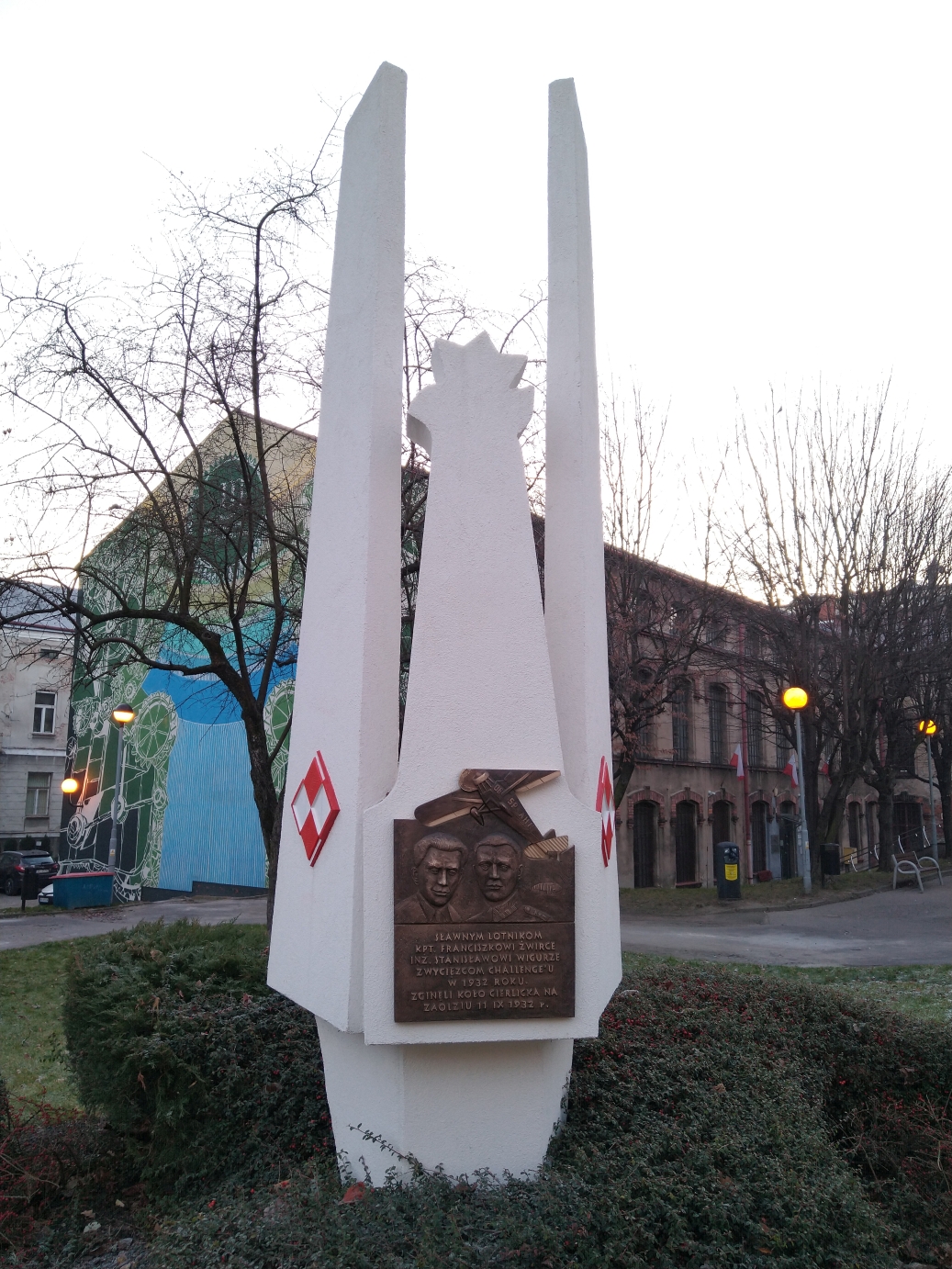
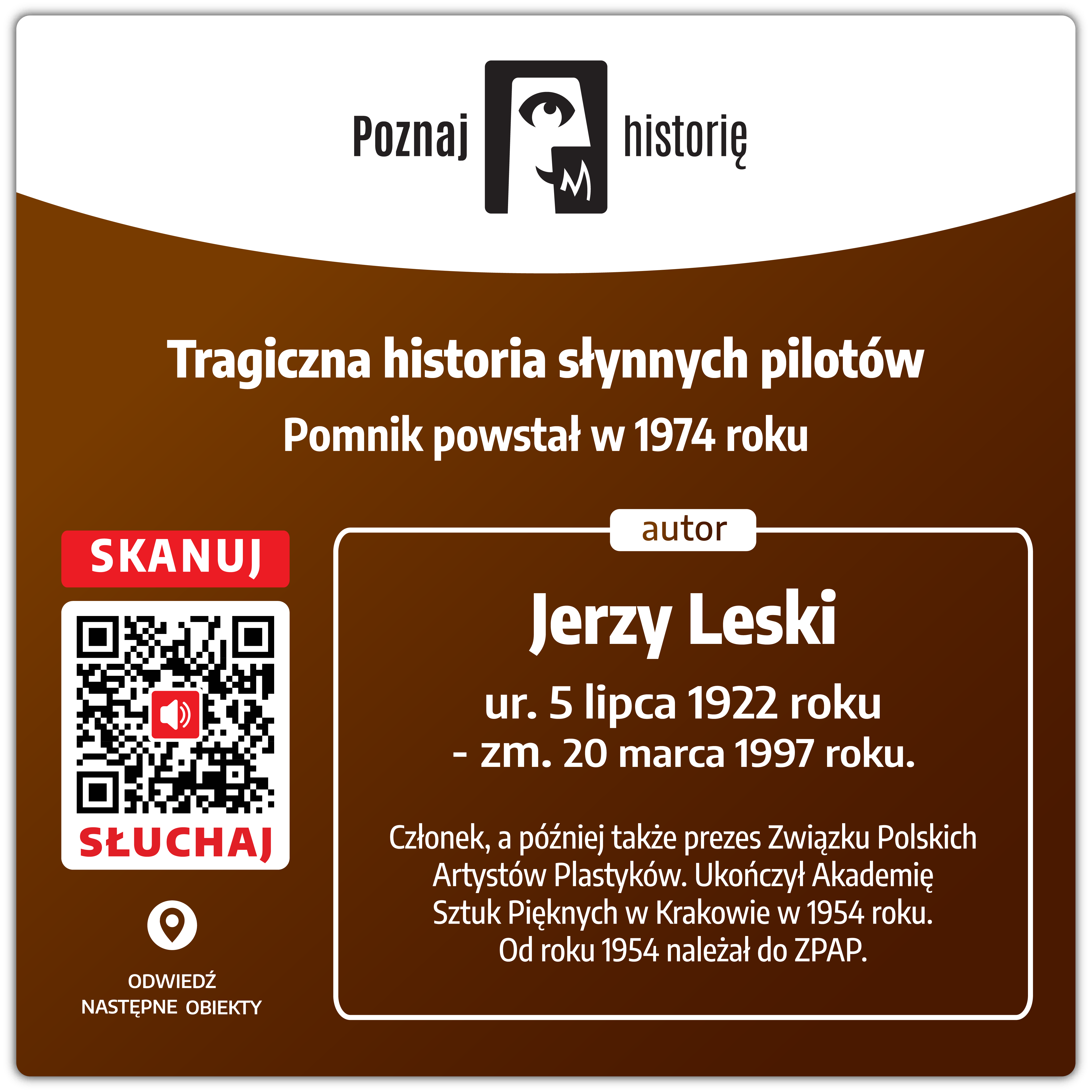
Plac Żwirki i Wigury, na którym się znajdujemy, zyskał swój kształt w roku 1974. Wtedy też pojawił się na nim właśnie ten obelisk w kształcie orła. Jednakże, ustawiony został w innej części placu niż obecnie, z boku, wśród drzew i krzewów. Zaprojektował go Jerzy Leski, członek, a później także prezes Związku Polskich Artystów Plastyków.

W latach 2005-2006 staraniem weteranów lotnictwa z bielskiego aeroklubu, monument przeniesiono w obecne miejsce, odnowiono i dodano przed pomnikiem ceramiczną tablicę poświęconą zmarłym bohaterom.

W 2024 roku pomnik przeszedł kolejny gruntowny remont, podczas którego wykonano także nową tablicę pamiątkową zachowującą stylistykę tablicy pierwotnej. Nową tablicę wykonano ze stopu brązu, a lokalizację przeniesiono na pierś orła.
Pomnik Żwirki i Wigury

Visit Social media:

Share Social media:

How it working

To listen to the history of monuments as part of the "Discover History" project, you need to follow a few simple steps. Below, we present a short, step-by-step "user manual" to provide a relatively simple way to access the mini-auditions.

STEP 1

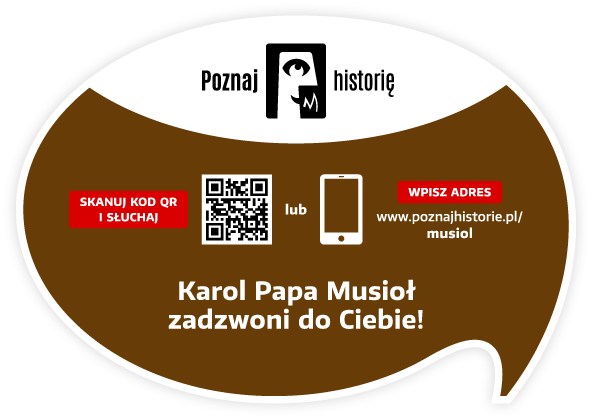
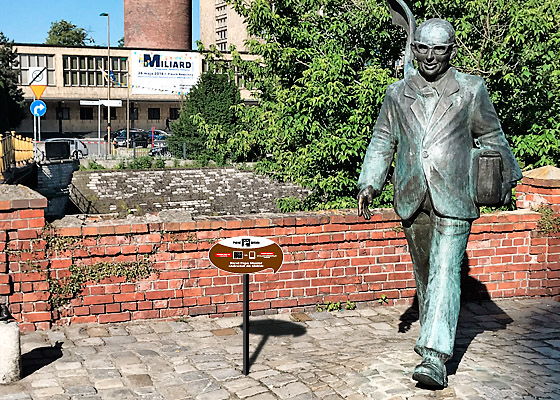
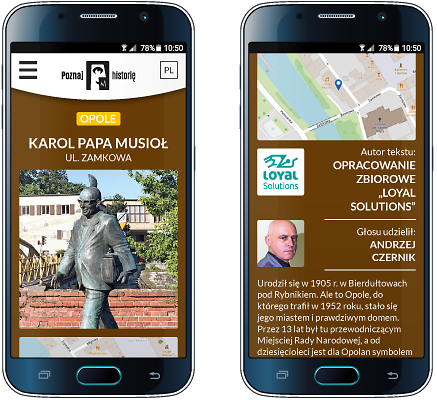
You need a smartphone with a camera. The camera lens should be pointed at the information plaque located next to the monument. Below is a view of the plaque itself and its example location next to the Karol Musioł monument in Opole.

STEP 2

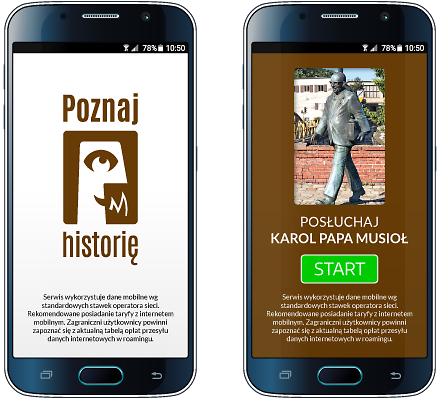
After pointing your smartphone's camera at the QR code located on the right side of the plaque, the app's welcome screen will appear, followed by a screen with the name, photo of the monument, and the "START" button.

STEP 3

The "START" button starts the audio recording process.
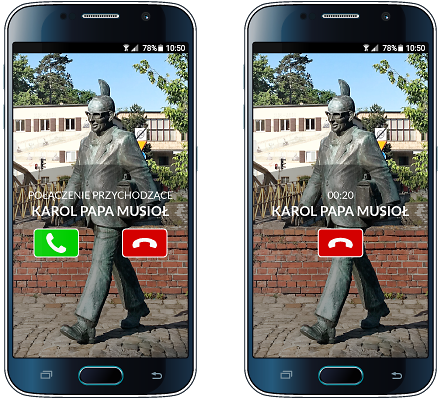
Your smartphone will prompt you with the next steps after you listen to the story or pause it. Please keep an eye on your smartphone screen!

STEP 4

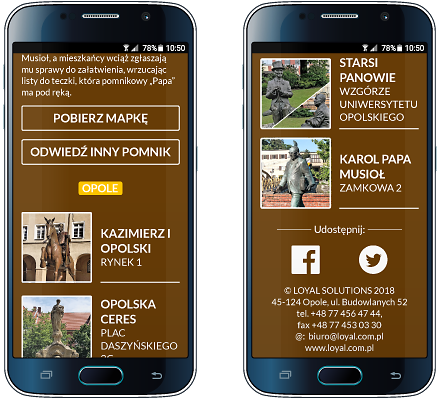
Other available options: brief information about the monument, author of the text and recording, list of other monuments in the city included in the "Discover History" project, downloadable map of monuments, video, and social media links


Would you like to implement the project in your city as well?

Contact

Project partners

Implementing the "Discover history" project in each city requires the involvement of many people: programmers, graphic designers, writers, actors, sound engineers, and coordinators. It is thanks to them that this project came to life.

Our ambition is to continually expand its reach. Therefore, we thank our current partners and invite additional cities, institutions, companies, and individuals to collaborate!


Would you like to become our Partner of the project or monument?

Contact

Contact

Are you interested in implementing the project in your city? Want to learn more? Want to learn more? Write to us, call us! We'll contact you and arrange a meeting. We'll prepare materials and a proposal for you.