The city was founded in 1308. It was done by the third resident bishop of Warmia, Eberhard of Nysa in Silesia. The fact that the founder of the city came from Silesia influenced the appearance of the city. German and Polish settlers from Silesia came to the newly created city. The city grew rapidly. In the fourteenth century, the town hall, church and hospital were built. In the second half of the 14th century, the city was surrounded by walls with towers and gates. The main merit of John of Meissen, who in 1350 chose the city as the seat of Warmia bishops.
In the same year, he started building a brick castle. It is one of the main tourist attractions of Lidzbark. It is one of the most beautiful castles of this type in Poland. Construction began in 1350. It was a representative building, built of red brick on stone foundations. The entire complex consisted of the castle proper and two wards: northern and southern. The high castle was surrounded by a perimeter defensive wall and a moat. Today there is a museum here, and the outer bailey has been converted into a hotel.
Unfortunately, the city experienced many tragedies afterwards. The biggest ones were: the six-year occupation during the Swedish Deluge and World War II. In 1945, the Red Army destroyed 80 percent of Lidzbark.
Lidzbark
Lidzbark was called the Pearl of Warmia. Until the end of the 19th century, it was the largest city in Warmia and also its capital. It was also a large economic center, and in the Polish-Lithuanian Commonwealth it was the center of faith and culture.


How it working
To listen to the history of monuments as part of the "Discover History" project, you need to follow a few simple steps. Below, we present a short, step-by-step "user manual" to provide a relatively simple way to access the mini-auditions.
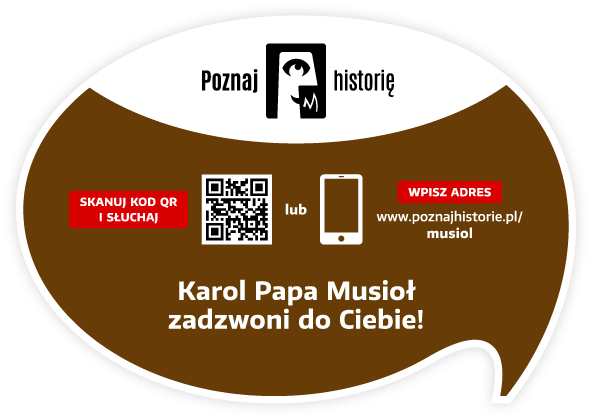
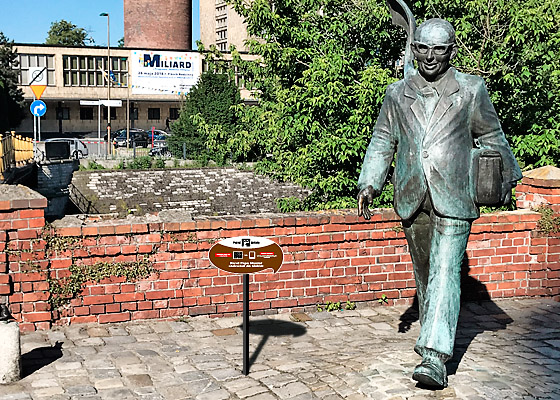
You need a smartphone with a camera. The camera lens should be pointed at the information plaque located next to the monument. Below is a view of the plaque itself and its example location next to the Karol Musioł monument in Opole.
After pointing your smartphone's camera at the QR code located on the right side of the plaque, the app's welcome screen will appear, followed by a screen with the name, photo of the monument, and the "START" button.
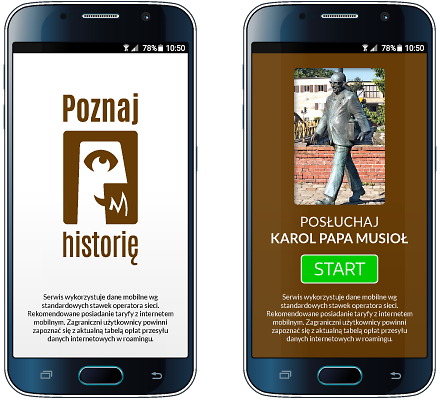
The "START" button starts the audio recording process.
Your smartphone will prompt you with the next steps after you listen to the story or pause it. Please keep an eye on your smartphone screen!
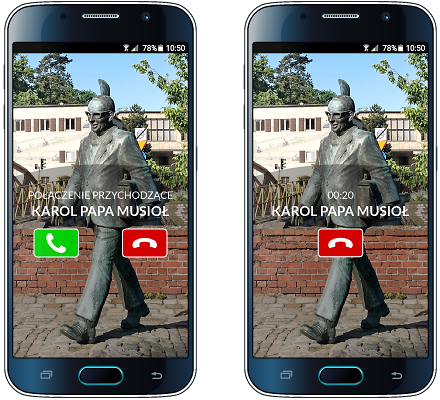
Other available options: brief information about the monument, author of the text and recording, list of other monuments in the city included in the "Discover History" project, downloadable map of monuments, video, and social media links
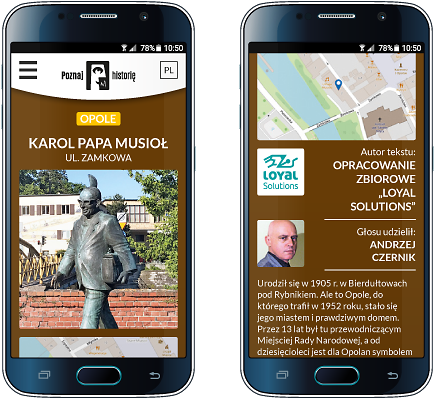
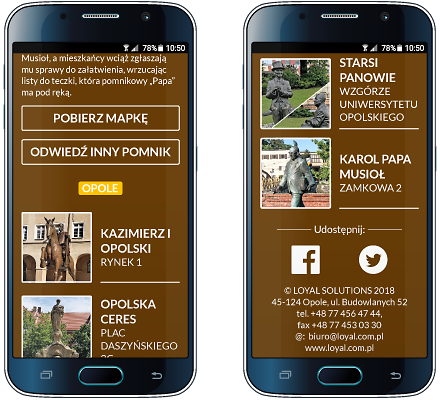
Would you like to implement the project in your city as well?
ContactView gallery
Monuments in cities remind us of the history of places and people, and allude to important events. They are also works of art. Bronze, metal, wood, or concrete transformed into the form of a monumental obelisk attract attention. We enjoy sitting by them, taking photos, and making appointments.
Contact
Are you interested in implementing the project in your city? Want to learn more? Want to learn more? Write to us, call us! We'll contact you and arrange a meeting. We'll prepare materials and a proposal for you.

QR Communication Sp. z o.o.
tel. +48 735 147 911
tel. +48 606 881 118
paulina.panusch@poznajhistorie.pl
kontakt@poznajhistorie.pl
Visit Social media:
Share Social media: