It started with securing historic wooden buildings, which were soon to be demolished. Then the object was carefully disassembled, transported in parts to the open-air museum, and then reassembled. For each relocated building, attempts were also made to find a function that was reasonably close to the original one. All this so that the facility can earn money on its own.
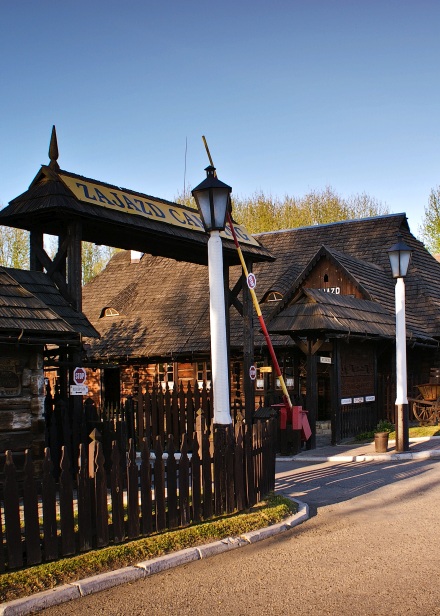
Pastewnik houses buildings from the 17th to the beginning of the 20th century. Here you will see original rural and bourgeois rooms, log houses and manor houses, covered with wooden shingles, with wooden gutters and small windows. And all surrounded by old trees and wooden fences, with hollyhocks, sunflowers and pansies typical of the old landscape.
Skansen Pastewnik
In Pastewnik, there are several, mostly wooden, buildings from the past centuries. The idea for an open-air museum came up in the early 1970s. They wanted to create it on the model of a typical Galician town, with a market square in the middle, and a traditional Galician village. Work started in 1976.
How it working
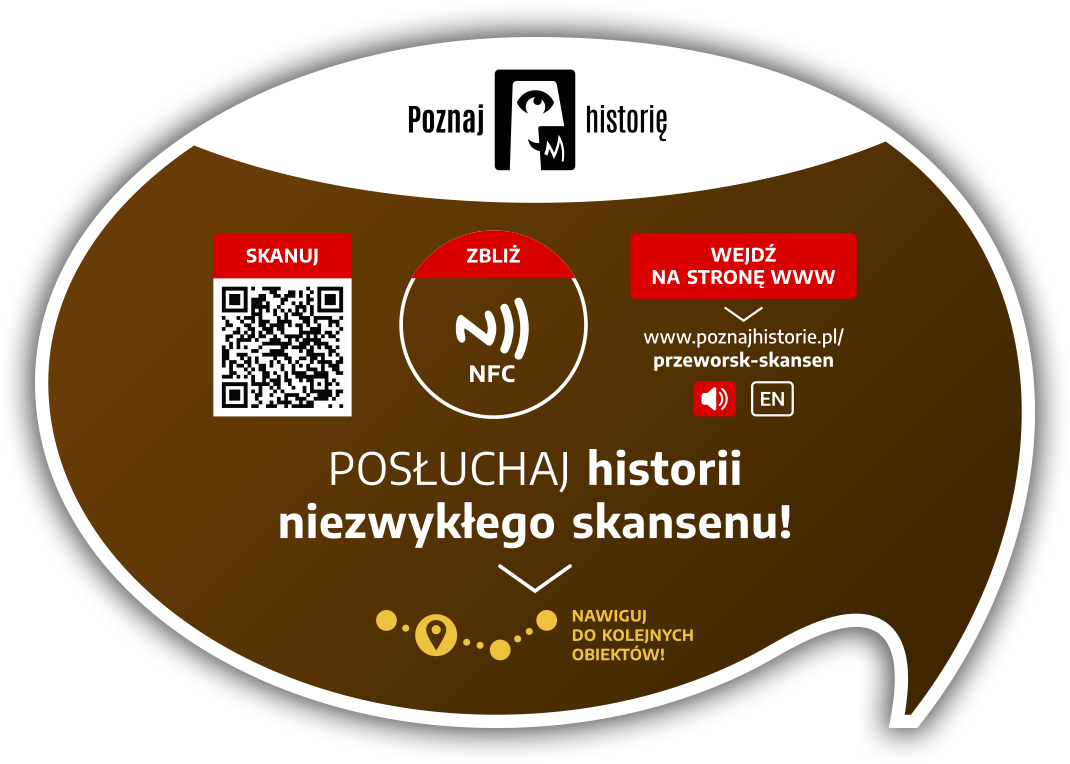
To listen to the history of monuments as part of the "Discover History" project, you need to follow a few simple steps. Below, we present a short, step-by-step "user manual" to provide a relatively simple way to access the mini-auditions.
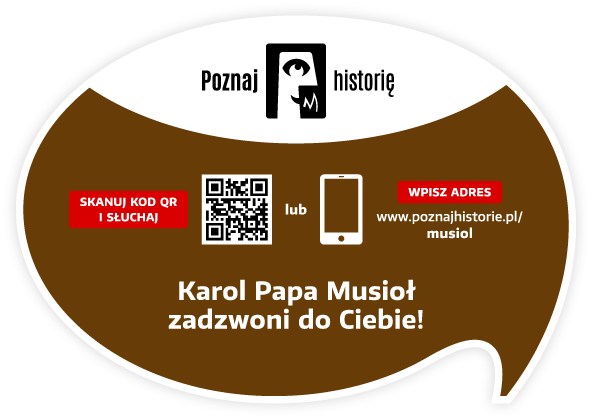
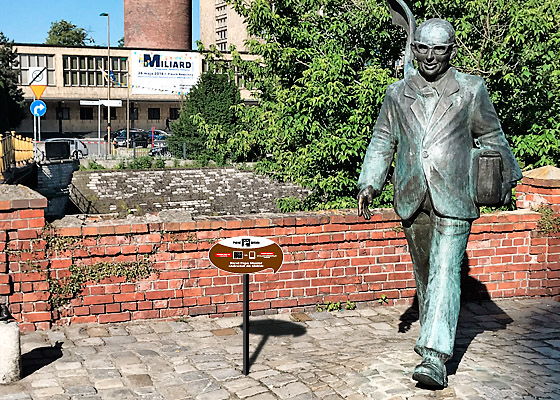
You need a smartphone with a camera. The camera lens should be pointed at the information plaque located next to the monument. Below is a view of the plaque itself and its example location next to the Karol Musioł monument in Opole.
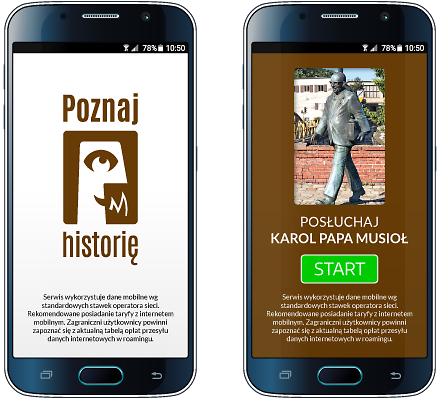
After pointing your smartphone's camera at the QR code located on the right side of the plaque, the app's welcome screen will appear, followed by a screen with the name, photo of the monument, and the "START" button.
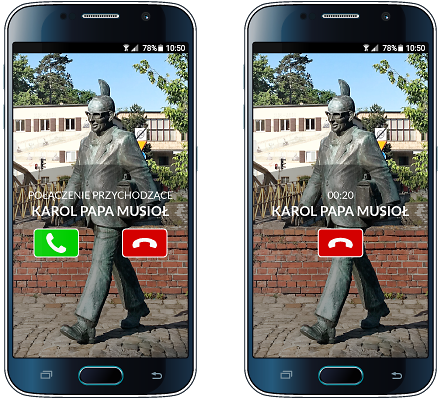
The "START" button starts the audio recording process.
Your smartphone will prompt you with the next steps after you listen to the story or pause it. Please keep an eye on your smartphone screen!
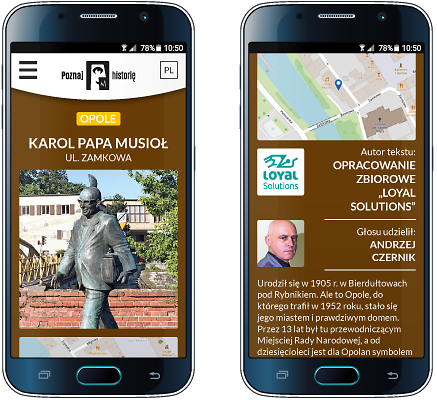
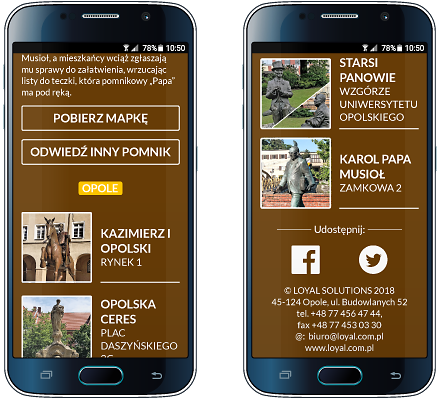
Other available options: brief information about the monument, author of the text and recording, list of other monuments in the city included in the "Discover History" project, downloadable map of monuments, video, and social media links
Would you like to implement the project in your city as well?
ContactView gallery
Monuments in cities remind us of the history of places and people, and allude to important events. They are also works of art. Bronze, metal, wood, or concrete transformed into the form of a monumental obelisk attract attention. We enjoy sitting by them, taking photos, and making appointments.
Project partners
Implementing the "Discover history" project in each city requires the involvement of many people: programmers, graphic designers, writers, actors, sound engineers, and coordinators. It is thanks to them that this project came to life.
Our ambition is to continually expand its reach. Therefore, we thank our current partners and invite additional cities, institutions, companies, and individuals to collaborate!

Visit Social media:
Share Social media: