A skąd tutaj tylu Czechów? Przybyli oni do Polski w XVII wieku, a do Zelowa, na początku XIX wieku. Czyli wtedy, kiedy granice w Europie zmieniały się jak w kalejdoskopie wskutek podziałów terytorialnych pomiędzy Prusami, Rosją i Austrią. Dzisiejsze tereny Czech były wówczas pod wpływami bardzo katolickich Habsburgów. A Zelów i okolica pod znacznie bardziej otwartymi religijnie Prusami. Władze pruskie, chcąc skutecznie zaanektować zajęte ziemie Polskie, patrzyły przychylnym okiem na różne akcje osadnicze. Dlatego na początku kilkudziesięciu czeskich kolonistów zakupiło te ziemie od szlachcica Józefa Świdzińskiego, do którego należały. Zachował się nawet dokument z tej transakcji. Wiadomo także, że byli to głównie ludzie młodzi. Począwszy od 1802 roku, kiedy do Zelowa dotarli pierwsi czescy osadnicy, przez niemal cały XIX wiek byli oni w miejscowości większością. Z czasem, na skutek zmian polityczno-narodowościowych, w miasteczku pojawiało się coraz więcej Polaków, Niemców i Żydów. Na przełomie XIX i XX wieku Zelów dynamicznie się rozwijał. Przed I wojną światową w miejscowości działało – bagatela – mnóstwo warsztatów tkackich. W tym miejscu nie da się nie wspomnieć o rodzie Gąsiorowskich, którzy mieli ogromny wpływ na rozwój tej branży.
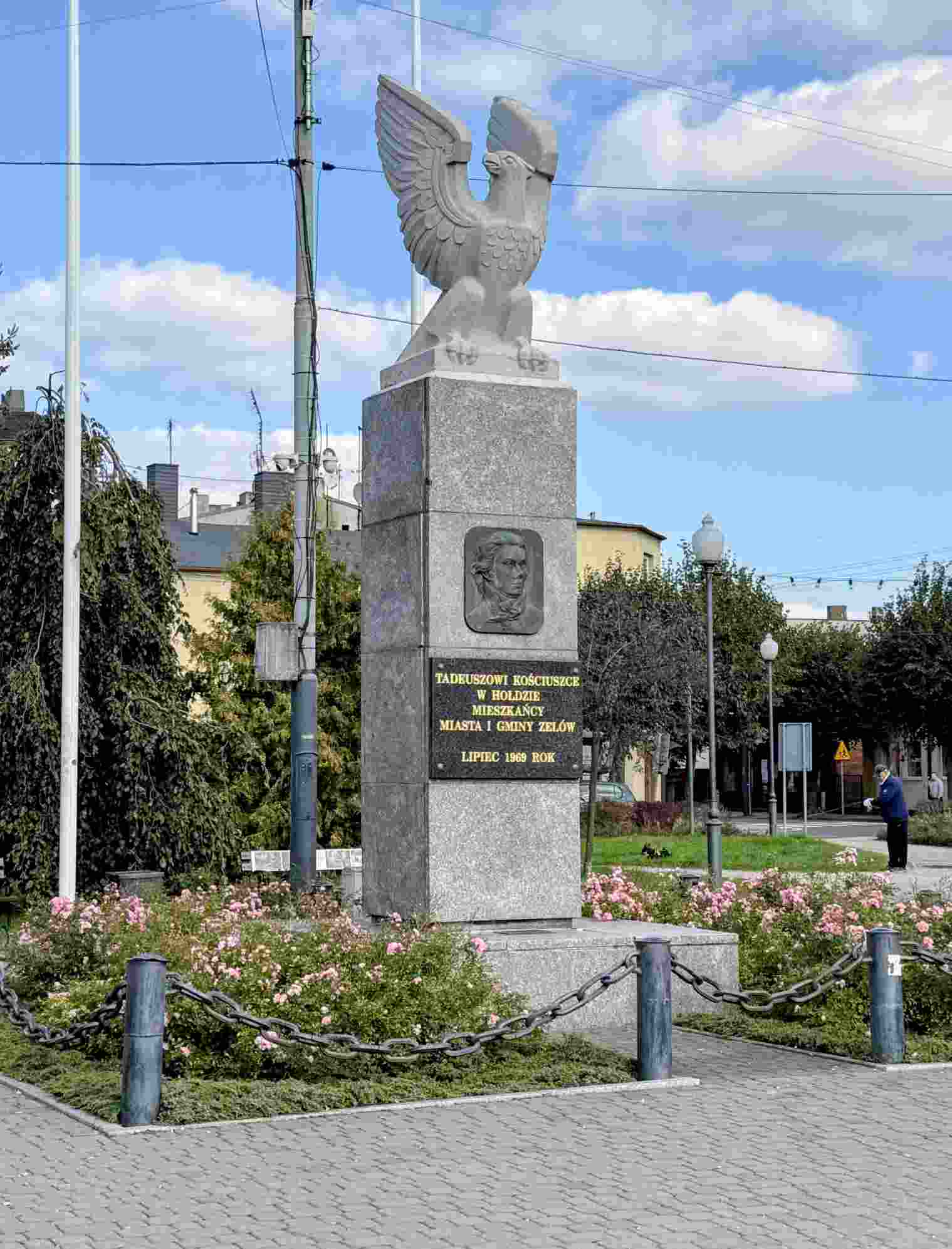
O obecność Kościuszki w postaci pomnika, który stoi przed nami, zadbali wspomniani Gąsiorowscy. Ów słynny ród powołał komitet budowy pomnika i zorganizował zbiórkę. Dzięki temu postument został sfinansowany przez mieszkańców Zelowa. Ukończono go już w 1924 roku, czyli jeszcze przed sławniejszym dziś pomnikiem Kościuszki w Łodzi.
Plac Dąbrowskiego
Można śmiało powiedzieć, że Zelów to najbardziej czeskie miasto w środkowej Polsce! A w jego sercu znajduje się plac Dąbrowskiego, potocznie nazywany rynkiem.
How it working
To listen to the history of monuments as part of the "Discover History" project, you need to follow a few simple steps. Below, we present a short, step-by-step "user manual" to provide a relatively simple way to access the mini-auditions.
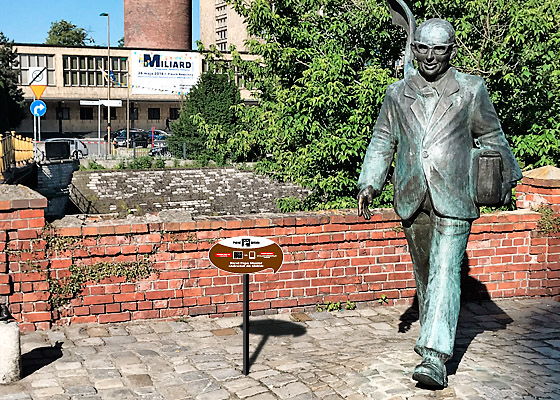
You need a smartphone with a camera. The camera lens should be pointed at the information plaque located next to the monument. Below is a view of the plaque itself and its example location next to the Karol Musioł monument in Opole.
After pointing your smartphone's camera at the QR code located on the right side of the plaque, the app's welcome screen will appear, followed by a screen with the name, photo of the monument, and the "START" button.
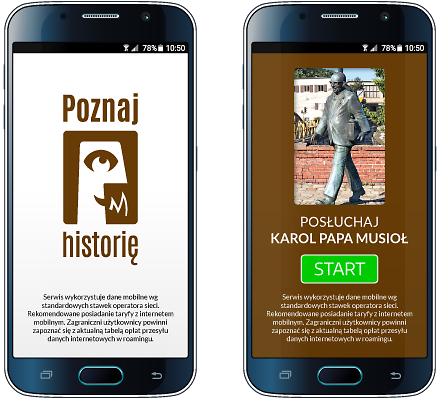
The "START" button starts the audio recording process.
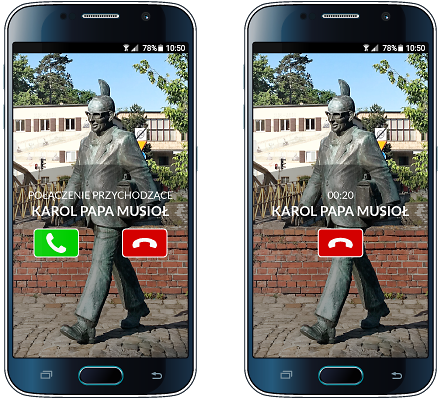
Your smartphone will prompt you with the next steps after you listen to the story or pause it. Please keep an eye on your smartphone screen!
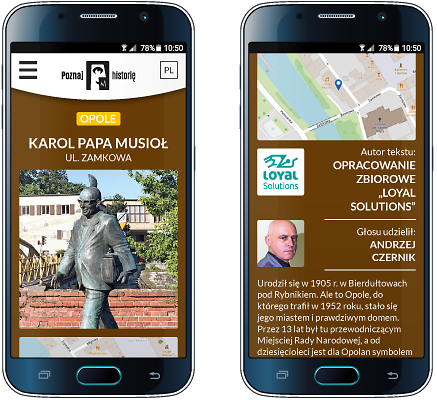
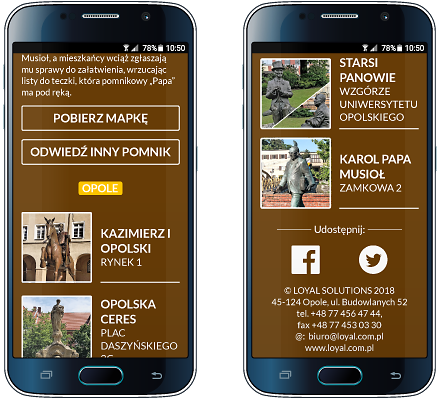
Other available options: brief information about the monument, author of the text and recording, list of other monuments in the city included in the "Discover History" project, downloadable map of monuments, video, and social media links
Would you like to implement the project in your city as well?
ContactView gallery
Monuments in cities remind us of the history of places and people, and allude to important events. They are also works of art. Bronze, metal, wood, or concrete transformed into the form of a monumental obelisk attract attention. We enjoy sitting by them, taking photos, and making appointments.
Project partners
Implementing the "Discover history" project in each city requires the involvement of many people: programmers, graphic designers, writers, actors, sound engineers, and coordinators. It is thanks to them that this project came to life.
Our ambition is to continually expand its reach. Therefore, we thank our current partners and invite additional cities, institutions, companies, and individuals to collaborate!

Would you like to become our Partner of the project or monument?
ContactContact
Are you interested in implementing the project in your city? Want to learn more? Want to learn more? Write to us, call us! We'll contact you and arrange a meeting. We'll prepare materials and a proposal for you.

QR Communication Sp. z o.o.
tel. +48 735 147 911
tel. +48 606 881 118
paulina.panusch@poznajhistorie.pl
kontakt@poznajhistorie.pl
Visit Social media:
Share Social media: