The development of the city begins when Słupca, on the initiative of the bishop of Poznań, Jan, received city rights. On November 15, 1290, in Dłusk, the Duke of Greater Poland Przemysł II agreed to the location of the city under German law. Thanks to the re-location of Słupca from 1296 (this time under the Średzki law), it received a whole range of new grants and privileges.
The location of the bishop's town near important trade routes had a very significant impact on its further development. In the 14th century, Prince Władysław the Short was a frequent visitor to the city.
During the Teutonic invasion in 1331, the town was completely burnt down. However, the reconstruction of Słupca did not last long. In the years 1375-82, the city was surrounded by a 1,100-meter-long defensive wall and the construction of the church of St. Lawrence.
To this day, the remains of the city walls and the brick church of St. Lawrence from the 15th century. In this Gothic temple, you can see a crucifix from the beginning of the 15th century, a historic statue of Our Lady of Sorrows and a baptismal font from the 16th century. There is also a 16th-century wooden church of St. Leonard. The city has the old oval street layout and several 19th-century buildings, incl. a historic house on Kościuszko Street, which used to be a post office inn.
History of Słupca
The first traces of settlement in the vicinity of Słupca come from prehistoric times. They were left by members of the original hunting groups. With time, during the Hallstatt period of the Lusatian culture (750-400 BCE), a fortified settlement was built on the island of Słupeckie Lake, which is the first evidence of the functioning of an organized human economy in this area.


How it working
To listen to the history of monuments as part of the "Discover History" project, you need to follow a few simple steps. Below, we present a short, step-by-step "user manual" to provide a relatively simple way to access the mini-auditions.
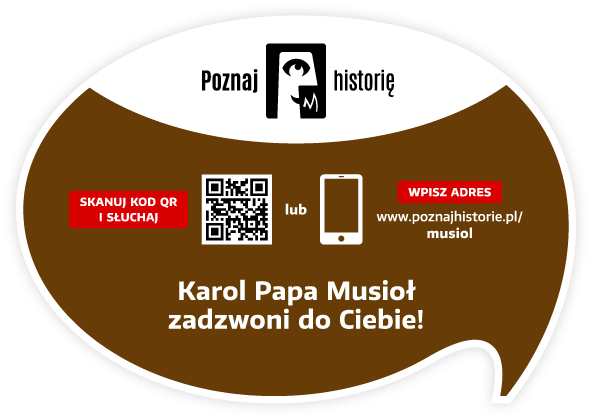
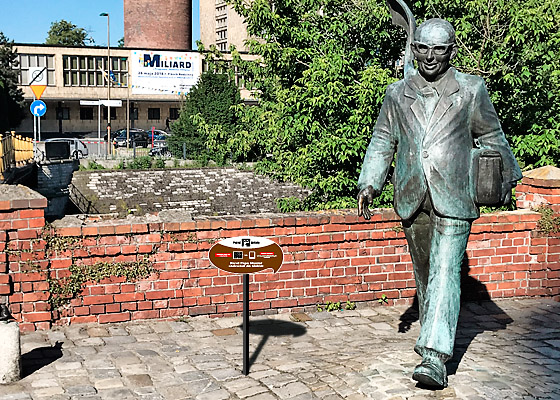
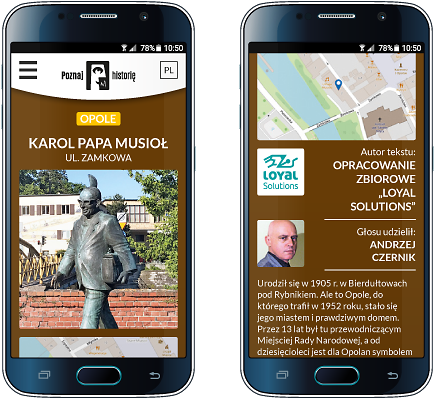
You need a smartphone with a camera. The camera lens should be pointed at the information plaque located next to the monument. Below is a view of the plaque itself and its example location next to the Karol Musioł monument in Opole.
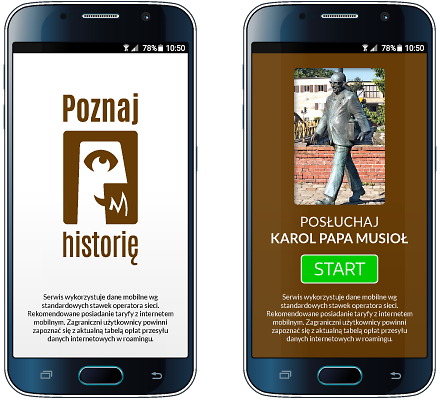
After pointing your smartphone's camera at the QR code located on the right side of the plaque, the app's welcome screen will appear, followed by a screen with the name, photo of the monument, and the "START" button.
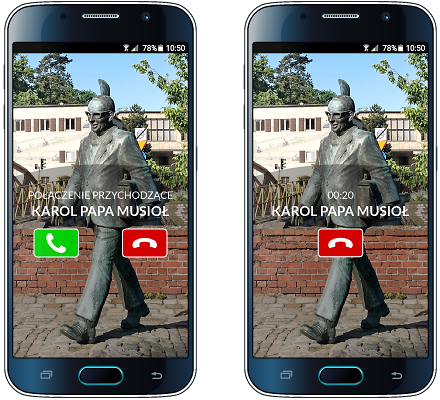
The "START" button starts the audio recording process.
Your smartphone will prompt you with the next steps after you listen to the story or pause it. Please keep an eye on your smartphone screen!
Other available options: brief information about the monument, author of the text and recording, list of other monuments in the city included in the "Discover History" project, downloadable map of monuments, video, and social media links
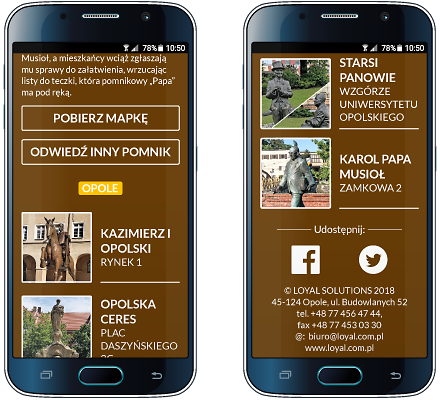
Would you like to implement the project in your city as well?
ContactView gallery
Monuments in cities remind us of the history of places and people, and allude to important events. They are also works of art. Bronze, metal, wood, or concrete transformed into the form of a monumental obelisk attract attention. We enjoy sitting by them, taking photos, and making appointments.
Project partners
Implementing the "Discover history" project in each city requires the involvement of many people: programmers, graphic designers, writers, actors, sound engineers, and coordinators. It is thanks to them that this project came to life.
Our ambition is to continually expand its reach. Therefore, we thank our current partners and invite additional cities, institutions, companies, and individuals to collaborate!

Would you like to become our Partner of the project or monument?
ContactContact
Are you interested in implementing the project in your city? Want to learn more? Want to learn more? Write to us, call us! We'll contact you and arrange a meeting. We'll prepare materials and a proposal for you.

QR Communication Sp. z o.o.
tel. +48 735 147 911
tel. +48 606 881 118
paulina.panusch@poznajhistorie.pl
kontakt@poznajhistorie.pl
Visit Social media:
Share Social media: