One of his works are the walls surrounding the center of Grodków. Bolko made the city a well-protected fortress. He started shortly after the city was founded, i.e. at the end of the 13th century. However, in the middle of the next century, Grodków had an efficient continuator - the bishop of Wrocław, Przecław from Pogorzela. He ordered the walls to be built up and strengthened. At that time, seven rectangular towers were built, and the fortifications were additionally reinforced with a moat, where today there are green belts running along the wall.
The fortifications of Grodków have been strengthened over the years. This was done by adapting the defenses to changing siege techniques. For example, in the times of the development of firearms, the perimeter of the walls was covered with a roof, and shooting holes for small firearms were pierced in the simple breast.
If you look at the city center from a bird's perspective, you will notice a characteristic ring of fortifications. It marked the border between the location center and the suburbs along trade routes. The ring has a regular shape similar to an oval.
The four gates that guarded the city were very important. They were set in four-sided gate towers or next to the towers in the curtains of the walls. These were: the Ziębice Gate at Warszawska Street from the west, the Lewińska Gate from the east at Józefa Elsnera Street, the now defunct Wrocław Gate from the north, and Nyska Gate from the south.
Grodków remains one of the few towns in Silesia where fortifications with towers are well preserved. To this day, the walls surround the city from the east, and their fragments are visible in the northern and southern parts. From the west, most of them have survived from the Ziębicka Gate at Warszawska Street, along the entire promenade to the south.
Historic city walls
He found Poland wooden and left it bricked - these words are invariably associated with the activities of Casimir the Great. Silesia, however, had its builder, and he did it 70 years before our famous king! I am talking about Bolek and Świdnicki.


How it working
To listen to the history of monuments as part of the "Discover History" project, you need to follow a few simple steps. Below, we present a short, step-by-step "user manual" to provide a relatively simple way to access the mini-auditions.
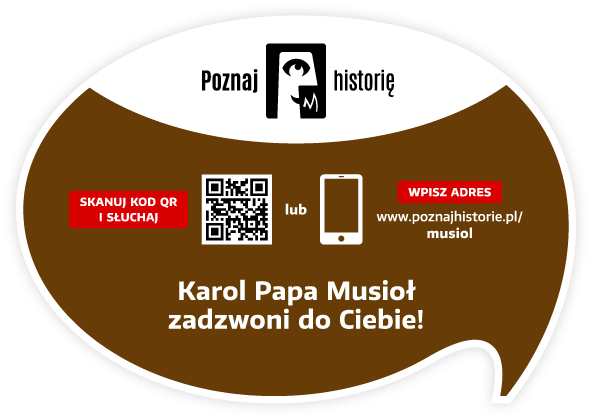
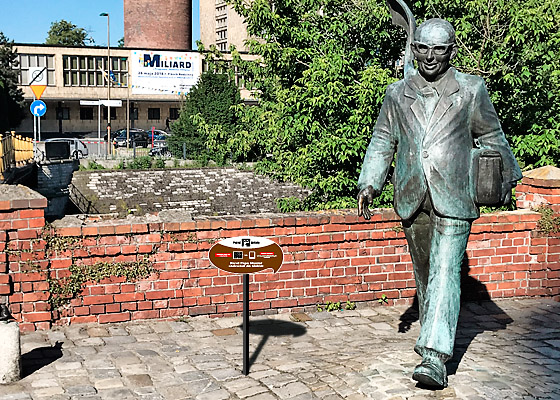
You need a smartphone with a camera. The camera lens should be pointed at the information plaque located next to the monument. Below is a view of the plaque itself and its example location next to the Karol Musioł monument in Opole.
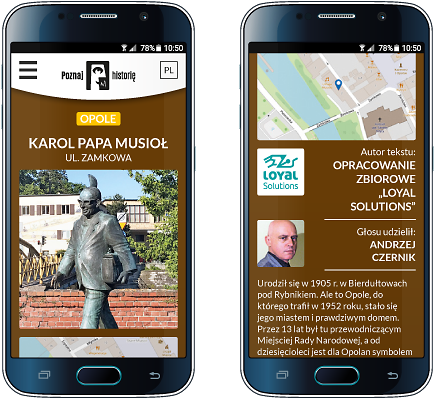
After pointing your smartphone's camera at the QR code located on the right side of the plaque, the app's welcome screen will appear, followed by a screen with the name, photo of the monument, and the "START" button.
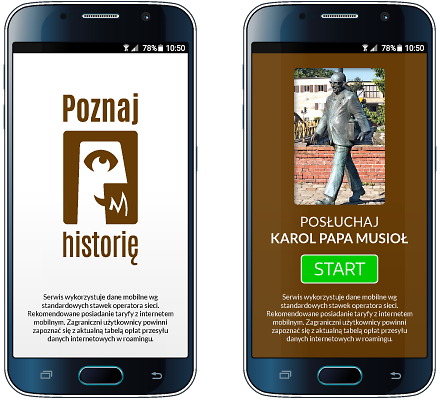
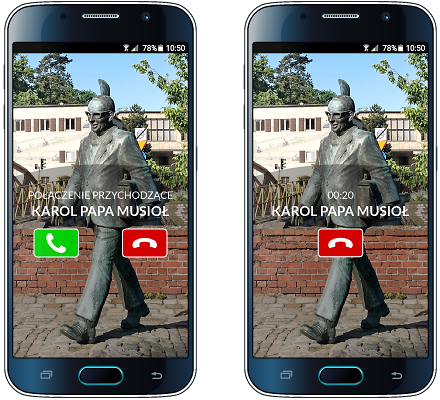
The "START" button starts the audio recording process.
Your smartphone will prompt you with the next steps after you listen to the story or pause it. Please keep an eye on your smartphone screen!
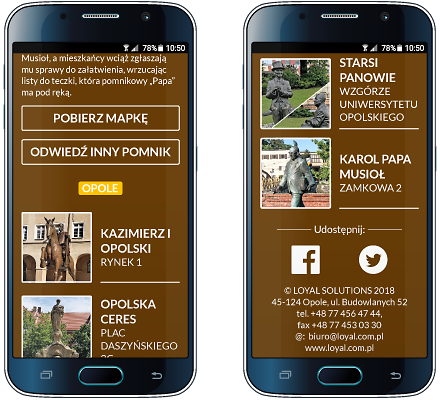
Other available options: brief information about the monument, author of the text and recording, list of other monuments in the city included in the "Discover History" project, downloadable map of monuments, video, and social media links
Would you like to implement the project in your city as well?
ContactView gallery
Monuments in cities remind us of the history of places and people, and allude to important events. They are also works of art. Bronze, metal, wood, or concrete transformed into the form of a monumental obelisk attract attention. We enjoy sitting by them, taking photos, and making appointments.
Project partners
Implementing the "Discover history" project in each city requires the involvement of many people: programmers, graphic designers, writers, actors, sound engineers, and coordinators. It is thanks to them that this project came to life.
Our ambition is to continually expand its reach. Therefore, we thank our current partners and invite additional cities, institutions, companies, and individuals to collaborate!

Would you like to become our Partner of the project or monument?
ContactContact
Are you interested in implementing the project in your city? Want to learn more? Want to learn more? Write to us, call us! We'll contact you and arrange a meeting. We'll prepare materials and a proposal for you.

QR Communication Sp. z o.o.
tel. +48 735 147 911
tel. +48 606 881 118
paulina.panusch@poznajhistorie.pl
kontakt@poznajhistorie.pl
Visit Social media:
Share Social media: