Prince Eugeniusz Wirtemberski was a famous general of horse riding. He served in the Russian army and commanded the allied forces during the anti-Napoleonic campaign. He was famous for his great victory over the French troops in the Battle of Kulm, or Chlumec, in today's Czech Republic. This battle took place on August 30, 1813. The prince became famous in it as an excellent strategist and commander. But most of all, he was a great benefactor of this place.
Thanks to him, Peace - or rather Carlsruhe - became a beautiful corner of the world where culture flourished. It was he who rebuilt the town and gave it the status of a health resort where people were attracting people. He rebuilt the theater here and brought Carl Maria Weber - the famous composer, whom Fryderyk Chopin himself later admired. It was thanks to him that Weber lived, performed and created, which today is remembered every year during the festivals held here. Anyway - Prince Eugeniusz was not only a great patron of the arts and music lover, but also a creator. He himself composed the opera Die Geisterbraut.
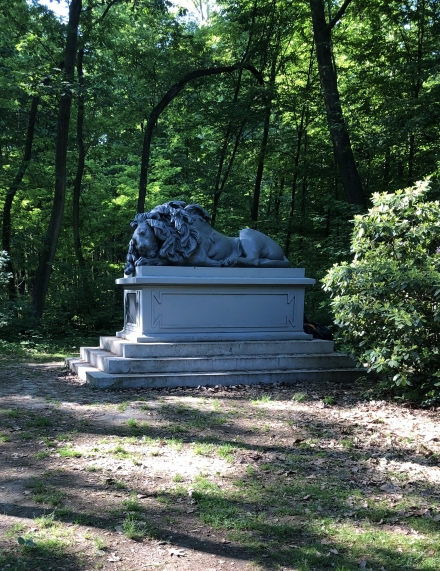
The lion is a symbol of bravery and courage. The Sleeper also symbolizes the peace that reigned after the difficult times of the Napoleonic Wars in Europe. The prince was also brave, full of bravery, but at the same time calm, prudent and wisdom. The author of this sculpture is Teodor Kalide. His similar "sleeping lions" have survived in Bytom, Legnica and Berlin.
Lion in the Park
It was established in 1863 at the request of Eugeniusz Erdmann, the prince of Württemberg, the former owner of the Room, which was then called Carlsruhe. A commemorates his father - Eugeniusz Württemberg, cousin of the first king of Württemberg, Frederick I (the First).
How it working
To listen to the history of monuments as part of the "Discover History" project, you need to follow a few simple steps. Below, we present a short, step-by-step "user manual" to provide a relatively simple way to access the mini-auditions.
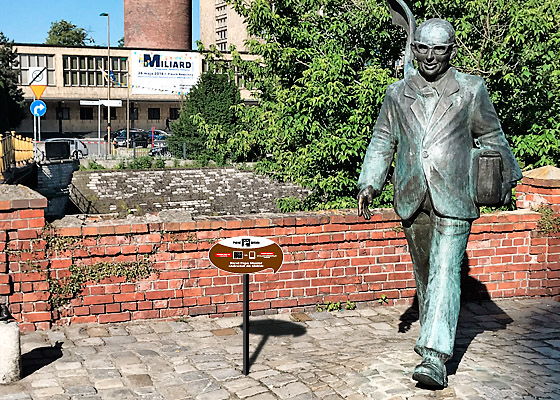
You need a smartphone with a camera. The camera lens should be pointed at the information plaque located next to the monument. Below is a view of the plaque itself and its example location next to the Karol Musioł monument in Opole.
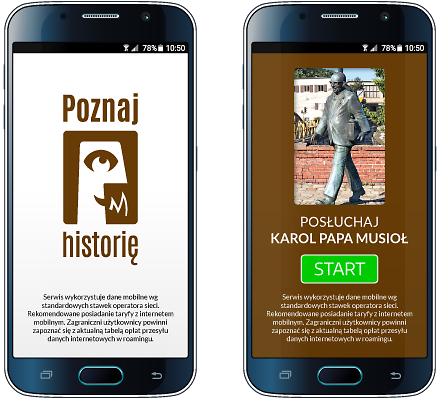
After pointing your smartphone's camera at the QR code located on the right side of the plaque, the app's welcome screen will appear, followed by a screen with the name, photo of the monument, and the "START" button.
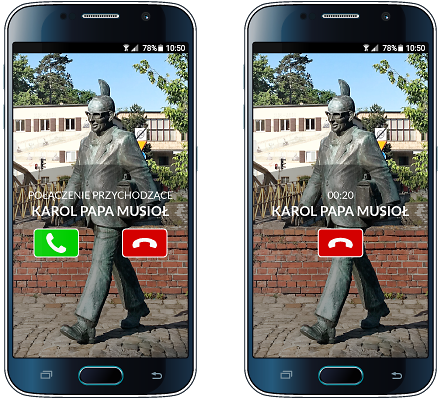
The "START" button starts the audio recording process.
Your smartphone will prompt you with the next steps after you listen to the story or pause it. Please keep an eye on your smartphone screen!
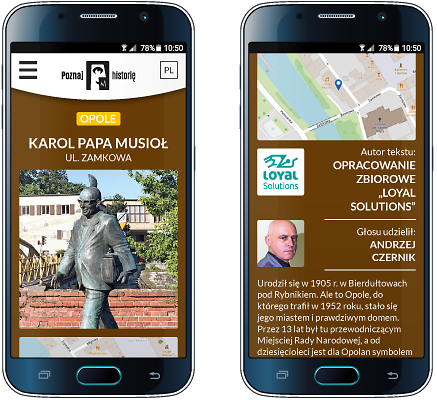
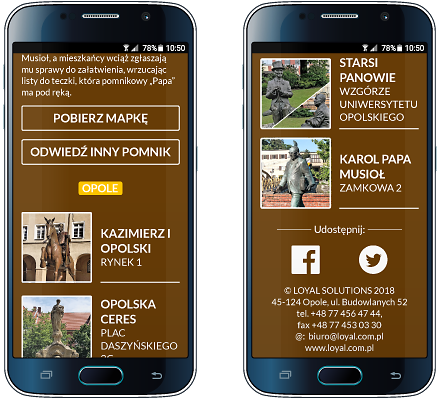
Other available options: brief information about the monument, author of the text and recording, list of other monuments in the city included in the "Discover History" project, downloadable map of monuments, video, and social media links
Would you like to implement the project in your city as well?
ContactView gallery
Monuments in cities remind us of the history of places and people, and allude to important events. They are also works of art. Bronze, metal, wood, or concrete transformed into the form of a monumental obelisk attract attention. We enjoy sitting by them, taking photos, and making appointments.
Project partners
Implementing the "Discover history" project in each city requires the involvement of many people: programmers, graphic designers, writers, actors, sound engineers, and coordinators. It is thanks to them that this project came to life.
Our ambition is to continually expand its reach. Therefore, we thank our current partners and invite additional cities, institutions, companies, and individuals to collaborate!

Visit Social media:
Share Social media: