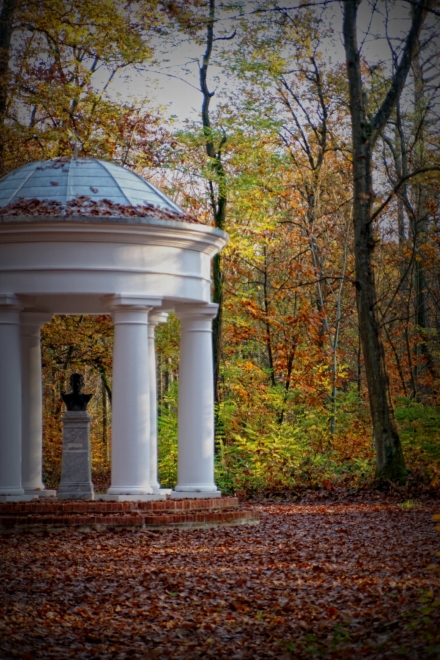
Historic park in Pokój

The whole complex consists of three parts: the French park, also known as the Baroque garden, the 19th century landscape park and the English park in Winna Góra. In total, it is almost 250 hectares of beautiful, mostly forested land, where many architectural, landscape and natural wonders are hidden.

Construction began in the second half of the 18th century on a French park. It started from the inner courtyard, which was located between the two wings of the outhouse. Part of this outbuilding was used as a greenhouse and orangery. Further there were flowerbeds decorated with carvings, a huge Japanese umbrella, and finally a bowling alley and a swimming pool. Then the part for all kinds of entertainment - with a carousel, a swing, and even a maze and theater. The French park ended at the place where today there are sculptures of Diana, Apollo and Venus, as well as a large erratic boulder where the medallion of Duchess Matilda and the ruins of the "tea salon" once stood. But what this salon was supposed to be - because the building collapsed, in fact, right after the completion of the works, and from the very beginning it was called a "ruin".

A large part of the park extends beyond the pond complex. On one of the hills in this part of the complex, the former owners of Peace, then called Carlsruhe, even had a vineyard planted. Over 21,000 grape seedlings were planted there. A gardener's house, wine press and a greenhouse were also built. There is also a castle on Winna Góra, a Swedish palace, a lighthouse and a marina, an aviary and numerous monuments.

Many species of trees and plants grow here. They include hornbeams, beeches, black alders, English oaks and spruces. But also white pine, Douglas fir and rhododendrons blooming beautifully in spring.

Historic park in Pokój
Text author:
Opracowanie zbiorowe
QR Communication

Visit Social media:

Share Social media:

How it working

To listen to the history of monuments as part of the "Discover History" project, you need to follow a few simple steps. Below, we present a short, step-by-step "user manual" to provide a relatively simple way to access the mini-auditions.

STEP 1

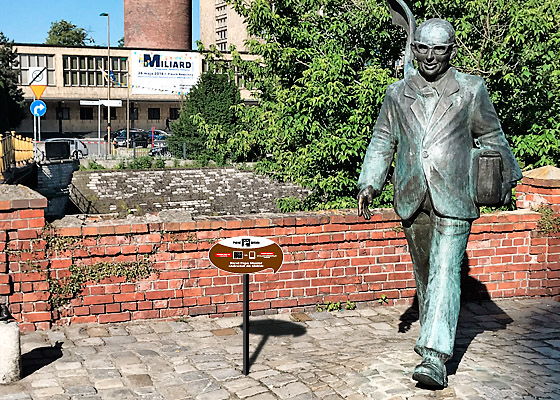
You need a smartphone with a camera. The camera lens should be pointed at the information plaque located next to the monument. Below is a view of the plaque itself and its example location next to the Karol Musioł monument in Opole.

STEP 2

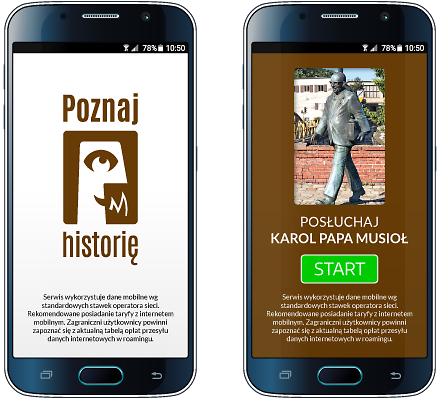
After pointing your smartphone's camera at the QR code located on the right side of the plaque, the app's welcome screen will appear, followed by a screen with the name, photo of the monument, and the "START" button.

STEP 3

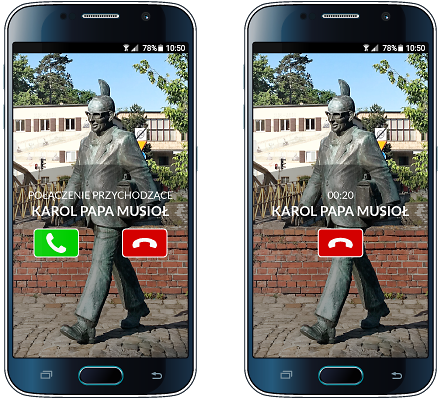
The "START" button starts the audio recording process.
Your smartphone will prompt you with the next steps after you listen to the story or pause it. Please keep an eye on your smartphone screen!

STEP 4

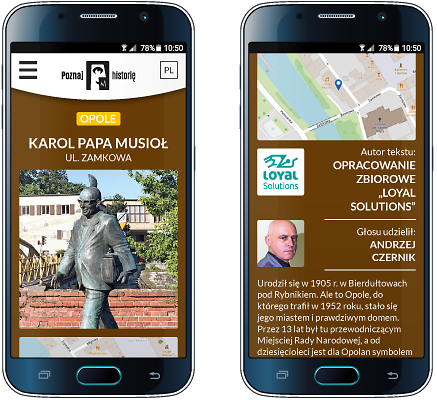
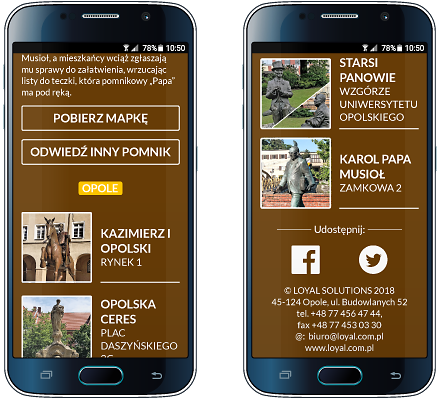
Other available options: brief information about the monument, author of the text and recording, list of other monuments in the city included in the "Discover History" project, downloadable map of monuments, video, and social media links


Would you like to implement the project in your city as well?

Contact

Project partners

Implementing the "Discover history" project in each city requires the involvement of many people: programmers, graphic designers, writers, actors, sound engineers, and coordinators. It is thanks to them that this project came to life.

Our ambition is to continually expand its reach. Therefore, we thank our current partners and invite additional cities, institutions, companies, and individuals to collaborate!


Would you like to become our Partner of the project or monument?

Contact

Contact

Are you interested in implementing the project in your city? Want to learn more? Want to learn more? Write to us, call us! We'll contact you and arrange a meeting. We'll prepare materials and a proposal for you.