Szeluto had a greater oeuvre as a composer than Szymanowski himself. On the other hand, Grzegorz Fitelberg, hearing his Sonata in B major, described it as "something so fabulously beautiful". Unfortunately, as he was unable to support his family from music, he emigrated to Russia where he practiced his legal profession. There he composed only in his free time, not publishing his works anywhere and losing contact with Polish musicians.
It became louder in 1934 when Szeluto returned to the country. He just moved to Słupca. At that time, his compositions appeared in the programs of the Poznań Philharmonic Hall, his music was played on Polish Radio.
Unfortunately, this brief period of success was interrupted and interrupted by World War II. During it, he lost his sons, and his wife died shortly thereafter. Szeluto experienced a breakdown from which he never recovered.
Szeluto has become a permanent part of the city's cultural life. For this reason, the Association of Apolinary Szeluta. Its idea is to promote the composer's work not only in the region but also in the world.
Monument to Apolinary Szeluta
Słupca has been standing with music for over a hundred years. The obelisk in the square reminds you of the most famous musician who lived in these parts: Apollinarym Szelucie. The monument was erected on the square on July 23, 1984, on the hundredth anniversary of the composer's birth.


How it working
To listen to the history of monuments as part of the "Discover History" project, you need to follow a few simple steps. Below, we present a short, step-by-step "user manual" to provide a relatively simple way to access the mini-auditions.
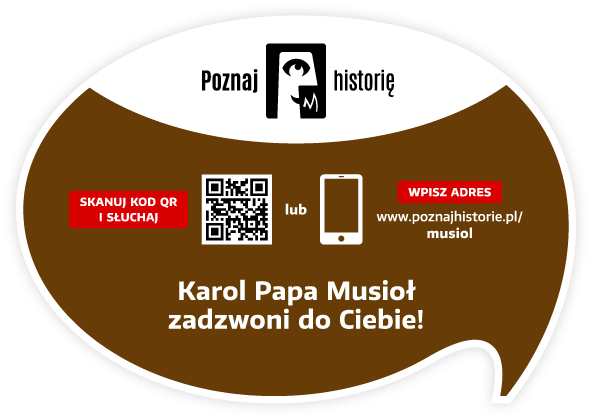
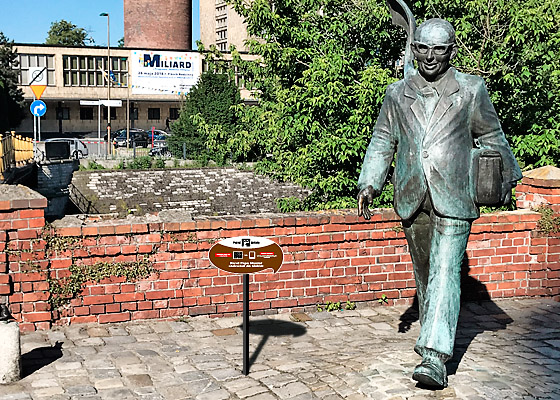
You need a smartphone with a camera. The camera lens should be pointed at the information plaque located next to the monument. Below is a view of the plaque itself and its example location next to the Karol Musioł monument in Opole.
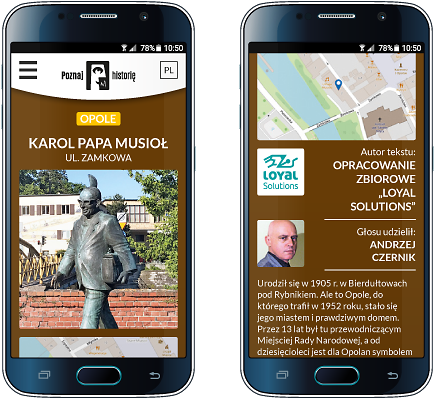
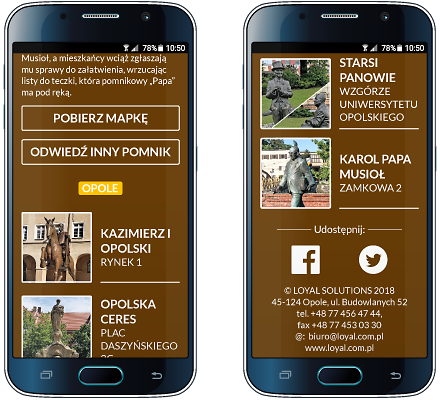
After pointing your smartphone's camera at the QR code located on the right side of the plaque, the app's welcome screen will appear, followed by a screen with the name, photo of the monument, and the "START" button.
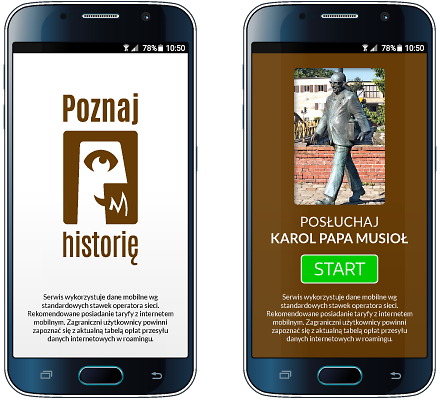
The "START" button starts the audio recording process.
Your smartphone will prompt you with the next steps after you listen to the story or pause it. Please keep an eye on your smartphone screen!
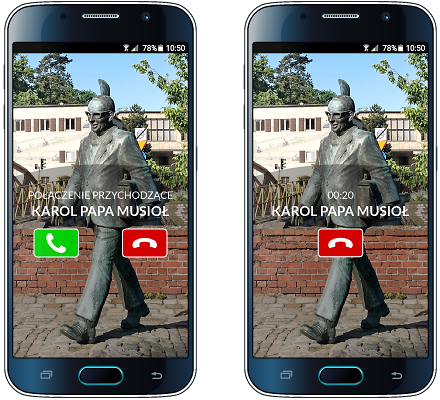
Other available options: brief information about the monument, author of the text and recording, list of other monuments in the city included in the "Discover History" project, downloadable map of monuments, video, and social media links
Would you like to implement the project in your city as well?
ContactView gallery
Monuments in cities remind us of the history of places and people, and allude to important events. They are also works of art. Bronze, metal, wood, or concrete transformed into the form of a monumental obelisk attract attention. We enjoy sitting by them, taking photos, and making appointments.
Project partners
Implementing the "Discover history" project in each city requires the involvement of many people: programmers, graphic designers, writers, actors, sound engineers, and coordinators. It is thanks to them that this project came to life.
Our ambition is to continually expand its reach. Therefore, we thank our current partners and invite additional cities, institutions, companies, and individuals to collaborate!

Would you like to become our Partner of the project or monument?
ContactContact
Are you interested in implementing the project in your city? Want to learn more? Want to learn more? Write to us, call us! We'll contact you and arrange a meeting. We'll prepare materials and a proposal for you.

QR Communication Sp. z o.o.
tel. +48 735 147 911
tel. +48 606 881 118
paulina.panusch@poznajhistorie.pl
kontakt@poznajhistorie.pl
Visit Social media:
Share Social media: