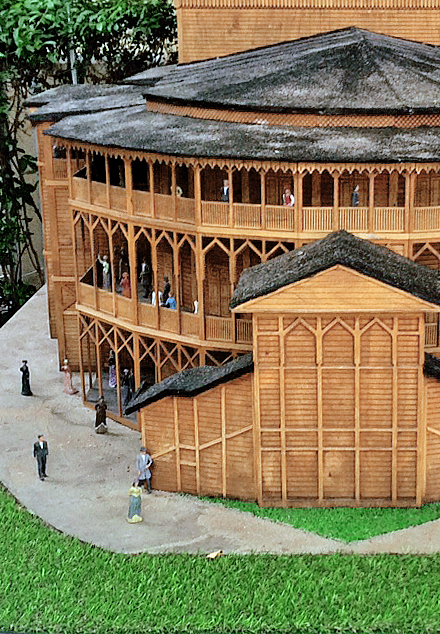
Teatr Letni był dodatkową sceną dla teatrów Wielkiego i „Rozmaitości”. Grywano tu opery, operetki i sztuki - zwłaszcza komedie, w których występowali najlepsi polscy śpiewacy i aktorzy. Sam Stanisław Moniuszko dyrygował tu swoimi operami, a przesławna Helena Modrzejewska 13 marca 1891 r. pożegnała się z warszawską publicznością rolą Ofelii w „Hamlecie”.
Ceny biletów były tu nieco niższe, a więc i widzów było więcej, i interes dobrze szedł…
Pod koniec XIX wieku stworzono nawet zespół aktorski Teatru Letniego, który grał głównie komedie i krotochwile. A w 1902 roku odbyły się tu premiery filmów wyprodukowanych przez pierwszą polską wytwórnię - Towarzystwo Udziałowe „Pleograf”.
Ostatni spektakl – Johana Nepomuka Nestroya „Serce w rozterce” w reżyserii Schillera - odbył się tu 2 września 1939 roku. Dzień po tym, gdy na Wieluń i Westerplatte spadły pierwsze bomby II wojny światowej. Kilka dni później teatr skonfiskowało wojsko i zamieniło go w skład amunicji dla baterii dział. To było jak zaproszenie dla niemieckiego lotnictwa. Wystarczyła jedna bomba i z misternej, drewnianej budowli nie pozostał najmniejszy ślad…
Teatr Letni
Budowę Teatru Letniego rozpoczęto w marcu 1870 r. 14 lipca 1870 roku odbył się tu pierwszy spektakl. Była to „Piękna Helena” Jacquesa Offenbacha, a partię tytułową śpiewała primadonna Opery Warszawskiej Bronisława Dowiakowska.
How it working
To listen to the history of monuments as part of the "Discover History" project, you need to follow a few simple steps. Below, we present a short, step-by-step "user manual" to provide a relatively simple way to access the mini-auditions.
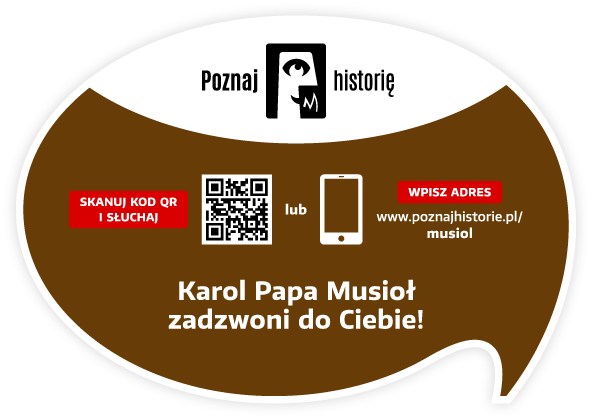
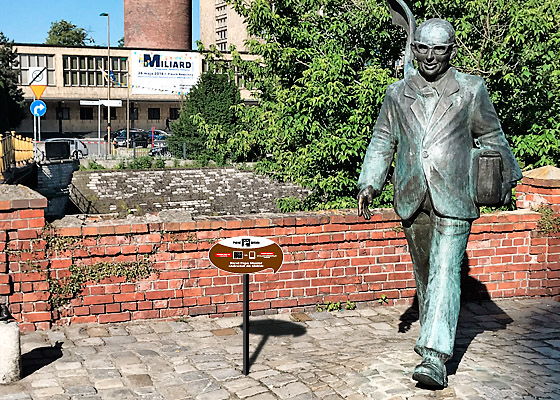
You need a smartphone with a camera. The camera lens should be pointed at the information plaque located next to the monument. Below is a view of the plaque itself and its example location next to the Karol Musioł monument in Opole.
After pointing your smartphone's camera at the QR code located on the right side of the plaque, the app's welcome screen will appear, followed by a screen with the name, photo of the monument, and the "START" button.
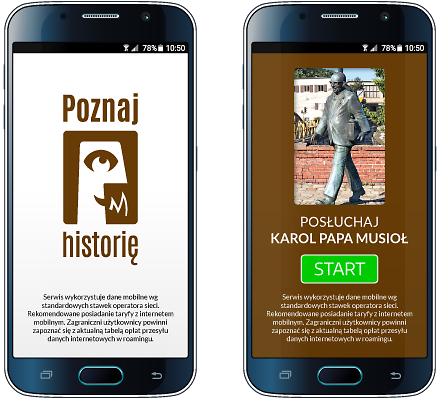
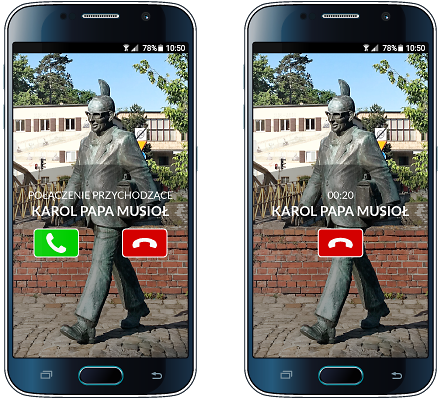
The "START" button starts the audio recording process.
Your smartphone will prompt you with the next steps after you listen to the story or pause it. Please keep an eye on your smartphone screen!
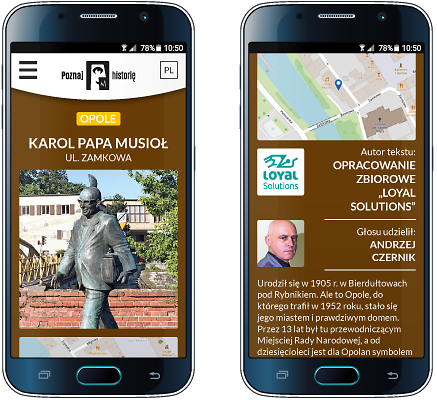
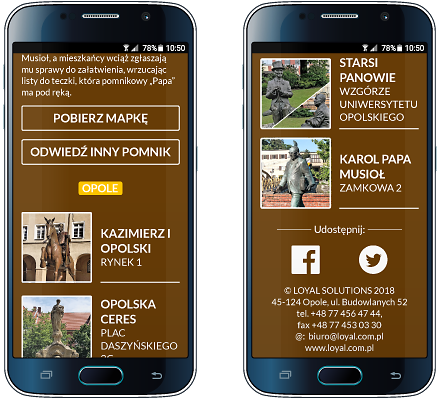
Other available options: brief information about the monument, author of the text and recording, list of other monuments in the city included in the "Discover History" project, downloadable map of monuments, video, and social media links
Would you like to implement the project in your city as well?
ContactView gallery
Monuments in cities remind us of the history of places and people, and allude to important events. They are also works of art. Bronze, metal, wood, or concrete transformed into the form of a monumental obelisk attract attention. We enjoy sitting by them, taking photos, and making appointments.
Project partners
Implementing the "Discover history" project in each city requires the involvement of many people: programmers, graphic designers, writers, actors, sound engineers, and coordinators. It is thanks to them that this project came to life.
Our ambition is to continually expand its reach. Therefore, we thank our current partners and invite additional cities, institutions, companies, and individuals to collaborate!

Would you like to become our Partner of the project or monument?
ContactContact
Are you interested in implementing the project in your city? Want to learn more? Want to learn more? Write to us, call us! We'll contact you and arrange a meeting. We'll prepare materials and a proposal for you.

QR Communication Sp. z o.o.
tel. +48 735 147 911
tel. +48 606 881 118
paulina.panusch@poznajhistorie.pl
kontakt@poznajhistorie.pl
Visit Social media:
Share Social media: