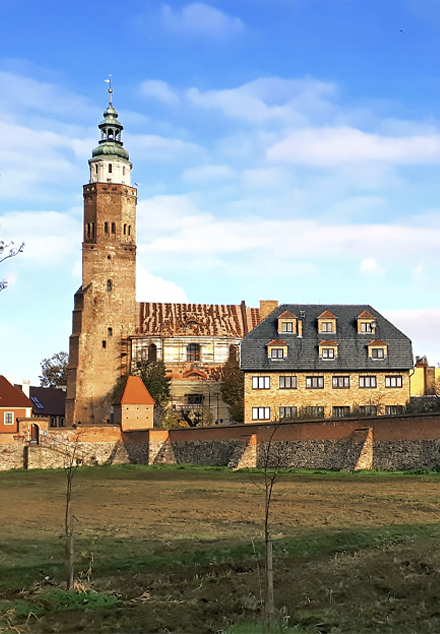
Wood was displaced by stones and bricks, while the entire Wschowa fortifications additionally consisted of a moat and earth embankments. Two gates led to the city: Polska and Głogowska. Both were situated on the main communication route that ran through the city, embracing the market square with two arms.
The wall was then nearly a kilometer long! Its lower part, up to a height of 3 meters, is made of stones joined with lime mortar. Above it, it was made of bricks. It was crowned with a battlement set at 7 meters. One and a half meters was its average thickness.
Unfortunately, in the nineteenth century, the wall was almost completely pulled down so that the city could continue to grow.
Defensive walls
In the mid-thirteenth century, the wall was a mixture of wooden piles and earth ramparts. In the following centuries, it was strengthened and modernized several times. He gained the most during Casimir the Great.
How it working
To listen to the history of monuments as part of the "Discover History" project, you need to follow a few simple steps. Below, we present a short, step-by-step "user manual" to provide a relatively simple way to access the mini-auditions.
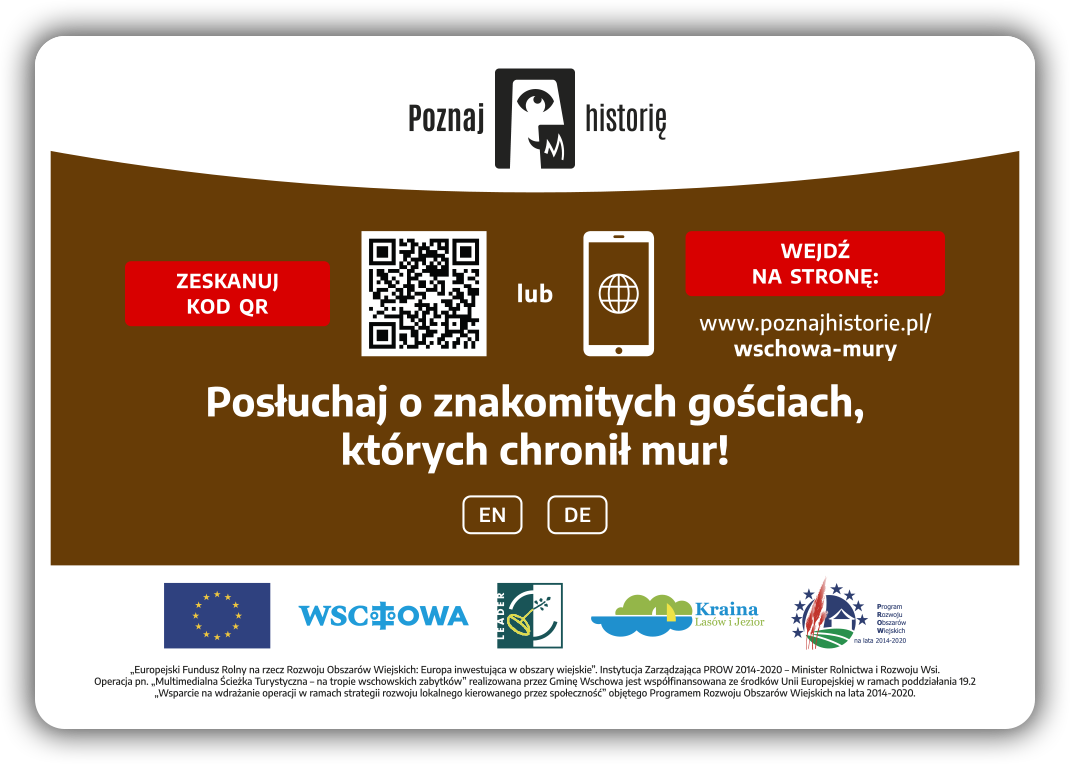
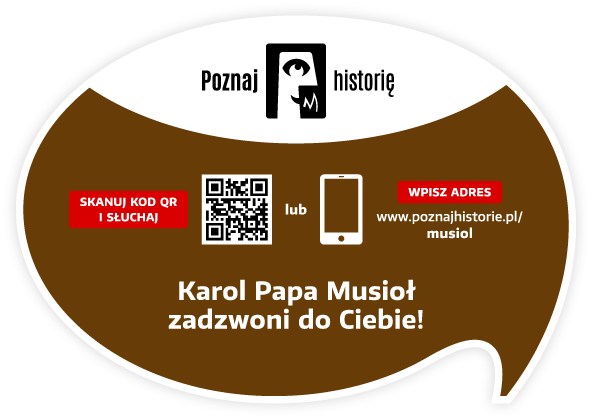
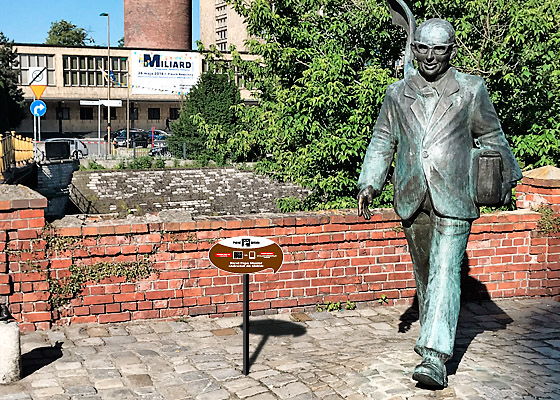
You need a smartphone with a camera. The camera lens should be pointed at the information plaque located next to the monument. Below is a view of the plaque itself and its example location next to the Karol Musioł monument in Opole.
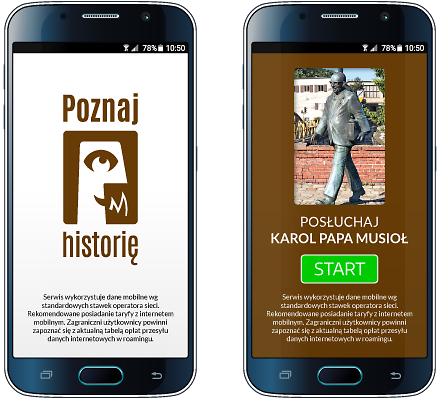
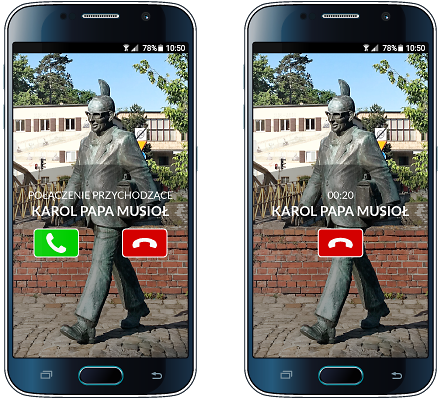
After pointing your smartphone's camera at the QR code located on the right side of the plaque, the app's welcome screen will appear, followed by a screen with the name, photo of the monument, and the "START" button.
The "START" button starts the audio recording process.
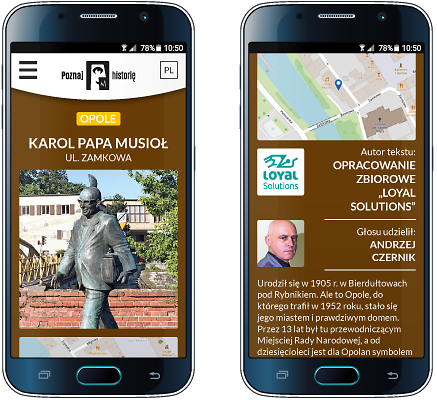
Your smartphone will prompt you with the next steps after you listen to the story or pause it. Please keep an eye on your smartphone screen!
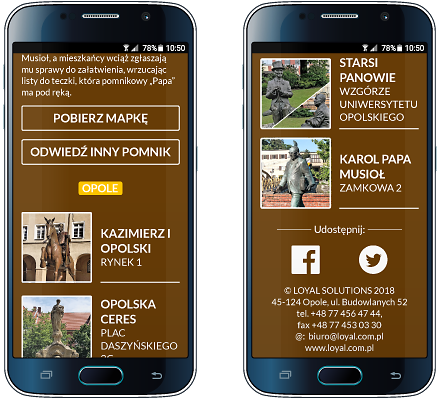
Other available options: brief information about the monument, author of the text and recording, list of other monuments in the city included in the "Discover History" project, downloadable map of monuments, video, and social media links
Would you like to implement the project in your city as well?
ContactSelect an object
View gallery
Monuments in cities remind us of the history of places and people, and allude to important events. They are also works of art. Bronze, metal, wood, or concrete transformed into the form of a monumental obelisk attract attention. We enjoy sitting by them, taking photos, and making appointments.
Project partners
Implementing the "Discover history" project in each city requires the involvement of many people: programmers, graphic designers, writers, actors, sound engineers, and coordinators. It is thanks to them that this project came to life.
Our ambition is to continually expand its reach. Therefore, we thank our current partners and invite additional cities, institutions, companies, and individuals to collaborate!

Visit Social media:
Share Social media: