„Ziemia węgla” to najbardziej w Rybniku znany wiersz poetki. Jego fragment umieszczony jest na rewersie jednego z insygniów miejskich - łańcucha Prezydenta Miasta Rybnika. Ale to niejedyny utwór Janiny Podlodowskiej poświęcony Śląskowi czy trudowi górniczej pracy. W utworze „Górnikowi” poetka pisała o ludziach zagrożonych przez „pulsy ziemi”, „dygotanie stropu” czy „gaz uwięziony”. Między innymi za te wiersze nagrodzona została w 1990 roku Złotą Lampką Górniczą.
Była córką aktorów: Władysława Bielenia i Heleny z Targoszów Bieleń-Rozwadowskiej. Ojciec, członek krakowskiej bohemy artystycznej, uczestniczył na przykład w legendarnym weselu Lucjana Rydla z Jadwigą Mikołajczykówną w Bronowicach - tym samym, które zainspirowało Stanisława Wyspiańskiego do napisania narodowego dramatu.
Poetka była wielokrotnie nagradzana. Była też laureatką Wydawnictwa Epoka, a w 1987 roku - za całokształt pracy literackiej - odebrała nagrodę imienia Gustawa Morcinka, z którym wcześniej przez lata się przyjaźniła.
W Rybniku zamieszkała tuż po wojnie. Od 1945 roku pracowała tu jako polonistka w Liceum Pedagogicznym oraz II Liceum Ogólnokształcącym. Wychowała tam kolejne pokolenia polonistów, którzy wspominają ją po dziś dzień. Zmarła 3 maja 1992 roku.
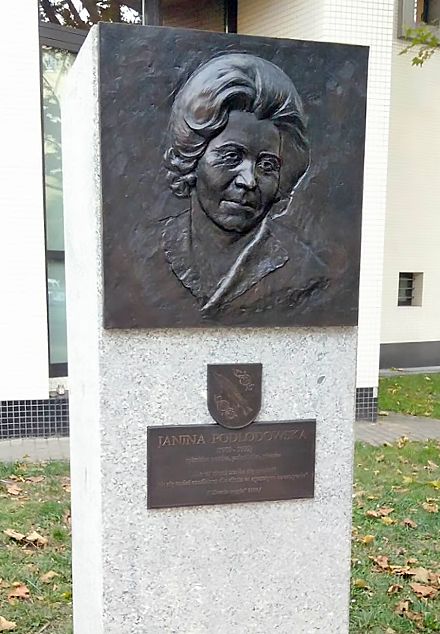
Janina Podlodowska
Urodziła się w Krakowie w 1909 roku, ale to na Śląsku osiadła i tu pracowała. To o Śląsku – i nie tylko – pisała. W jego historię wrosła i tu pozostała. Janina Podlodowska to najbardziej znana poetka ziemi rybnickiej.
How it working
To listen to the history of monuments as part of the "Discover History" project, you need to follow a few simple steps. Below, we present a short, step-by-step "user manual" to provide a relatively simple way to access the mini-auditions.
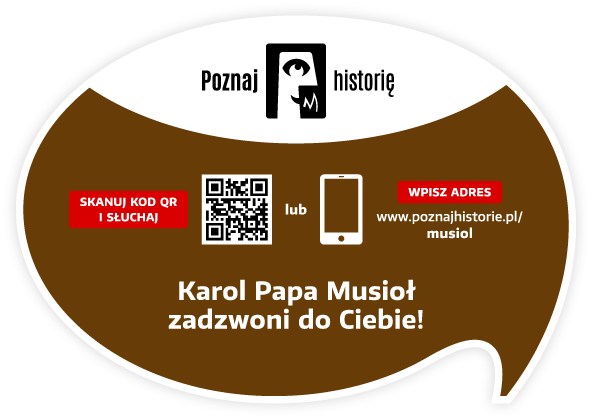
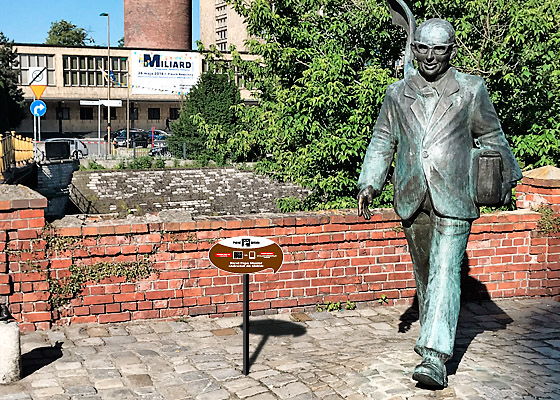
You need a smartphone with a camera. The camera lens should be pointed at the information plaque located next to the monument. Below is a view of the plaque itself and its example location next to the Karol Musioł monument in Opole.
After pointing your smartphone's camera at the QR code located on the right side of the plaque, the app's welcome screen will appear, followed by a screen with the name, photo of the monument, and the "START" button.
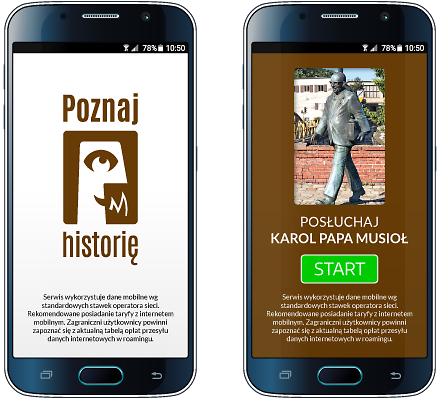
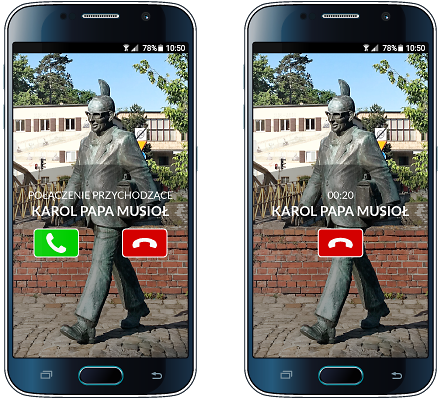
The "START" button starts the audio recording process.
Your smartphone will prompt you with the next steps after you listen to the story or pause it. Please keep an eye on your smartphone screen!
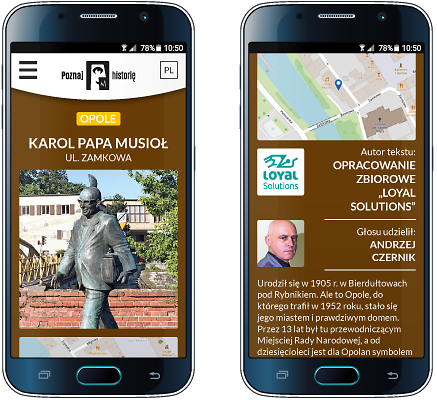
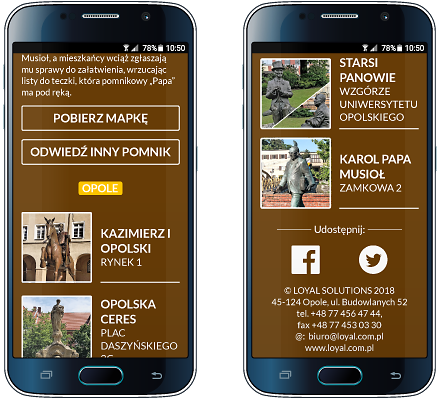
Other available options: brief information about the monument, author of the text and recording, list of other monuments in the city included in the "Discover History" project, downloadable map of monuments, video, and social media links
Would you like to implement the project in your city as well?
ContactSelect an object
View gallery
Monuments in cities remind us of the history of places and people, and allude to important events. They are also works of art. Bronze, metal, wood, or concrete transformed into the form of a monumental obelisk attract attention. We enjoy sitting by them, taking photos, and making appointments.
Project partners
Implementing the "Discover history" project in each city requires the involvement of many people: programmers, graphic designers, writers, actors, sound engineers, and coordinators. It is thanks to them that this project came to life.
Our ambition is to continually expand its reach. Therefore, we thank our current partners and invite additional cities, institutions, companies, and individuals to collaborate!

Would you like to become our Partner of the project or monument?
ContactContact
Are you interested in implementing the project in your city? Want to learn more? Want to learn more? Write to us, call us! We'll contact you and arrange a meeting. We'll prepare materials and a proposal for you.

QR Communication Sp. z o.o.
tel. +48 735 147 911
tel. +48 606 881 118
paulina.panusch@poznajhistorie.pl
kontakt@poznajhistorie.pl
Visit Social media:
Share Social media: