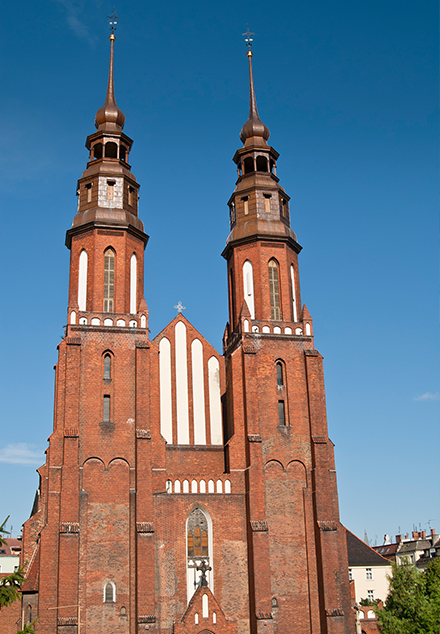
Katera powstała jednak w miejscu budowanych tu już wcześniej i wielokrotnie przebudowywanych świątyń. Pierwszy kościół w Opolu ufundował ponoć sam król Bolesław Chrobry już w 1005 roku! Uwagę zwiedzających zwracają przede wszystkim neogotyckie wieże katedry. Mają aż 73 metry wysokości, a wybudowano je w latach 1899-1900. To najwyższe, widoczne z daleka, budowle w mieście. Wewnątrz świątyni warto zwrócić uwagę na główny ołtarz, wykonany w stylu późnego baroku w 1773 roku. Jednym z najcenniejszych sakralnych skarbów jest obraz Matki Boskiej Opolskiej, sprowadzony tu z na stałe Piekar Śląskich w 1702 roku i ukoronowany w 1983 r. przez Jana Pawła II. Najstarszym zabytkiem w katedrze jest natomiast gotycka chrzcielnica z XIV wieku wykonana z piaskowca i wapienia. Warto przyjrzeć się również bliżej monumentalnym drzwiom katedry. Na ich skrzydłach umieszczono cały panteon postaci. Są tu m.in. budowniczy arki Noe i Mojżesz z kamiennymi tablicami, na których wykuto X Przykazań. Jest święty Jacek Odrowąż oraz święty Wojciech, który przed wiekami miał w Opolu głosić kazania i udzielać chrztu. Na katedralnych drzwiach znajdziecie też papieża Jana Pawła II, a obok niego niezwykle szanowanego i lubianego arcybiskupa opolskiego Alfonsa Nossola. Na drzwiach upamiętniono także legendarnego przywódcę Solidarności Lecha Wałęsę oraz zamordowanego przez komunistyczną służbę bezpieczeństwa ks. Jerzego Popiełuszkę. Wrota opolskiej katedry ufundowano w 1997 roku, w tysięczną rocznicę śmierci św. Wojciecha oraz z okazji jubileuszu 700-lecia istnienia tutejszej parafii.

How it working
To listen to the history of monuments as part of the "Discover History" project, you need to follow a few simple steps. Below, we present a short, step-by-step "user manual" to provide a relatively simple way to access the mini-auditions.
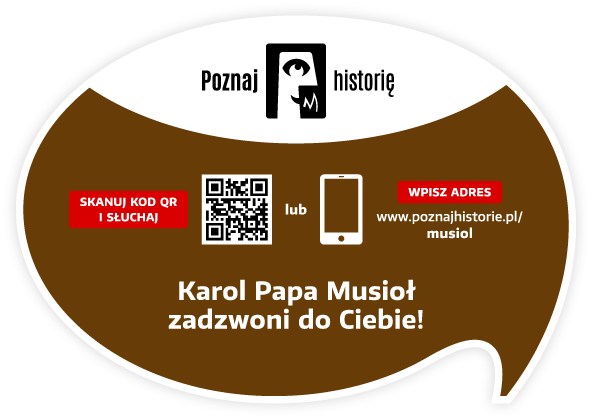
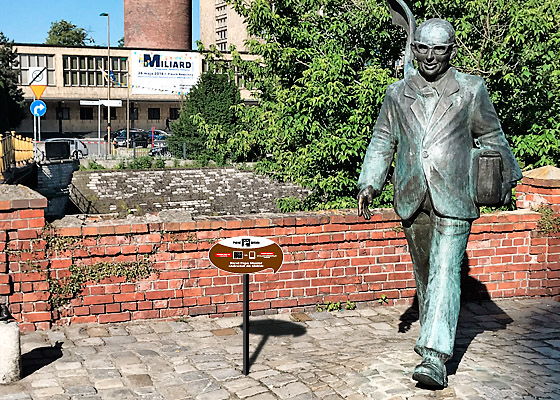
You need a smartphone with a camera. The camera lens should be pointed at the information plaque located next to the monument. Below is a view of the plaque itself and its example location next to the Karol Musioł monument in Opole.
After pointing your smartphone's camera at the QR code located on the right side of the plaque, the app's welcome screen will appear, followed by a screen with the name, photo of the monument, and the "START" button.
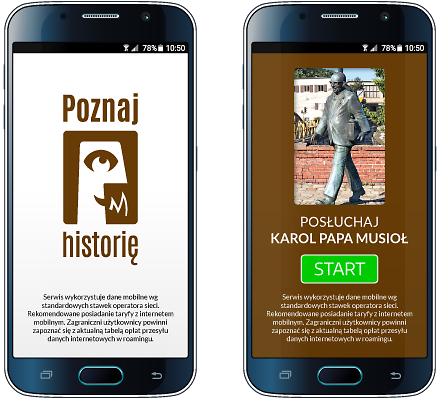
The "START" button starts the audio recording process.
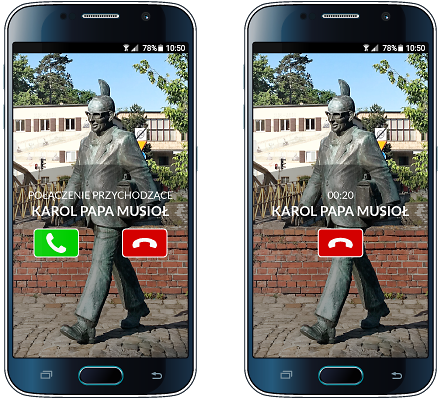
Your smartphone will prompt you with the next steps after you listen to the story or pause it. Please keep an eye on your smartphone screen!
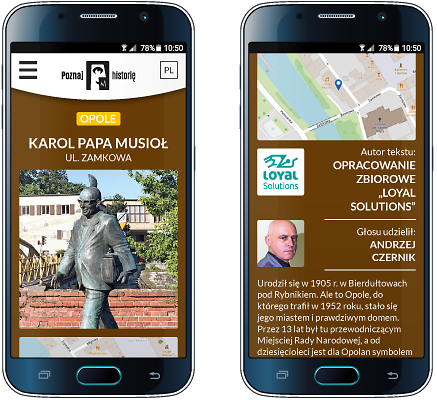
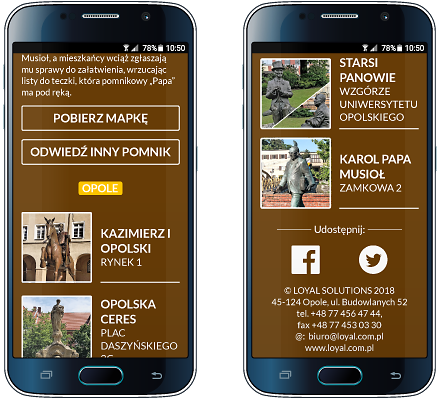
Other available options: brief information about the monument, author of the text and recording, list of other monuments in the city included in the "Discover History" project, downloadable map of monuments, video, and social media links
Would you like to implement the project in your city as well?
ContactSelect an object
View gallery
Monuments in cities remind us of the history of places and people, and allude to important events. They are also works of art. Bronze, metal, wood, or concrete transformed into the form of a monumental obelisk attract attention. We enjoy sitting by them, taking photos, and making appointments.
Project partners
Implementing the "Discover history" project in each city requires the involvement of many people: programmers, graphic designers, writers, actors, sound engineers, and coordinators. It is thanks to them that this project came to life.
Our ambition is to continually expand its reach. Therefore, we thank our current partners and invite additional cities, institutions, companies, and individuals to collaborate!


Would you like to become our Partner of the project or monument?
ContactContact
Are you interested in implementing the project in your city? Want to learn more? Want to learn more? Write to us, call us! We'll contact you and arrange a meeting. We'll prepare materials and a proposal for you.

QR Communication Sp. z o.o.
tel. +48 735 147 911
tel. +48 606 881 118
paulina.panusch@poznajhistorie.pl
kontakt@poznajhistorie.pl
Visit Social media:
Share Social media: