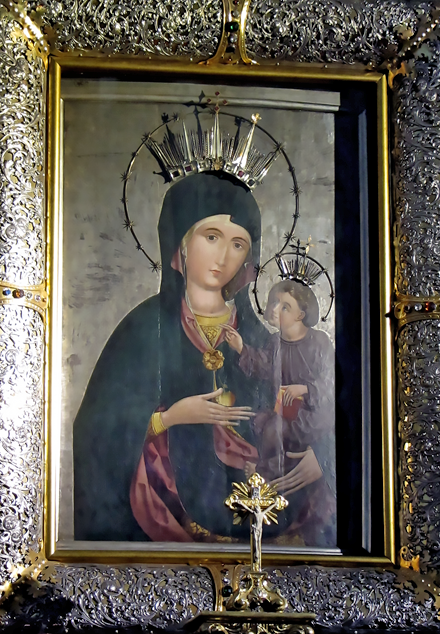
Od wieków łaskami słynący obraz Matki Bożej Opolskiej zajmuje poczesne miejsce w sercach Opolan i wielu pielgrzymów. Dziś wierni przychodzą do Opolskiej Pani z mniejszymi i większymi troskami dnia codziennego. Pochodzący z Piekar obraz za cudowny uznany został w XVII wieku, gdy na ratunek czeskiej Pradze sprowadził go tam, do jezuickiego kolegium św. Klemensa, cesarz Leopold I. W mieście nad Wełtawą ludność dziesiątkowała wtedy zaraza. W przekazach odnotowano, że gdy sprowadzono tam obraz Matki Bożej, wtedy jeszcze Piekarskiej, wielu modlących się przed nim odzyskiwało zdrowie.
15 marca 1680 roku obraz przeniesiono ulicami Pragi w uroczystej, błagalnej procesji do katedry św. Wita i… w krótkim czasie zaraza ustała. Praski biskup Jan Fryderyk określił go wówczas „cudownym”. Obdarowana licznymi wotami Matka Boża wróciła do Piekar, a jej kult stał się powszechny. 8 sierpnia 1681 roku to Opolanie wyruszyli z dziękczynną pielgrzymką, by Matce Bożej podziękować za to, że ustała zaraza z lat 1679-1680.
Po raz pierwszy do Opola Jezuici sprowadzili cudowny obraz w roku 1683 w obawie przed zbliżającą się wówczas nawałą turecką. Wierni w Piekarach, mimo sprzeciwów, musieli zadowolić się kopią obrazu. To przed nią 20 sierpnia 1683 roku modlił się jadący na legendarną odsiecz do Wiednia król Polski Jan III Sobieski. W podzięce za odniesione tam nad Turkami zwycięstwo, jako wotum, król podarował potem Matce Bożej srebrną sukienkę. W 1697 roku przed cudownym obrazem modlił się, w drodze na koronację, przyszły polski król August II Sas. Potem Matka Boża Piekarska trafiła do Opola w 1702, w obawie przed potopem szwedzkim i już w Opolu pozostała.
Dziś wizerunek Matki Bożej Opolskiej umieszczony jest w pięknym, barokowym ołtarzu, datowanym na 1713 rok. Ołtarz ten w 1927 roku kupił w Jeleniej Górze ówczesny proboszcz katedralnej parafii, ks. Józef Kubis.
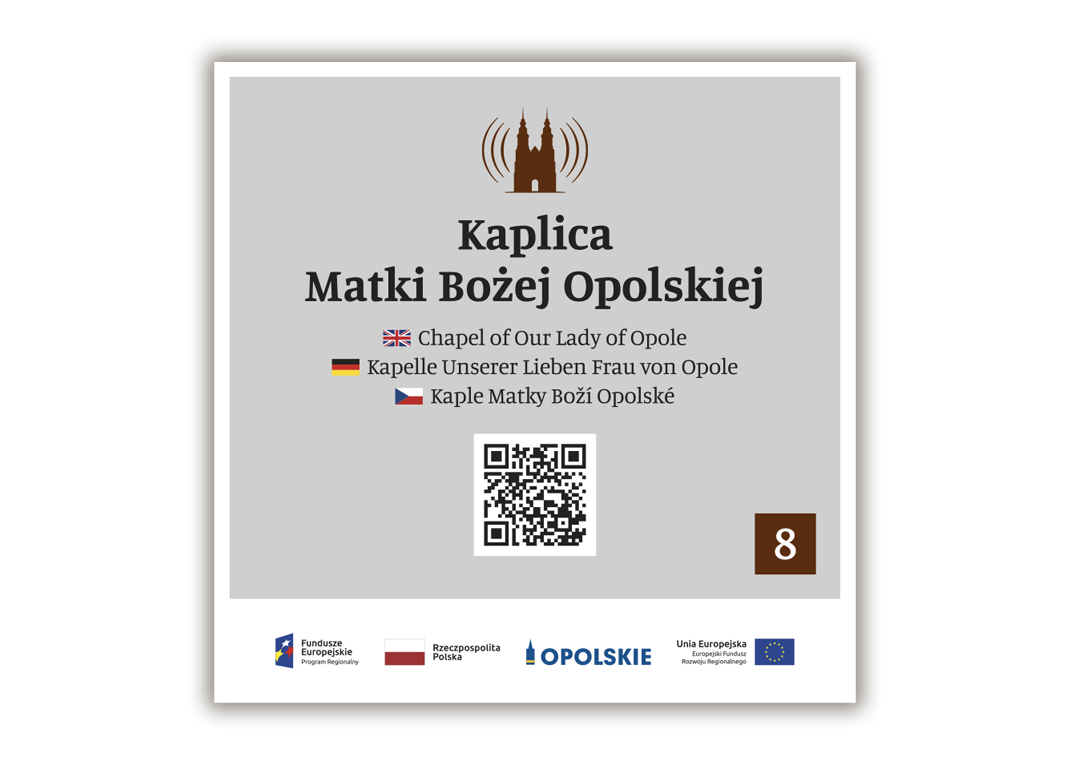
Kaplica Matki Bożej Opolskiej
Teksty o wybranych miejscach w Katedrze Opolskiej oraz nagrania powstały w ramach projektu „Świadek wielokulturowości regionu opolskiego. Renowacja i konserwacja katedry pw. Podwyższenia Krzyża Świętego w Opolu”, współfinansowanego przez Unię Europejską ze środków Europejskiego Funduszu Rozwoju Regionalnego w ramach Regionalnego Programu Operacyjnego Województwa Opolskiego na lata 2014–2020 oraz środków własnych parafii katedralnej. Więcej informacji: www.renowacja.katedraopolska.pl
How it working
To listen to the history of monuments as part of the "Discover History" project, you need to follow a few simple steps. Below, we present a short, step-by-step "user manual" to provide a relatively simple way to access the mini-auditions.
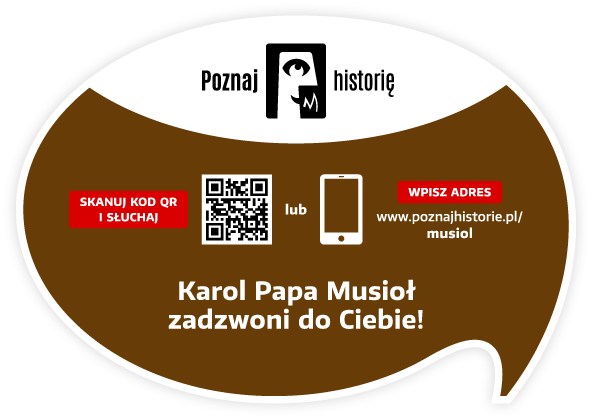
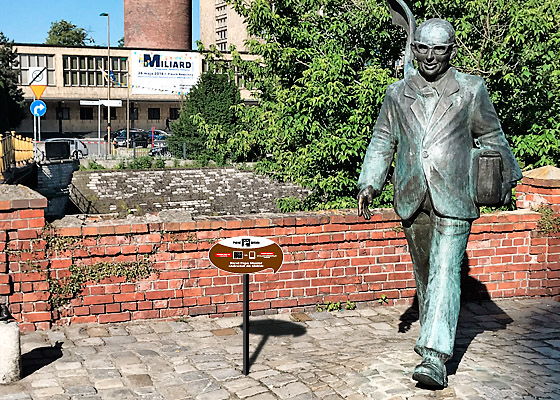
You need a smartphone with a camera. The camera lens should be pointed at the information plaque located next to the monument. Below is a view of the plaque itself and its example location next to the Karol Musioł monument in Opole.
After pointing your smartphone's camera at the QR code located on the right side of the plaque, the app's welcome screen will appear, followed by a screen with the name, photo of the monument, and the "START" button.
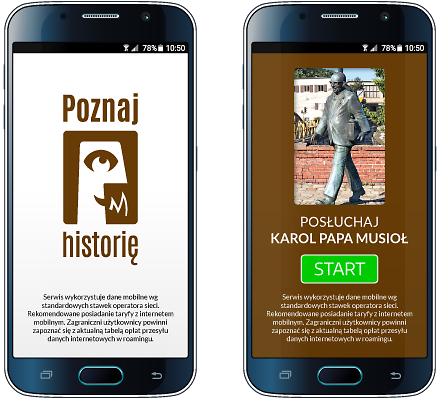
The "START" button starts the audio recording process.
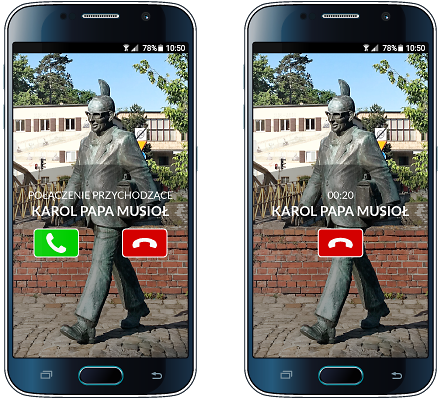
Your smartphone will prompt you with the next steps after you listen to the story or pause it. Please keep an eye on your smartphone screen!
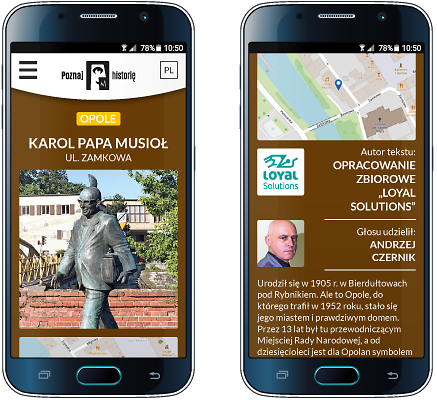
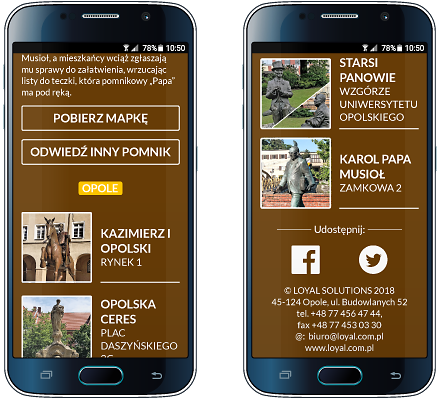
Other available options: brief information about the monument, author of the text and recording, list of other monuments in the city included in the "Discover History" project, downloadable map of monuments, video, and social media links
Would you like to implement the project in your city as well?
ContactSelect an object
View gallery
Monuments in cities remind us of the history of places and people, and allude to important events. They are also works of art. Bronze, metal, wood, or concrete transformed into the form of a monumental obelisk attract attention. We enjoy sitting by them, taking photos, and making appointments.
Project partners
Implementing the "Discover history" project in each city requires the involvement of many people: programmers, graphic designers, writers, actors, sound engineers, and coordinators. It is thanks to them that this project came to life.
Our ambition is to continually expand its reach. Therefore, we thank our current partners and invite additional cities, institutions, companies, and individuals to collaborate!
Would you like to become our Partner of the project or monument?
ContactContact
Are you interested in implementing the project in your city? Want to learn more? Want to learn more? Write to us, call us! We'll contact you and arrange a meeting. We'll prepare materials and a proposal for you.

QR Communication Sp. z o.o.
tel. +48 735 147 911
tel. +48 606 881 118
paulina.panusch@poznajhistorie.pl
kontakt@poznajhistorie.pl
Visit Social media:
Share Social media: