Kościół
pw. NMP

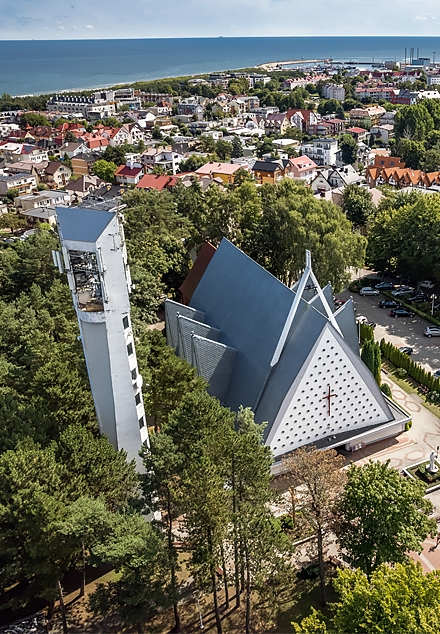
Mało kto, widząc ten budynek po raz pierwszy, poznaje od razu, że to kościół. Jedni dostrzegają w nim odwróconą do góry nogami łódź czy wręcz arkę. Innym boczne elewacje kojarzą się z żaglami, a liczne małe okienka przypominają montowane na rufach bulaje. Świątynia bez wątpienia budzi marynistyczne skojarzenia i taki był zamiar autorów.

Kościół wzniesiono z czerwonej cegły w stylu neogotyckim. Jego patronem został święty Wojciech. Czy coś zostało z pierwotnej budowli? Ano stoi tu nadal! Nie rozebrano ani jednej cegły. Wystarczy oddalić się nieco i spojrzeć na prezbiterium. Tak, to właśnie oryginalny kościół. Nowy został nawą główną. Takie unikalne rozwiązanie zaproponowali pod koniec lat 50. dwaj gdańscy architekci: Szczepan Baum i Andrzej Kulesza. Ich wizja tak spodobała się ówczesnemu proboszczowi, że już w 1961 konsekrował on nowy kościół, który jest dziś prawdziwą perłą architektury.

Choć jego wnętrze może wydać się skromne, skrywa ono wiele tajemnic. Jedną z nich są witraże uznawane za jedne z najciekawszych na świecie. W kościele przechowuje się także relikwie Jana Pawła II oraz - o czym wiedzą nieliczni - relikwie pierwszych rzymskich męczenników. Będąc wewnątrz warto zwrócić także uwagę na organy. Stworzyła je we 1937 roku warszawska firma Kamińskich. Mają 42 głosy i 4 wolne kombinacje. Ich walory przyciągają nie tylko wiernych, ale i miłośników kultury.

Warto wybrać się tutaj w wakacje, kiedy odbywa się Festiwal Letnie Koncerty Organowe i Kameralne. Od ponad pięćdziesięciu lat biorą w nim udział wybitni artyści z kraju i zagranicy.  Dzwonnicę wybudowano w latach 90. i jest oddzielona od głównej części świątyni. Ma 37,5 metra wysokości.
Kościółpw. NMP
Kościół pw. NMP

Visit Social media:

Share Social media:

How it working

To listen to the history of monuments as part of the "Discover History" project, you need to follow a few simple steps. Below, we present a short, step-by-step "user manual" to provide a relatively simple way to access the mini-auditions.

STEP 1

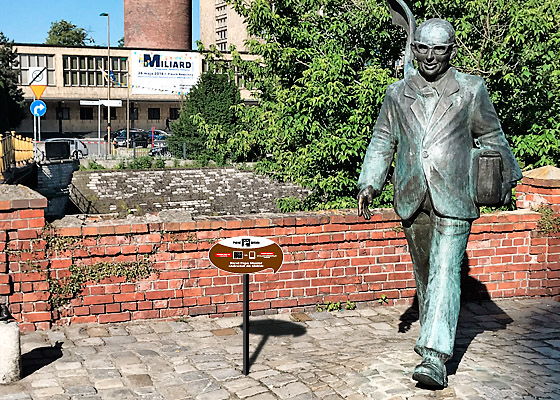
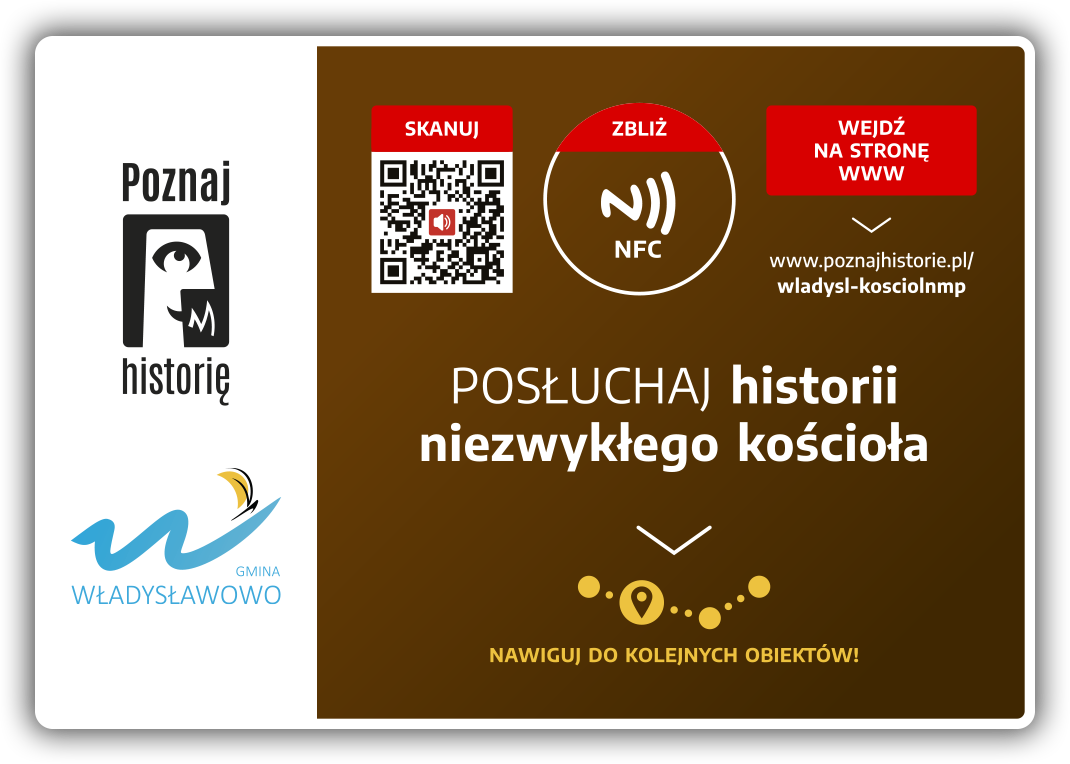
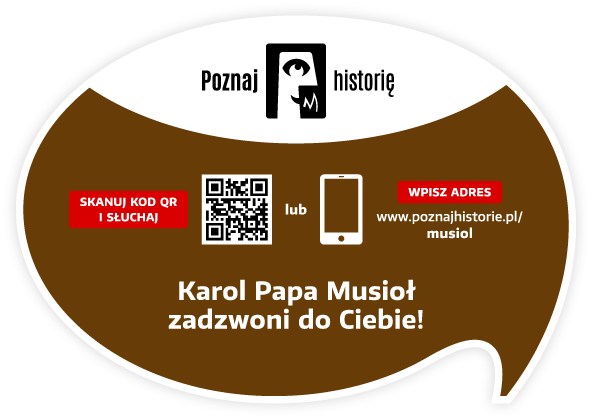
You need a smartphone with a camera. The camera lens should be pointed at the information plaque located next to the monument. Below is a view of the plaque itself and its example location next to the Karol Musioł monument in Opole.

STEP 2

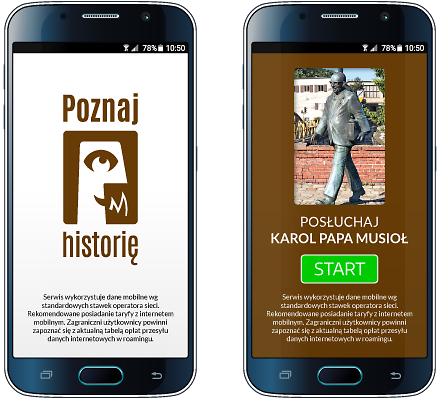
After pointing your smartphone's camera at the QR code located on the right side of the plaque, the app's welcome screen will appear, followed by a screen with the name, photo of the monument, and the "START" button.

STEP 3

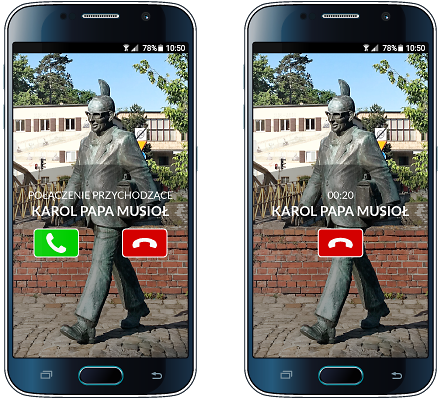
The "START" button starts the audio recording process.
Your smartphone will prompt you with the next steps after you listen to the story or pause it. Please keep an eye on your smartphone screen!

STEP 4

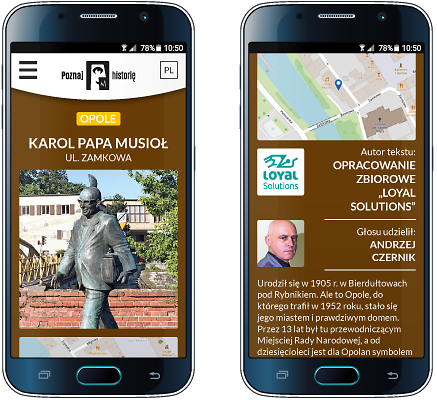
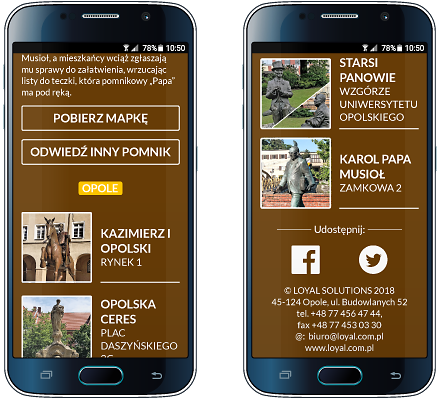
Other available options: brief information about the monument, author of the text and recording, list of other monuments in the city included in the "Discover History" project, downloadable map of monuments, video, and social media links


Would you like to implement the project in your city as well?

Contact

Project partners

Implementing the "Discover history" project in each city requires the involvement of many people: programmers, graphic designers, writers, actors, sound engineers, and coordinators. It is thanks to them that this project came to life.

Our ambition is to continually expand its reach. Therefore, we thank our current partners and invite additional cities, institutions, companies, and individuals to collaborate!


Would you like to become our Partner of the project or monument?

Contact

Contact

Are you interested in implementing the project in your city? Want to learn more? Want to learn more? Write to us, call us! We'll contact you and arrange a meeting. We'll prepare materials and a proposal for you.