A że Ceynowa nie była we wsi lubiana, bo była kłótliwa, nie raz przeklinała i złorzeczyła, to podejrzenia padły na nią. Tak o sprawie napisał w swojej książce „Wiatr od morza” Stefan Żeromski: „W Chałupach od dawna panowało domniemanie, wielokroć w zupełną przechodzące pewność, iż wdowa Krystyna Ceynowa, matka dwu dorosłych córek, Anny i Marianny, oraz trojga dzieci nieletnich, zajmująca się wiązaniem sieci rybackich, jest czarownicą złośliwą. Niewiasta owa, skoro tylko popadała z kimkolwiek w zwadę, kłótnię, zajście sąsiedzkie - złorzeczyła, ciskała przekleństwa, wyzywała złe i życzyła złego, co się też wielokrotnie spełniło, gdyż ludzie przez nią przeklęci wnet chorowali. Zdarzyło się też wielokroć we wsi, że bydło niespodzianie i bez przyczyny chorzało i zdychało, a był nawet przypadek, iż czternastoletnia dziewczyna wskutek działania sił nadprzyrodzonych, które ta zła kobieta ode Złego odebrała - zeszła ze świata. Wskutek orzeczenia lekarza Kamińskiego powszechne podejrzenie w pewność się zmieniło. Cała wieś Chałupy rozbrzmiewała od jednogłośnego żądania, ażeby wdowę Ceynową zmusić koniecznie do wypędzenia czarta, którego swymi przekleństwy wegnała była w Jana Kąkola”.
Niesieni strachem, emocjami i niechęcią mieszkańcy podobno najpierw próbowali siłą zmusić Krystynę Ceynowę, żeby urok z Kąkola zdjęła. Nie szczędzili jej przy tym razów. A kiedy to nie pomogło, postanowili poddać ją próbie wody, jakiej poddawano czarownice. Grupa mężczyzn wrzuciła skrępowaną kobietę do morza. Założenie było takie: jeśli utonie, to znaczy, że była niewinna. Jeśli nie utonie – znaczy, że pomaga jej diabeł. Jedno i drugie oznaczało dla Ceynowej wyrok śmierci. Nie utonęła od razu. Pewnie dzięki temu, jak przypuszcza wielu, że na powierzchni wody trzymała ją poduszka powietrzna, która powstała w obszernej spódnicy. Kilku miejscowych, na czele z Kamińskim, dobiło ją więc wiosłami.
Do dziś wspominana jest często w opracowaniach dotyczących licznych spraw i procesów czarownic, które kosztowały życie tysięcy kobiet w całej Europie. A tu, w Chałupach, dla upamiętnienia, przy molo ustawiono tę tabliczkę.
Czarownica
z Chałup
Był rok 1836. 51-letnia wdowa po rybaku z Chałup, zwanych wówczas Ceynowa, została oskarżona o to, że rzuciła urok na Jana Kąkola, miejscowego rybaka, który spuchł i cierpiał na bóle żołądka i całego ciała. Na jego dolegliwości nie pomogły żadne zabiegi sprowadzonego z Pucka znachora Stanisława Kamińskiego. Więc ten doszedł do wniosku, że muszą one być… wynikiem czarów.
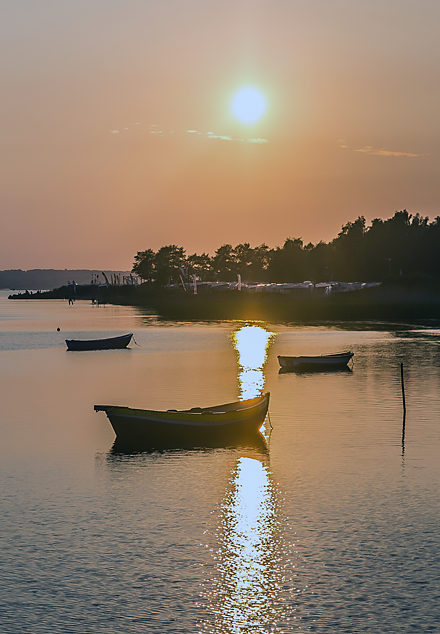
Czarownica z Chałup
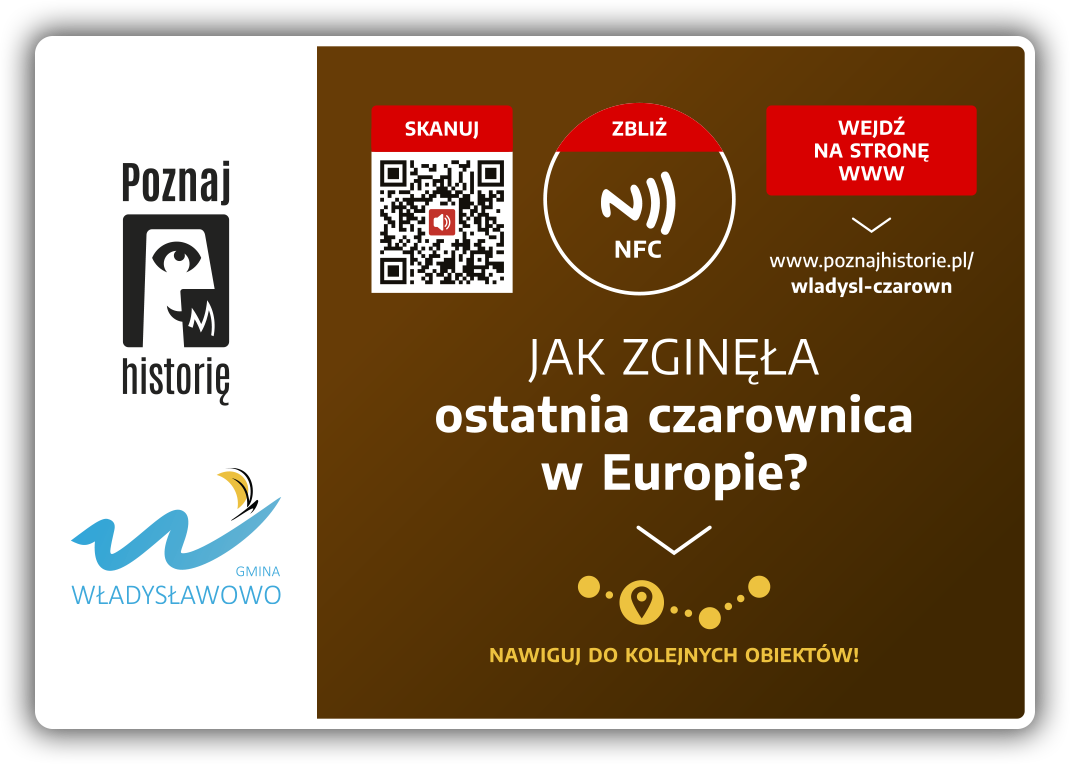
How it working
To listen to the history of monuments as part of the "Discover History" project, you need to follow a few simple steps. Below, we present a short, step-by-step "user manual" to provide a relatively simple way to access the mini-auditions.
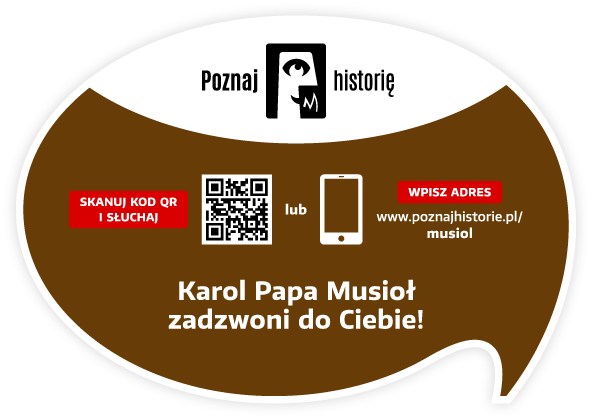
STEP 1
You need a smartphone with a camera. The camera lens should be pointed at the information plaque located next to the monument. Below is a view of the plaque itself and its example location next to the Karol Musioł monument in Opole.
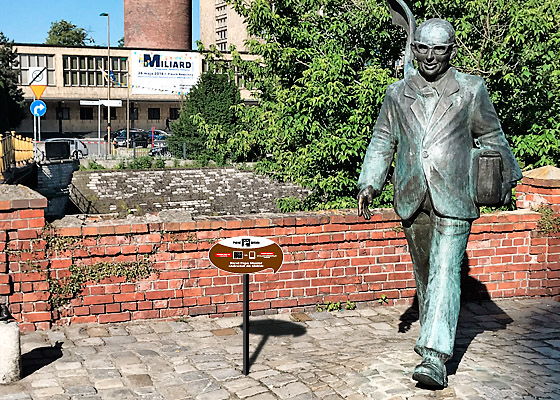
STEP 2
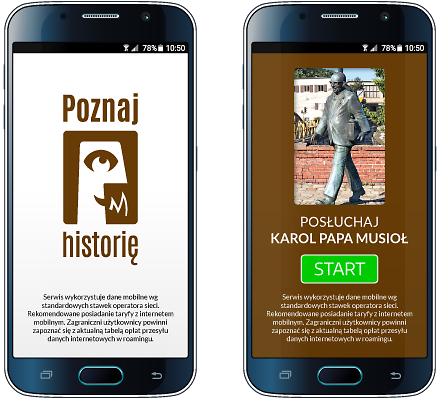
After pointing your smartphone's camera at the QR code located on the right side of the plaque, the app's welcome screen will appear, followed by a screen with the name, photo of the monument, and the "START" button.
STEP 3
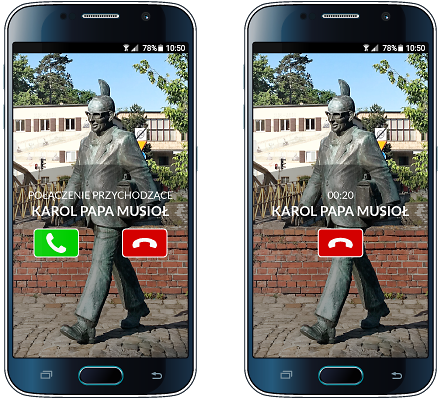
The "START" button starts the audio recording process.
Your smartphone will prompt you with the next steps after you listen to the story or pause it. Please keep an eye on your smartphone screen!
STEP 4
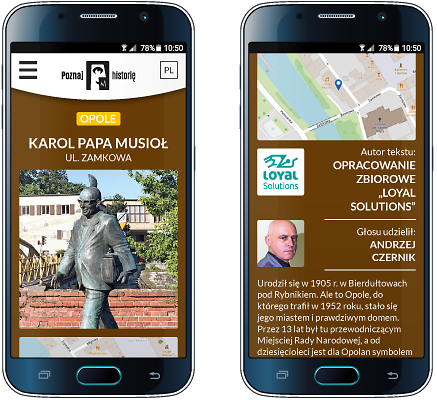
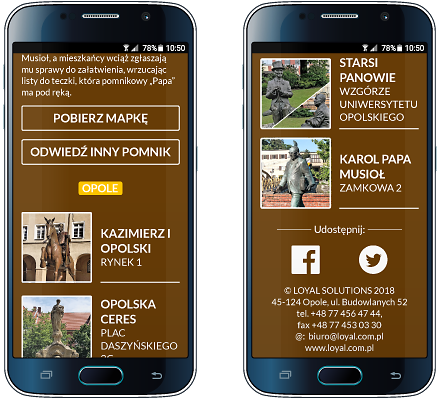
Other available options: brief information about the monument, author of the text and recording, list of other monuments in the city included in the "Discover History" project, downloadable map of monuments, video, and social media links
Would you like to implement the project in your city as well?
ContactSelect an object
View gallery
Monuments in cities remind us of the history of places and people, and allude to important events. They are also works of art. Bronze, metal, wood, or concrete transformed into the form of a monumental obelisk attract attention. We enjoy sitting by them, taking photos, and making appointments.
Project partners
Implementing the "Discover history" project in each city requires the involvement of many people: programmers, graphic designers, writers, actors, sound engineers, and coordinators. It is thanks to them that this project came to life.
Our ambition is to continually expand its reach. Therefore, we thank our current partners and invite additional cities, institutions, companies, and individuals to collaborate!

Would you like to become our Partner of the project or monument?
ContactContact
Are you interested in implementing the project in your city? Want to learn more? Want to learn more? Write to us, call us! We'll contact you and arrange a meeting. We'll prepare materials and a proposal for you.

Project „DISCOVER HISTORY”.
QR Communication Sp. z o.o.
tel. +48 735 147 911
tel. +48 606 881 118
paulina.panusch@poznajhistorie.pl
kontakt@poznajhistorie.pl
QR Communication Sp. z o.o.
tel. +48 735 147 911
tel. +48 606 881 118
paulina.panusch@poznajhistorie.pl
kontakt@poznajhistorie.pl
Visit Social media:
Share Social media: