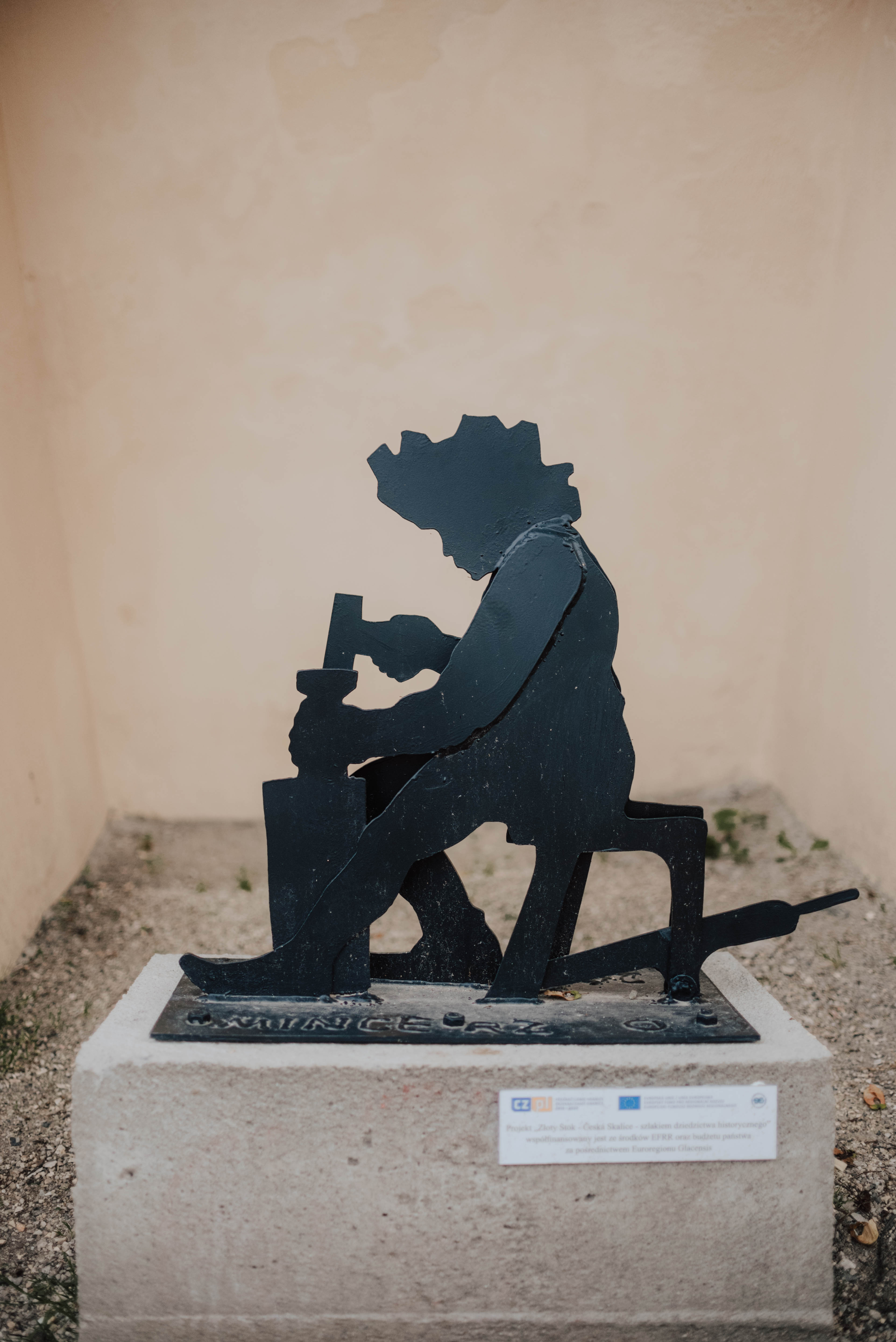
Ja wybijam wyobrażenia na monetach za pomocą stempli. Te, rytowane są w żelazie przez specjalistów. Do wytłaczania stempli używam nieruchomego, osadzonego w pniu drzewa stempla dolnego, czyli awersu i ruchomego, trzymanego w ręku stempla górnego - inaczej rewersu. W niego uderzam z góry tym właśnie młotem.
Pierwsza osada górnicza powstała w Złotym Stoku już w X wieku. Ale to niespełna sześćset lat później rozpoczęło się prawdziwe szaleństwo. Złotym Stokiem interesowały się wówczas najpotężniejsze w Europie domy handlowe i spółki górniczo-hutnicze. Mennicę w której będziesz terminować założyli w 1507 roku książęta ziębicko-oleśniccy Albrecht i Karol Podiebradowie. W 1529 mieliśmy już czynnych 145 kopalń i kilkanaście hut. Miasto rozwijało się z roku na rok. W połowie XVI wieku wydobywano tu 30 tysięcy ton rudy! 30 tysięcy! A zgadnij, ile produkowaliśmy rocznie złota? Minimum 60 kilogramów, choć bywały lata gdy było ich aż 140! Wyobrażasz sobie ile pierścieni, naszyjników, bransolet i innych skarbów można było stworzyć z takiej ilości drogocennego kruszczu? I to tylko jednego roku. 8 procent produkowanego złota w Europie pochodziło wtedy właśnie stąd.
Gwarek mincerz
Nasza mennica zatrudnia wielu rzemieślników. Każdy zajmuje się poszczególnymi etapami wyrobu monet. Są to między innymi: oczyszczanie metalu, odlewanie blach, czy wybijanie bądź wycinanie krążków.
How it working
To listen to the history of monuments as part of the "Discover History" project, you need to follow a few simple steps. Below, we present a short, step-by-step "user manual" to provide a relatively simple way to access the mini-auditions.
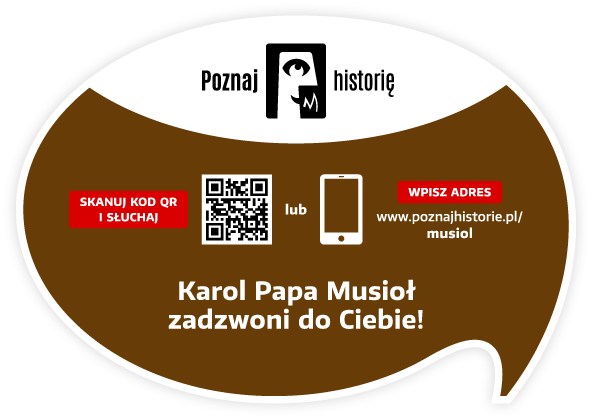
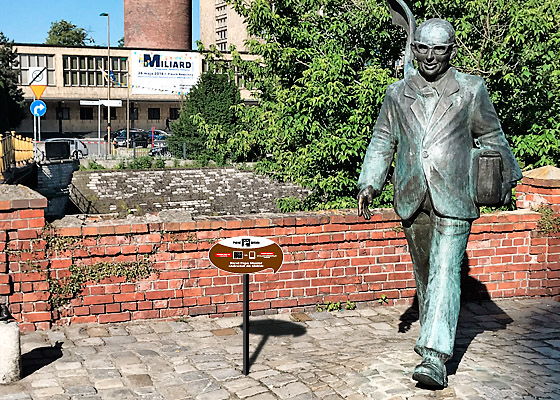
You need a smartphone with a camera. The camera lens should be pointed at the information plaque located next to the monument. Below is a view of the plaque itself and its example location next to the Karol Musioł monument in Opole.
After pointing your smartphone's camera at the QR code located on the right side of the plaque, the app's welcome screen will appear, followed by a screen with the name, photo of the monument, and the "START" button.
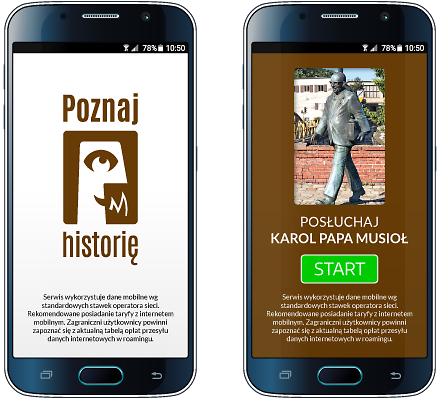
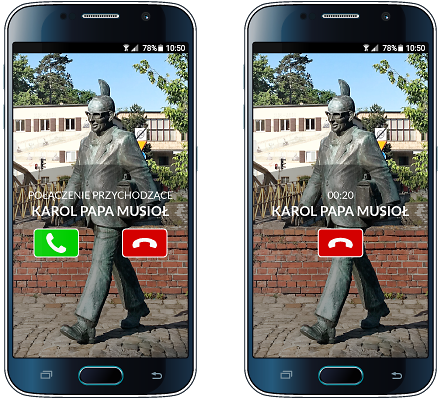
The "START" button starts the audio recording process.
Your smartphone will prompt you with the next steps after you listen to the story or pause it. Please keep an eye on your smartphone screen!
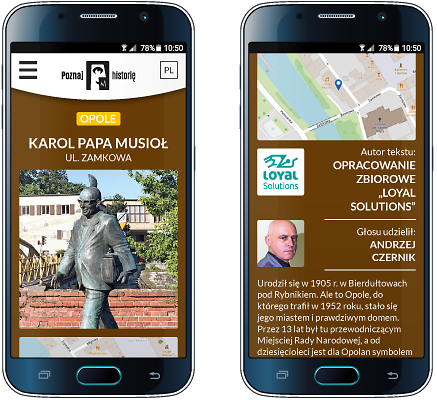
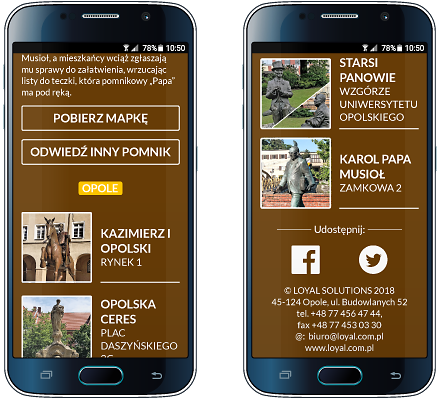
Other available options: brief information about the monument, author of the text and recording, list of other monuments in the city included in the "Discover History" project, downloadable map of monuments, video, and social media links
Would you like to implement the project in your city as well?
ContactView gallery
Monuments in cities remind us of the history of places and people, and allude to important events. They are also works of art. Bronze, metal, wood, or concrete transformed into the form of a monumental obelisk attract attention. We enjoy sitting by them, taking photos, and making appointments.
Project partners
Implementing the "Discover history" project in each city requires the involvement of many people: programmers, graphic designers, writers, actors, sound engineers, and coordinators. It is thanks to them that this project came to life.
Our ambition is to continually expand its reach. Therefore, we thank our current partners and invite additional cities, institutions, companies, and individuals to collaborate!

Would you like to become our Partner of the project or monument?
ContactContact
Are you interested in implementing the project in your city? Want to learn more? Want to learn more? Write to us, call us! We'll contact you and arrange a meeting. We'll prepare materials and a proposal for you.

QR Communication Sp. z o.o.
tel. +48 735 147 911
tel. +48 606 881 118
paulina.panusch@poznajhistorie.pl
kontakt@poznajhistorie.pl
Visit Social media:
Share Social media: