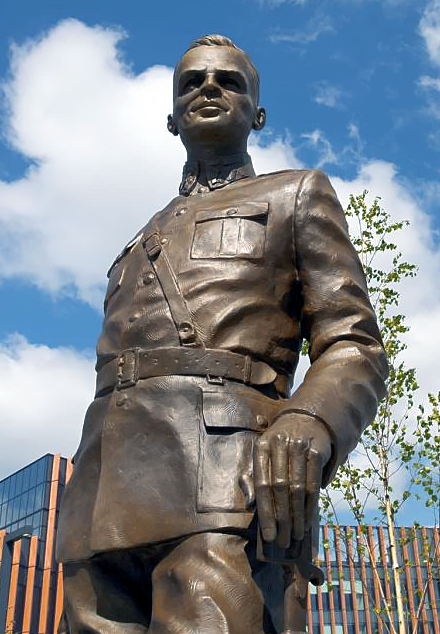
Captain Witold Pilecki

Scout, participant in the war against the Bolsheviks in 1920, defender in the war of 1939, soldier of the Home Army, one of the creators of the Secret Polish Army operating within the structures of the Polish Underground State.

On September 19, 1940, as a volunteer, Lieutenant Colonel Pilecki allowed himself to be captured by the Germans during a roundup in Warsaw in order to be sent to Auschwitz two days later as Tomasz Serafiński. His heroic mission had two objectives: to gather intelligence on how the notoriously infamous camp operated and, if possible, to organize a resistance movement in collaboration with the Polish underground.

He spent two years and seven months in the camp, known as the "death factory." From there, he sent reports to the Main Headquarters of the Union of Armed Struggle of the Home Army about the situation in the camp. He also established a secret network called the Union of Military Organization, consisting of over eight hundred prisoners. He decided to escape from Auschwitz only in 1943. On the night of April 26-27, 1943, he escaped along with two fellow prisoners, Jan Redzej and Edward Ciesielski.

Posthumously, he was awarded the Commander's Cross of the Order of Polonia Restituta and the Order of the White Eagle. In 2013, he was promoted to the rank of Colonel. Many schools, scout troops, streets, and institutions bear his name today. There is also a Museum - House of the Pilecki Family in Ostrowi Mazowieckiej.

Monuments to Lieutenant Colonel Pilecki are erected throughout Poland. The one in Opole was created by Professor Marian Molenda, an employee of the Art Faculty at Opole University.

Captain Witold Pilecki
The monument to Captain Witold Pilecki stands on the square in front of the Public Services Center in Opole.

Visit Social media:

Share Social media:

How it working

To listen to the history of monuments as part of the "Discover History" project, you need to follow a few simple steps. Below, we present a short, step-by-step "user manual" to provide a relatively simple way to access the mini-auditions.

STEP 1

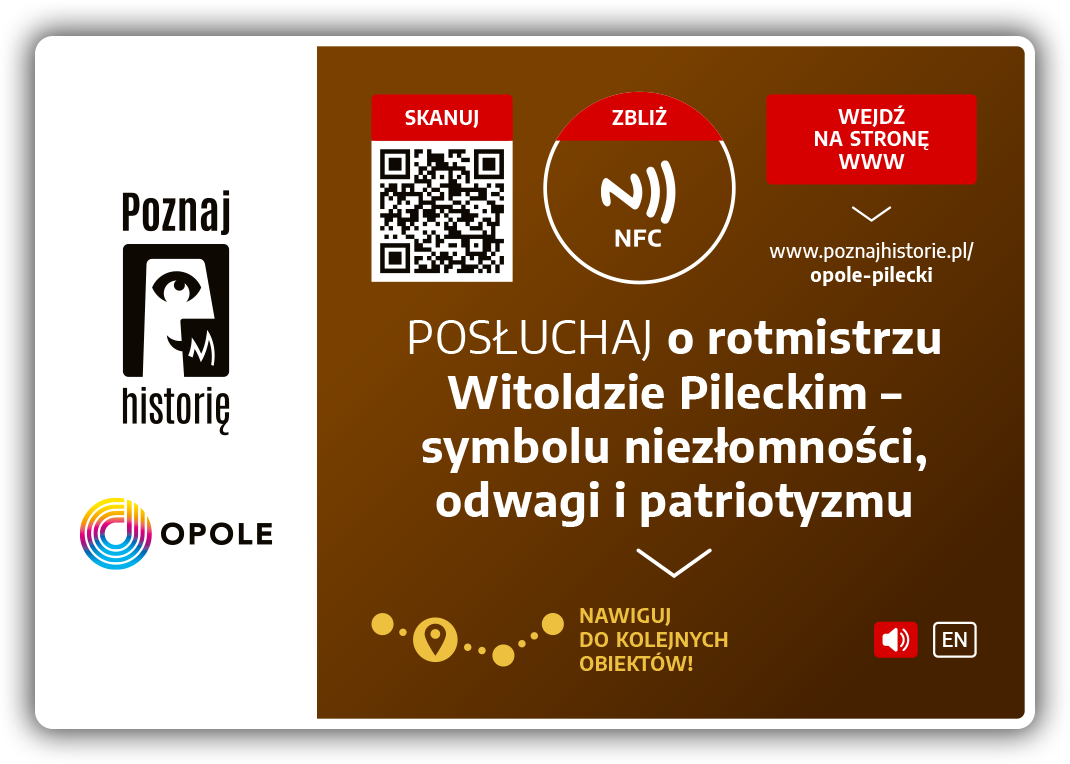
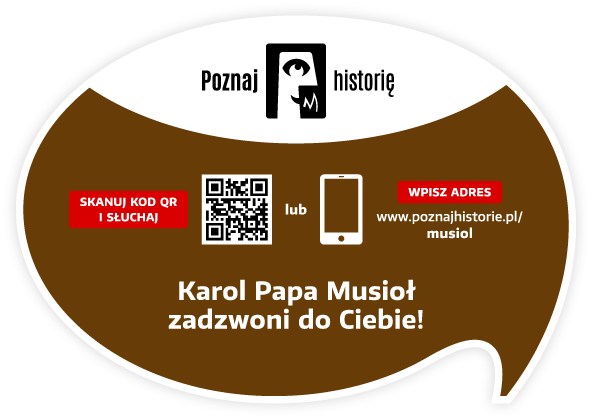
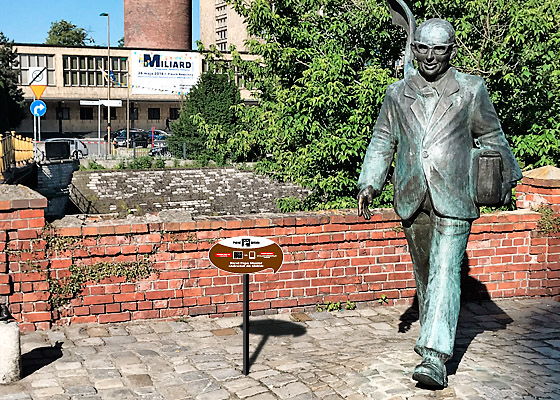
You need a smartphone with a camera. The camera lens should be pointed at the information plaque located next to the monument. Below is a view of the plaque itself and its example location next to the Karol Musioł monument in Opole.

STEP 2

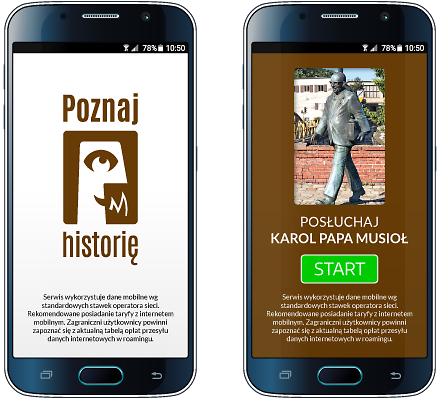
After pointing your smartphone's camera at the QR code located on the right side of the plaque, the app's welcome screen will appear, followed by a screen with the name, photo of the monument, and the "START" button.

STEP 3

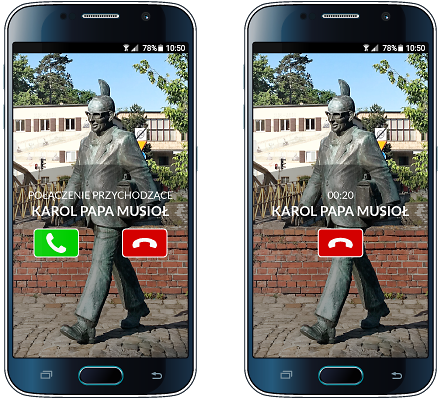
The "START" button starts the audio recording process.
Your smartphone will prompt you with the next steps after you listen to the story or pause it. Please keep an eye on your smartphone screen!

STEP 4

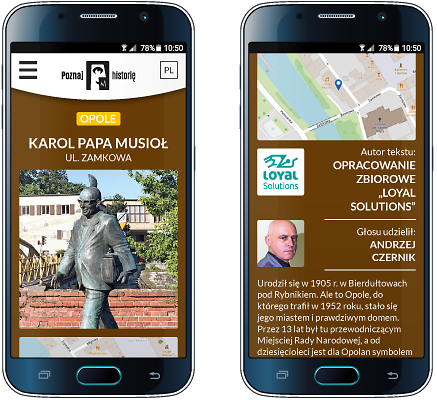
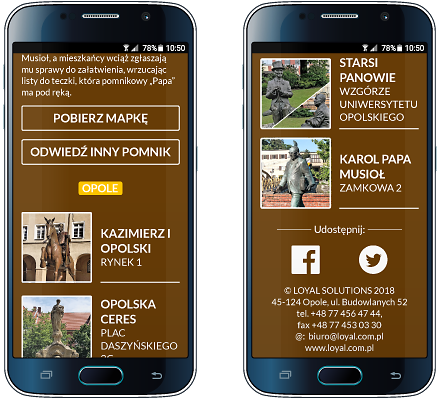
Other available options: brief information about the monument, author of the text and recording, list of other monuments in the city included in the "Discover History" project, downloadable map of monuments, video, and social media links


Would you like to implement the project in your city as well?

Contact

Project partners

Implementing the "Discover history" project in each city requires the involvement of many people: programmers, graphic designers, writers, actors, sound engineers, and coordinators. It is thanks to them that this project came to life.

Our ambition is to continually expand its reach. Therefore, we thank our current partners and invite additional cities, institutions, companies, and individuals to collaborate!


Would you like to become our Partner of the project or monument?

Contact

Contact

Are you interested in implementing the project in your city? Want to learn more? Want to learn more? Write to us, call us! We'll contact you and arrange a meeting. We'll prepare materials and a proposal for you.