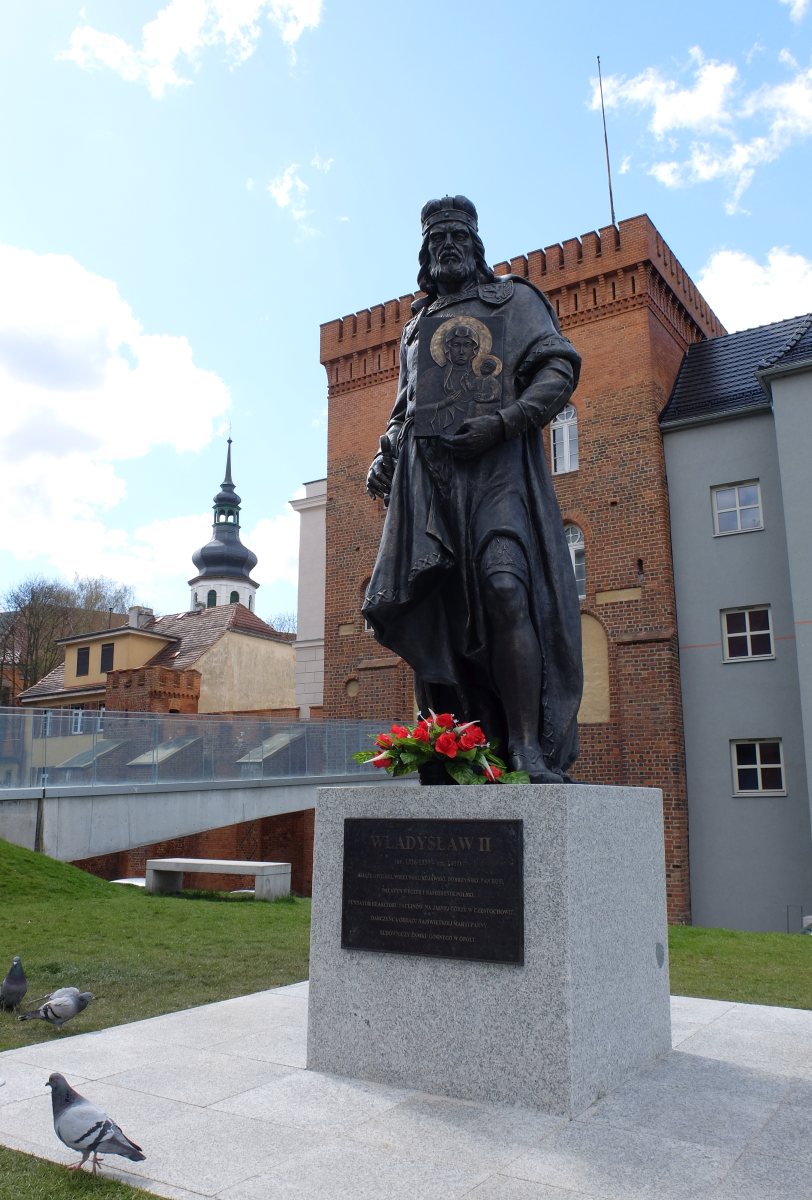
It was with the Hungarian court that Władysław made his fortune. With success, because thanks to his commitment, Louis appointed him a palatine in 1367 - the most important person in Hungary after the king. It was also a very lucrative job.
Then Władysław became the governor of the king in Halych Ruthenia. He was also a governor of Poland for a short time, and finally he got Kujawy Inowrocławskie and the Dobrzyń land. He had the reputation of an economical ruler. Where he ruled, he left behind established villages and towns, founded forges and crowds of colonists, built castles and monasteries.
The prince died in 1401 and was buried in the basement of the local Franciscan monastery.
He had a castle in Opole, called the Upper One. Only the tower and a fragment of the wall remained. Today it is assumed that prince Władysław erected it in the years 1382-1387. After the extinction of the Opole Piast dynasty, the building fell into decline, just like the city and the principality left without rulers… Finally, the castle, ruined by subsequent fires, was pulled down in the 17th century. The recently reconstructed tower is only a shadow of old memories and the splendor of this place.
Monument of Władysław II Opolczyk
He was the eldest son of the Opole Piast Bolek II, born probably between 1326 and 1330, and of Elżbieta Świdnicka, granddaughter of Władysław Łokietek. His cousin was King Casimir the Great, and his uncle was King Ludwik Węgierski.
How it working
To listen to the history of monuments as part of the "Discover History" project, you need to follow a few simple steps. Below, we present a short, step-by-step "user manual" to provide a relatively simple way to access the mini-auditions.
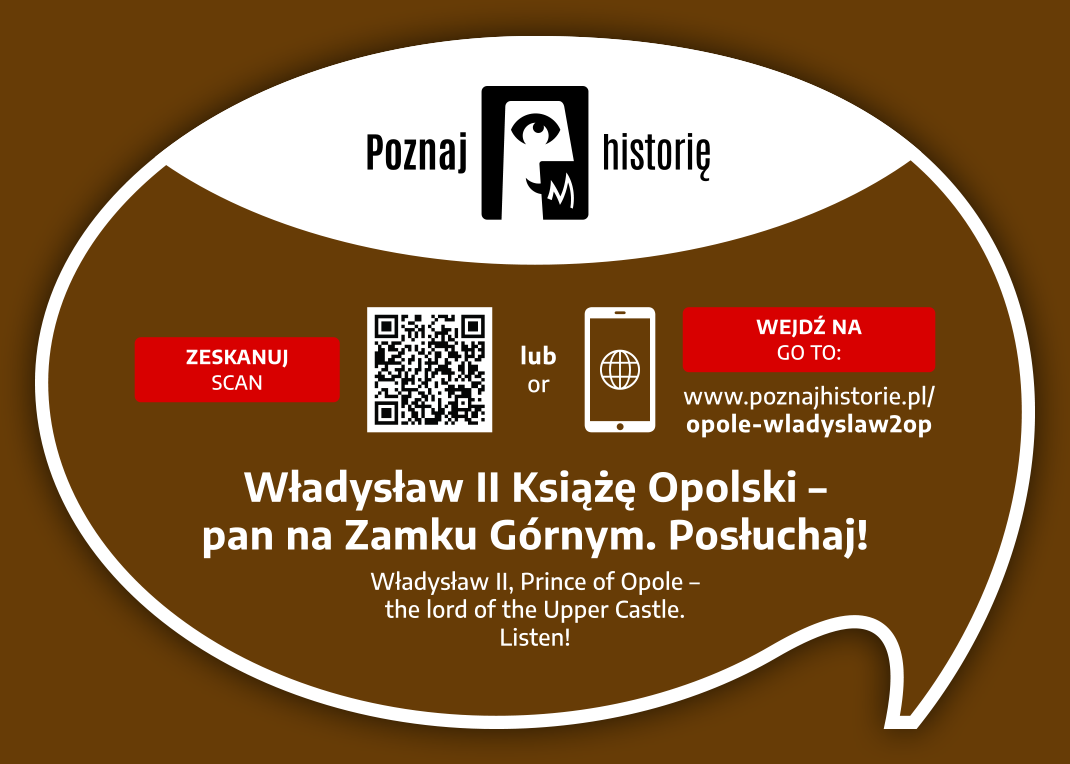
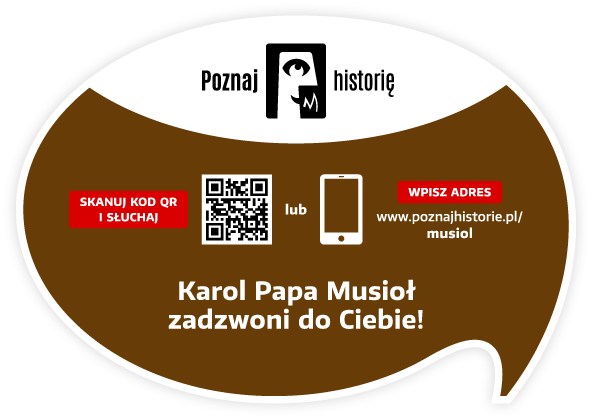
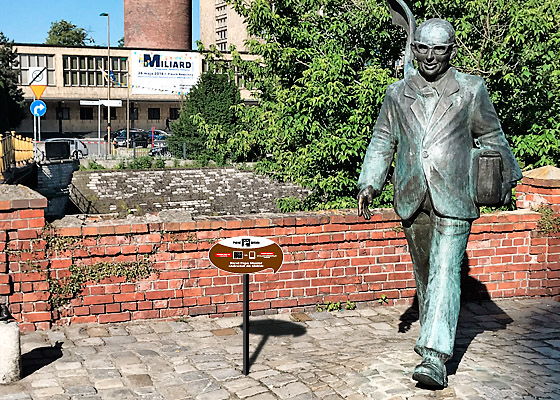
You need a smartphone with a camera. The camera lens should be pointed at the information plaque located next to the monument. Below is a view of the plaque itself and its example location next to the Karol Musioł monument in Opole.
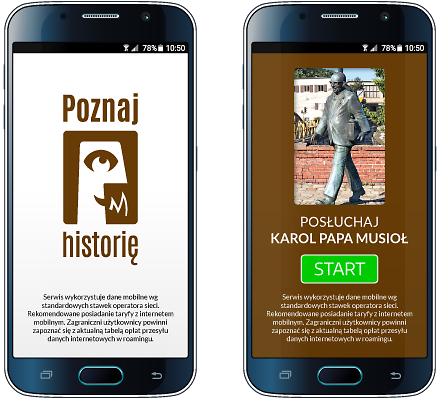
After pointing your smartphone's camera at the QR code located on the right side of the plaque, the app's welcome screen will appear, followed by a screen with the name, photo of the monument, and the "START" button.
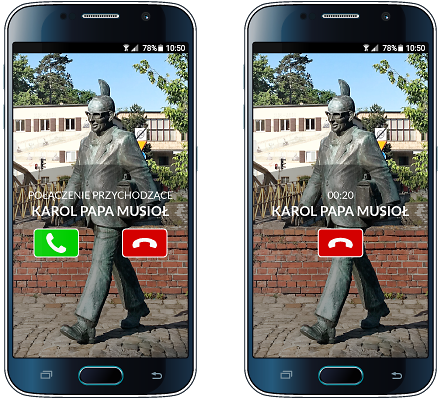
The "START" button starts the audio recording process.
Your smartphone will prompt you with the next steps after you listen to the story or pause it. Please keep an eye on your smartphone screen!
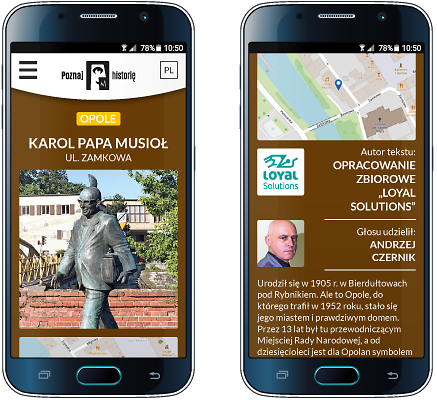
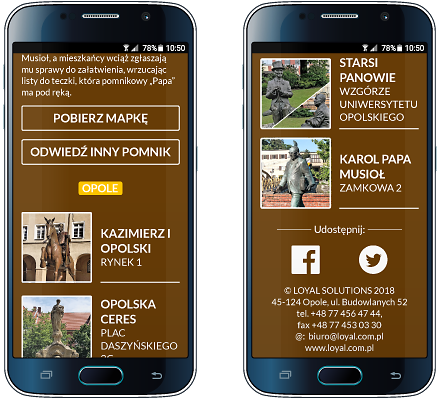
Other available options: brief information about the monument, author of the text and recording, list of other monuments in the city included in the "Discover History" project, downloadable map of monuments, video, and social media links
Would you like to implement the project in your city as well?
ContactSelect an object
View gallery
Monuments in cities remind us of the history of places and people, and allude to important events. They are also works of art. Bronze, metal, wood, or concrete transformed into the form of a monumental obelisk attract attention. We enjoy sitting by them, taking photos, and making appointments.
Project partners
Implementing the "Discover history" project in each city requires the involvement of many people: programmers, graphic designers, writers, actors, sound engineers, and coordinators. It is thanks to them that this project came to life.
Our ambition is to continually expand its reach. Therefore, we thank our current partners and invite additional cities, institutions, companies, and individuals to collaborate!


Visit Social media:
Share Social media: