Schinkel malował obrazy, które dziś zobaczyć można m.in. w Luwrze, a także - podobnie jak jego wielki Włoski poprzednik - tworzył dekoracje teatralne, operowe, freski i litografie. I oczywiście projektował: zamki, pałace, rezydencje królów. Jego dzieła stoją dziś w wielu rejonach Niemiec, Polski a także i Rosji.
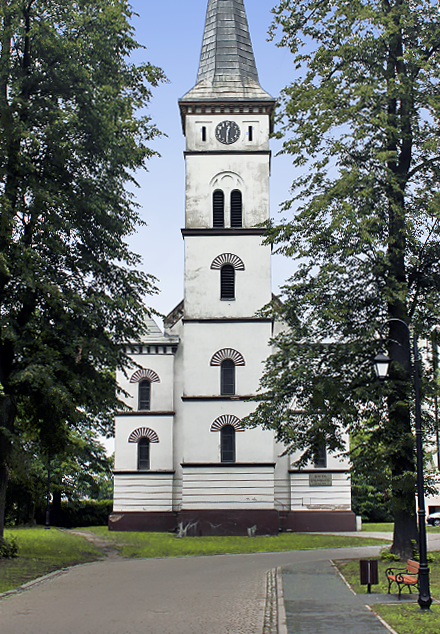
Kościół powstał w niespełna dwa lata. Jego architekt inspirował się do dorobkiem wielu epok. Dominują jednak cechy neoromańskie i neogotyckie. Wnętrze kościoła: ołtarz, ambona, okna, słupy chóralne - odlano w pobliskiej hucie Ozimek.
Do pełni szczęścia parafian brakowało tylko dzwonnicy z prawdziwego zdarzenia. Cel osiągnięto dopiero w 1858 roku. Głęboki, mocny dźwięk dzwonów, który słychać do dziś, również zawdzięczamy tutejszym hutnikom. Trzy stalowe dzwony odlali do użytku w 1922 roku.
W czasie drugiej wojny światowej kościół został częściowo zniszczony. Odbudowano go niedługo potem w niemal pierwotnym kształcie. 9 maja 1988 r., przyszło jednak koleje nieszczęście. W nocy zabytek został podpalony, całkowitemu spaleniu uległa konstrukcja dachowa. Po remoncie w październiku 1991 r. znów odprawia się w nim nabożeństwa.
Kościół w Ozimku
24 czerwca 1819 roku położono kamień węgielny pod budowę kościoła w Ozmiku. Architektem został Da Vinci swoich czasów - Karl Friedrich Schinkel.
How it working
To listen to the history of monuments as part of the "Discover History" project, you need to follow a few simple steps. Below, we present a short, step-by-step "user manual" to provide a relatively simple way to access the mini-auditions.
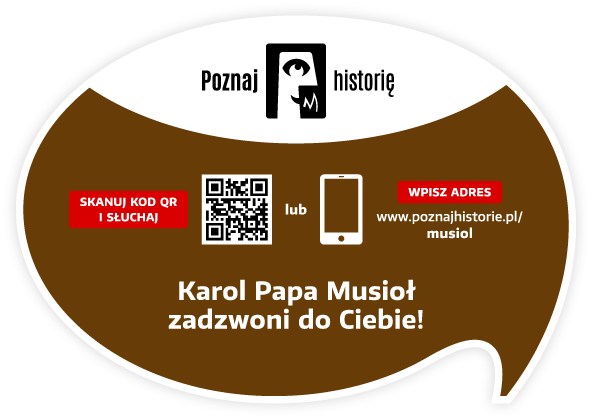
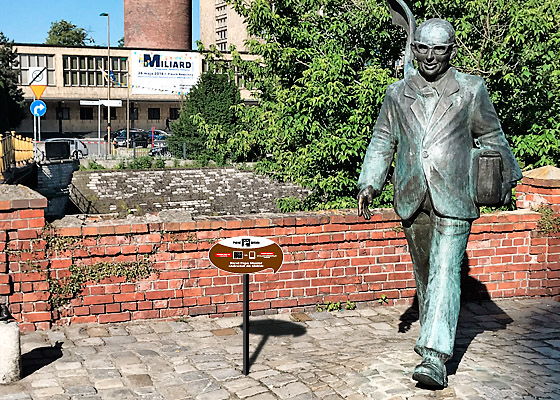
You need a smartphone with a camera. The camera lens should be pointed at the information plaque located next to the monument. Below is a view of the plaque itself and its example location next to the Karol Musioł monument in Opole.
After pointing your smartphone's camera at the QR code located on the right side of the plaque, the app's welcome screen will appear, followed by a screen with the name, photo of the monument, and the "START" button.
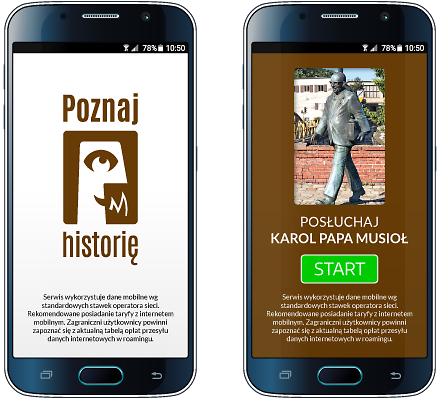
The "START" button starts the audio recording process.
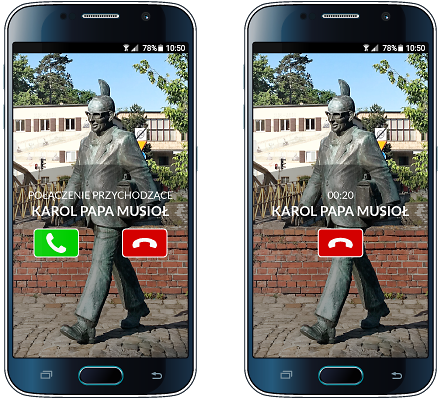
Your smartphone will prompt you with the next steps after you listen to the story or pause it. Please keep an eye on your smartphone screen!
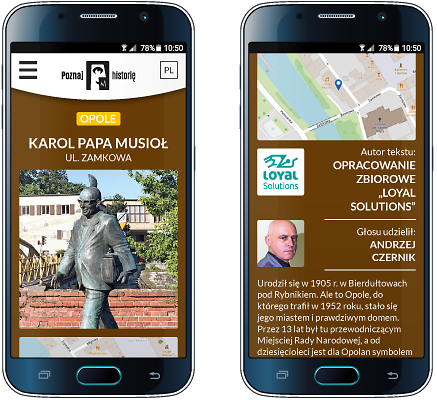
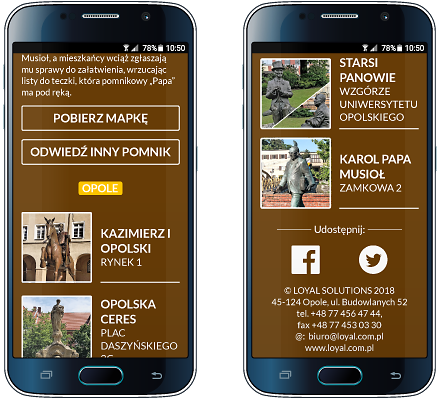
Other available options: brief information about the monument, author of the text and recording, list of other monuments in the city included in the "Discover History" project, downloadable map of monuments, video, and social media links
Would you like to implement the project in your city as well?
ContactSelect an object
View gallery
Monuments in cities remind us of the history of places and people, and allude to important events. They are also works of art. Bronze, metal, wood, or concrete transformed into the form of a monumental obelisk attract attention. We enjoy sitting by them, taking photos, and making appointments.
Project partners
Implementing the "Discover history" project in each city requires the involvement of many people: programmers, graphic designers, writers, actors, sound engineers, and coordinators. It is thanks to them that this project came to life.
Our ambition is to continually expand its reach. Therefore, we thank our current partners and invite additional cities, institutions, companies, and individuals to collaborate!

Would you like to become our Partner of the project or monument?
ContactContact
Are you interested in implementing the project in your city? Want to learn more? Want to learn more? Write to us, call us! We'll contact you and arrange a meeting. We'll prepare materials and a proposal for you.

QR Communication Sp. z o.o.
tel. +48 735 147 911
tel. +48 606 881 118
paulina.panusch@poznajhistorie.pl
kontakt@poznajhistorie.pl
Visit Social media:
Share Social media: