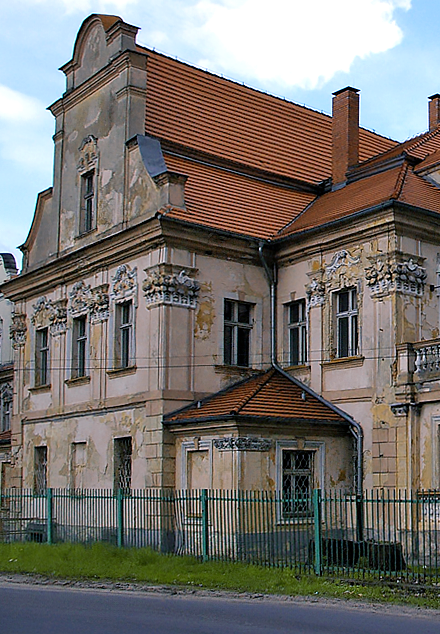
To właśnie w tym miejscu zrodził się pomysł budowy jeziora, a właściwie zbiornika retencyjnego „Turawa”, choć ostateczną zgodę musiał wydać, a działo się to w Berlinie w latach 30tych XX wieku, kanclerz III Rzeszy – Adolf Hitler. Sam pałac powstał znacznie wcześniej bo w połowie XVIII wieku dla pana turawskich ziem Martina Scholza von Loewenckorna, który w 1712 r. kupił Turawę od Franciszka Karola Blankowskyego - kolejnego po rodzie Kotorz właściciela okolicznych dóbr. Następnie obiekt był kilkukrotnie rozbudowywany. Po raz kolejny m.in. w 1761r kiedy to zostało dobudowane północne skrzydło oraz brama wjazdowa. W skutek ślubu dziedzica Loewenckornów z Anną Barbarą von Garnier majtek przeszedł w kolejnych latach w ręce von Garnierów, którzy na trwałę zapisali się w historii tych ziem fundując budowę kilku obiektów sakralnych i świeckich w okolicy, a także doprowadzając do powstania jezior. Sam pałac jest przykładem budowli barokowej z neorokokową dekoracją. Obiekt został wzniesiony na planie nieregularnego prostokąta. Podobno w niezmienionym stanie do dziś zachowała się tylko sala balowa, gdyż reszta została przebudowana w czasie, kiedy w rezydencji mieścił się (druga połowa XX wieku) Dom Dziecka.
Pałac w Turawie
Budowę pałacu rozpoczęto w XVIII wieku. Dlaczego taki zniszczony – pytają dziś turyści. Wojenna zawierucha sprawiła, że posiadłość opuścił dobrodziej pałacu i ziem turawskich hrabia von Garnier. Wcześniej jednak sprawił, że obok powstały słynne jeziora turawskie.
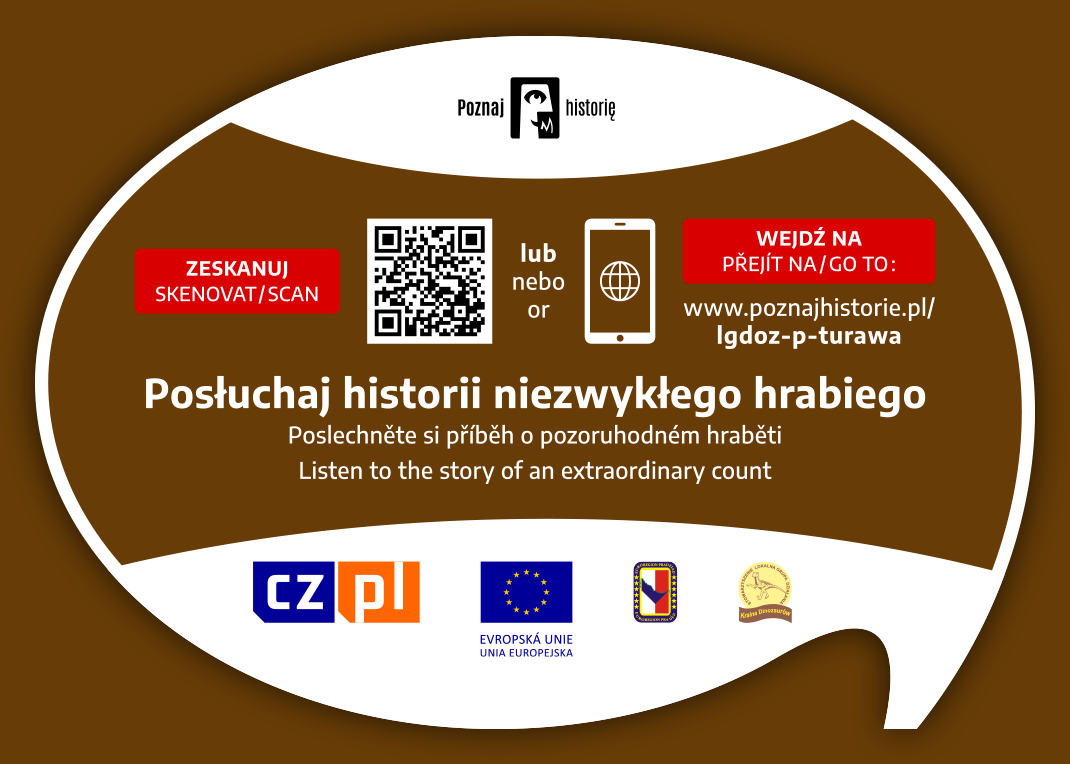
How it working
To listen to the history of monuments as part of the "Discover History" project, you need to follow a few simple steps. Below, we present a short, step-by-step "user manual" to provide a relatively simple way to access the mini-auditions.
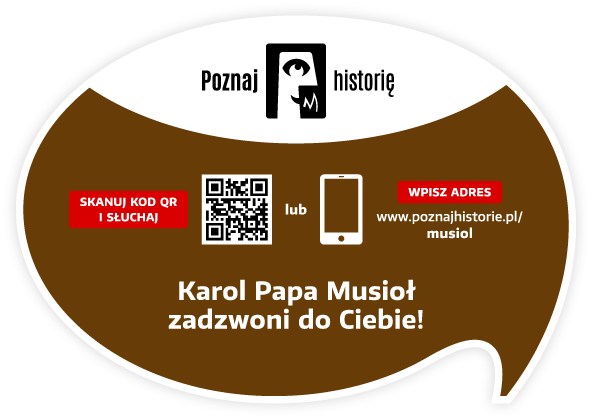
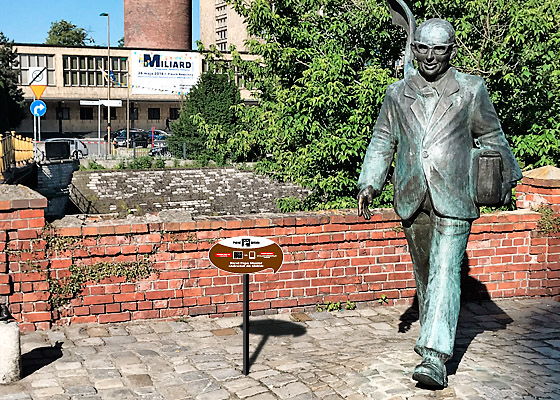
You need a smartphone with a camera. The camera lens should be pointed at the information plaque located next to the monument. Below is a view of the plaque itself and its example location next to the Karol Musioł monument in Opole.
After pointing your smartphone's camera at the QR code located on the right side of the plaque, the app's welcome screen will appear, followed by a screen with the name, photo of the monument, and the "START" button.
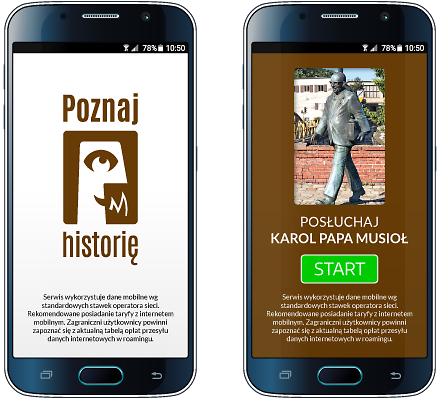
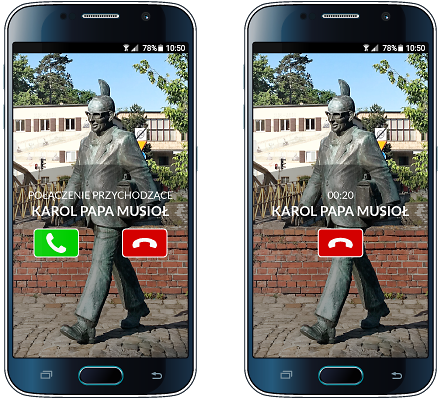
The "START" button starts the audio recording process.
Your smartphone will prompt you with the next steps after you listen to the story or pause it. Please keep an eye on your smartphone screen!
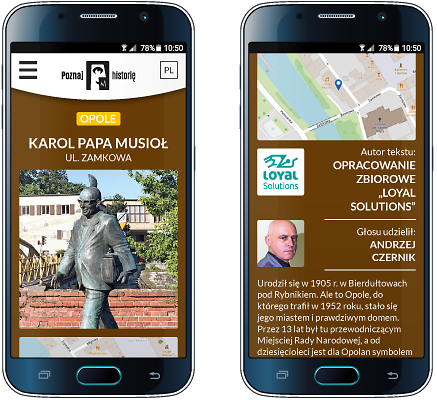
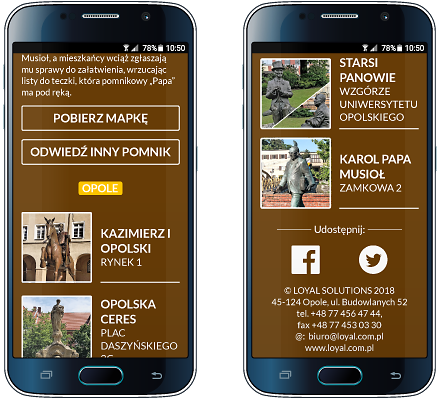
Other available options: brief information about the monument, author of the text and recording, list of other monuments in the city included in the "Discover History" project, downloadable map of monuments, video, and social media links
Would you like to implement the project in your city as well?
ContactSelect an object
View gallery
Monuments in cities remind us of the history of places and people, and allude to important events. They are also works of art. Bronze, metal, wood, or concrete transformed into the form of a monumental obelisk attract attention. We enjoy sitting by them, taking photos, and making appointments.
Project partners
Implementing the "Discover history" project in each city requires the involvement of many people: programmers, graphic designers, writers, actors, sound engineers, and coordinators. It is thanks to them that this project came to life.
Our ambition is to continually expand its reach. Therefore, we thank our current partners and invite additional cities, institutions, companies, and individuals to collaborate!

Would you like to become our Partner of the project or monument?
ContactContact
Are you interested in implementing the project in your city? Want to learn more? Want to learn more? Write to us, call us! We'll contact you and arrange a meeting. We'll prepare materials and a proposal for you.

QR Communication Sp. z o.o.
tel. +48 735 147 911
tel. +48 606 881 118
paulina.panusch@poznajhistorie.pl
kontakt@poznajhistorie.pl
Visit Social media:
Share Social media: